Ben Goss had helped put investment advice on the internet. Then his customers did something instructive: they took the answers to a person. Sort, the online adviser he co-founded in 1998, was giving advice to more than a thousand people a day at its height, by his account. For many of them, the next step was to ask a financial adviser whether it all made sense. The computer had completed its work. The conversation was still waiting to happen.
That behaviour gave Goss something to think about after Sort was sold in 2000. The internet could distribute a recommendation. People still wanted someone they trusted to help them act on it. His next company would put its technology behind the adviser. More than two decades later, the same question follows him through new products, books and debates about artificial intelligence: how do you make that conversation available to more people?
The customer went to see someone anyway
Goss’s route into financial technology included strategy consulting at PricewaterhouseCoopers. He studied at Bradford and Indiana University, where he was a MacArthur Foundation Scholar. His professional biography records another useful bit of preparation: while setting up Sort, he qualified as a financial adviser. He had experience of the service as well as the opportunity to automate parts of it.
In 2003 he co-founded Distribution Technology with Adrian Hall and Patrick FitzGerald. Dynamic Planner was its product. Their early business plan addressed the danger of matching the wrong investment to the wrong person, and the cost of doing the job properly. Face-to-face advice could become quicker and more affordable with an internet-based system behind it. There was a business opportunity in helping the professional across the table.
“People want a trusted advisor to help with big decisions.”
Ben Goss · February 2025
The distinction matters. Buying an investment involves deciding how much uncertainty you can live with, what you hope the money will do and what happens if things go badly. A service has to make room for all three. Goss’s second venture grew around the adviser’s ability to hold those questions together.
The distance between willing and able
The apparently simple question of investment risk helps explain his company’s work. Someone may enjoy taking a chance with money and have very little they can afford to lose. Someone else may have ample financial resources and dislike uncertainty intensely. Willingness and capacity need separate consideration. Experience adds a further question: does the person understand what the proposed investment might do?
Dynamic Planner’s approach separates these elements and uses the answers to prompt discussion. An inconsistency in a questionnaire becomes something to explore. A proposed risk level can be tested against possible outcomes, reconsidered and discussed again. The useful output includes the client’s understanding of the choice. A tidy score cannot do all the talking.
There is an editorial quality to that process: establish what someone means before proceeding on the strength of what they have said. Financial language can make quite different circumstances sound alike. A questionnaire earns its place when it helps an adviser notice the difference.
A handbook, written on borrowed weekends
Goss took another route to the same audience in 2017. Writing Catching the FinTech Wave occupied two years of weekends and holidays before its November launch. He wanted something practical for people running advice businesses. Technology forecasts were plentiful; instructions for making useful changes to a working firm were less easy to come by.
The book dealt with awkward implementation questions. How do you choose priorities when a regulated business has competing demands? How do you bring advisers along with a change? How do you get old systems to work together? Those questions have less glamour than predicting the future. They also determine whether a new system ever becomes part of an ordinary Tuesday.
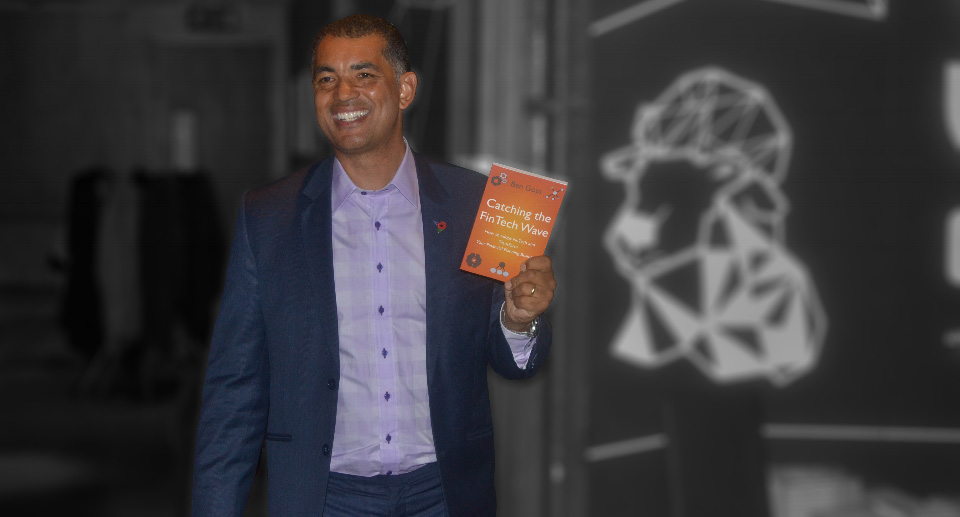
Its publisher described a guide for senior executives, supported by more than 60 listed resources. The promised benefits concerned productivity, customer relationships, access to advice and compliance. Even the surfing metaphor had to earn its keep. Goss was writing for readers who would eventually have to decide what to buy, what to change and how to explain it to colleagues.
The work of growing up
By July 2022, Dynamic Planner was ready for its first institutional investment. FPE Capital backed the existing management team and expansion plans in Britain and Europe. At the time, the investor reported that the company served almost 40% of UK wealth advice firms, worked with more than 150 asset managers and employed over 100 people. Those figures describe that moment in its development, after nearly nineteen years in business.
The partnership brought a different kind of work for Goss. By February 2025, he described a platform rebuilt on Microsoft Azure, upgraded finance and customer-management systems, a new chief financial officer and an enterprise sales team. Serving larger organisations also meant investing in governance, security and audit trails. Growth was showing up in the machinery behind the product.
The company also launched Tram, a configurable app that firms could offer under their own branding. Goss described it as a way to give clients a digital connection without each firm paying to build an app from scratch. It extended the relationship beyond an appointment, making the financial plan something a client could return to on a phone.
of UK wealth advice firms served at the time of FPE’s July 2022 investment announcement.
A dated company milestone · not a current market estimateIn January 2023 Michael Whitfield became chair. He had founded Thomson Online Benefits and led it for seventeen years. Goss welcomed his experience of growing a British technology business internationally. The appointment added another founder’s perspective to a company approaching its twentieth birthday, with the organisational demands that anniversary implied.
The plan belongs to the client
With Funding Happiness, launched in April 2026, Goss moved to the other side of the desk. The intended reader was the client trying to understand investing, risk and the purpose of a financial plan. The book offered language for participating in the conversation, including how present decisions relate to future goals.
That change of audience gives his writing a useful symmetry. An advice firm needs the tools and processes to deliver a service. A client needs the confidence and understanding to use it. A plan can be carefully prepared and still feel remote to the person whose future it describes. Explaining why it matters is part of bringing it into everyday life.
Goss connects the book to experiences early in his career, when he saw investments sold with insufficient attention to individual circumstances and capacity for risk. The company announced that royalties would go to Urban Synergy, the education and mentoring charity. It puts a practical destination behind a book concerned with what people can do with financial knowledge.
Faster, with someone still responsible
In 2026, the technology available to Goss includes automated meeting notes, information extraction and help preparing reports. At Dynamic Planner’s February conference he set out a vision of reducing the work required to deliver advice so firms could serve more clients. His ambition depends on the economics: a service that takes less time to prepare can become viable for a wider range of people.
His predictions for the year linked connected systems, mobile use and AI to that ambition. Information should move more freely between the tools firms use. Clients should be able to engage digitally. AI should work alongside reliable data and repeatable financial models. Each element addresses a place where a process can slow down or require someone to do the same work again.
The organisation changed too. In May, Dynamic Planner announced Rory McLaren as chief technology officer and Ian McEwan as chief revenue officer, while longtime technology leader Piers Lawson became chief architect. The appointments put named responsibilities behind the next stage of development. A founder’s enthusiasm still needs people who can turn it into a working service.
Goss’s July writing asked advice firm boards to examine accountability, ongoing testing, clients’ use of general-purpose AI and the degree of autonomy in their own systems. His questions were practical: who owns a decision, what happens after launch and where does human control sit? Speed brings its own management work. The person relying on the result has a reason to care about that work.
Ambition, kindness, and a few sheep
Asked what he would tell his younger self, Goss offered a compact prescription: “Work hard, be ambitious and be kind.” He described successful people who give others their time and attention. Asked about an alternative career, he chose farming and mentioned that his wife had bought sheep. There are, apparently, other ways to spend a day managing uncertainty.
The answer is a pleasing detail in a career usually measured in software releases and business milestones. Yet the question that first caught his attention remains close to ordinary life. Someone receives an answer about their money and wants to talk it through. Goss has built much of his working life around making space for the person they ask next.
Continue the conversation
Watch · read · connect