The most revealing thing about Be Broadcast is not that it puts people on television. Plenty of public-relations agencies can produce a spokesperson, a statistic and a hopeful email to a producer. The revealing thing is a rule that sounds, at first, like an admission of weakness: each consultant launches only one campaign a week.
In the usual agency language, capacity is elastic. Everyone is always available. Five launches can apparently occupy the same Tuesday without anyone becoming less thoughtful. Founder Josh Wheeler had seen what that elasticity looked like in practice. The senior person sold the work, the brief passed down the chain, and several clients quietly competed for the same pair of hands. The first thing to fail was not effort. It was translation.
So, when Wheeler launched Be Broadcast from Manchester in April 2022, he made an internal scheduling decision legible to the customer. The person in the meeting would remain the person dealing with the media. One consultant, one launch, one week. Senior consultancy and senior delivery. In a trade that sells access and judgement, he put a fence around both.
“The person you deal with will be the person who also deals with media.”Be Broadcast's founding promise
The handoff was the bug
Wheeler did not arrive at the rule through a management book. He had spent more than a decade in broadcast PR, including senior roles at Broadcast Revolution and markettiers. His own account of the problem is unusually candid: trying to deliver several campaigns at once forced sacrifices. Broadcast made those sacrifices obvious. A live news day does not wait for the account team to locate version six of the key messages.
The pandemic changed his mind about timing. Television and radio had become more intimate, more immediate and, for anxious audiences, more useful. Wheeler believed the public's relationship with those channels had shifted faster than many communications plans. In February 2022 he incorporated BE BROADCAST LTD. By April it had a first significant client, LGBT Consortium, in the middle of a fast-moving argument over conversion therapy.
The assignment was a useful stress test. An umbrella group needed to speak with unity, explain the difference between affirmative and conversion therapy, and respond while policy was changing. Be Broadcast helped shape the argument, briefed the spokesperson on the spot and handled the live media demand. The client said it had never seen comparable media results. The company's stated measure of success, however, was not a clip count. It was whether conversion therapy was eventually banned. That distinction - coverage as a means, not a souvenir - still runs through the offer.
A broadcast story has four jobs
Be Broadcast sits in a narrow but surprisingly complicated part of the market. Its customers are brands, charities, membership bodies and experts that need a story to survive contact with TV and radio. That means a pitch has to do more than read nicely. It needs a reason to happen now, evidence sturdy enough for a newsroom, a human who can speak without hiding in corporate syntax, and something an audience can see or hear.
This is where the firm differs from a generalist agency that adds broadcast after a press release is finished. Be Broadcast starts earlier. It can commission consumer research, find case studies, procure a spokesperson, train them, shape regional variants and manage the media relations. Its public rate card makes the labour unusually visible: UK broadcast media relations is listed at £2,500 plus VAT; ten questions to 1,000 UK adults costs £2,000; media training is £1,000. A one-off TV or radio clip is £50. Podcast development is £7,000.
The economics are simple fee-for-service and retainer work, not venture theatre. Wheeler has said the company started with no investment and no safety net. It remains privately held. The website now claims more than 50 global brand clients and more than 30 industry awards. Named work stretches from Co-op, Uswitch and Yorkshire Building Society to Sport England, Check Point, Epilepsy Action and Movember.
The consultancy became a small system
The clever extension was to build adjacent products around the same bottleneck: knowing what broadcasters need. Mission Control analyses television and radio output to show how a brand is portrayed, where competitors dominate, which themes are rising and which emotional territory is unoccupied. Its 2026 report on artificial intelligence examined 215,519 UK television and radio transcript records. The finding was practical: AI had moved from the product-hype phase into arguments about jobs, copyright, safety, energy and accountability. A new feature was no longer much of a story on its own.
Little Book works at the other end of the clock. Every Monday, it sends producers a curated guide to experts who can speak to the week's likely news hooks. Experts can accept or decline opportunities; Be Broadcast handles the liaison and briefing. Regional placement costs £200, national placement £400, and charities pay nothing. It is less a directory than a weekly memory aid. The useful asset is not the database. It is being familiar when a producer's deadline suddenly becomes eight minutes away.
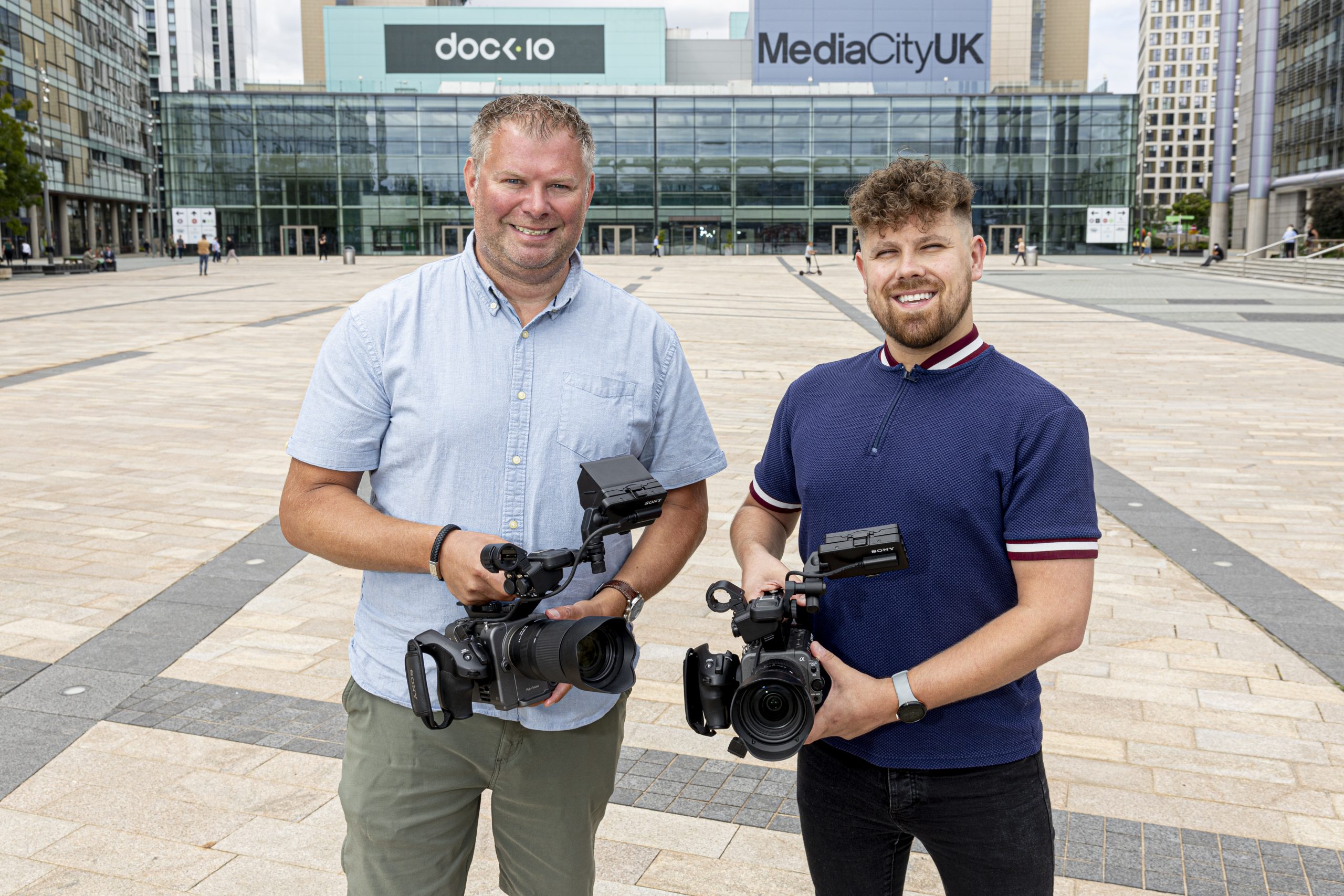
AV Room solves the picture problem. Led by Dave Cooper, whose newsroom career spans the BBC, ITV, Sky and Channel 4, it produces material for television, YouTube, digital publishers, social clips, live streams and podcasts. The company says the kit meets Netflix-approved standards. More important, it is built around what editors can use rather than what looks handsome in a client presentation.
Together, the products form a loop: study the conversation, place credible people inside it, then make the material usable across modern broadcast surfaces. That is a more defensible position than merely owning a long contact list. Contacts age. A method can learn.
The numbers are loud; the method is quieter
The campaign pages contain the sort of figures PR loves. Work for Epilepsy Action reported 1,178 pieces of coverage and a 25 percent website-traffic increase on broadcast day. A Co-op funeral-music campaign reported hundreds of items across BBC and commercial radio. A recent Uswitch campaign with Greg Rutherford generated 537 opportunities. The awards shelf has followed: a PRCA Platinum win in 2023, several PRCA DARE North West wins in 2024, Prolific North's small PR agency of the year in 2024, and PRmoment gold in 2025 for work supporting the UK's first men's health strategy.
Yet the transferable lesson is not “win 1,178 clips.” It is to identify the moment where quality leaks out of your own operation. At Be Broadcast, it was the handoff and the pile-up. Wheeler turned both into explicit rules. Any service company can attempt the same move without copying a single media tactic.
Locate the handoff, queue or overload that customers feel but suppliers prefer not to discuss.
Cap the behaviour that causes it. A visible constraint is more credible than a vague promise of care.
Show what the concentrated work costs and which output the customer should expect.
There is discipline in the negative space. Be Broadcast is not a generalist content mill. It does not promise that every announcement deserves national television. Its senior job advertisement asks candidates to challenge briefs and explain what will not work for broadcast. That is good advice disguised as a hiring requirement.
The boundary is part of the offer
The model fits high-stakes, interview-led stories with evidence, a real human consequence and room for preparation. It is a weaker fit for clients demanding constant daily output, guaranteed praise or airtime for a claim that cannot survive a producer's first question. The one-campaign rule also becomes harder to protect if growth outruns senior hiring. Scarcity only works while the company keeps the promise.
That may be the most interesting test ahead. Be Broadcast is hiring senior account leadership and widening its range while insisting it will not become what its values page calls a “sausage factory of stories.” Growth usually rewards utilisation, repeatable process and more work per person. The company was founded on the opposite intuition: the work becomes more valuable when the calendar contains less of it.
Four years in, the consultancy has made that intuition tangible. Not a slogan about passion. A slot in a diary. In a noisy business, restraint may be the clearest signal it sends.