Picture a family dinner. Plates cross the table, jokes arrive from three directions, and the subject changes before anyone can locate the speaker. For a person who cannot hear the room, the problem is not a lack of conversation. It is an abundance of it, all arriving without a readable label. Thibault Duchemin grew up the only hearing person in his immediate Deaf family. He interpreted for his parents and sister. Ava, the company he later co-founded, started with the suspicion that a phone might do some of that work whenever a human interpreter was unavailable.
- Ava turns speech into live captions on phones, computers and the web.
- Its first app connected several phones so a group conversation could show who said what.
- Free captions cover spontaneous moments; paid plans and human Scribes serve organizations and consequential sessions.
- The useful lesson is physical: cleaner audio, speaker labels and a way to correct mistakes matter as much as the AI.
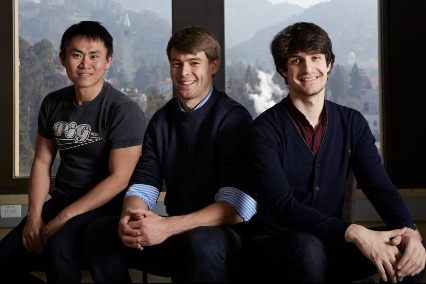
The company has a name for the experience that shaped it: “Dinner Table Syndrome.” It is not a clinical diagnosis. It describes the familiar social geometry of exclusion - one person at the table, present but continually a sentence behind. Duchemin met co-founders Skinner Cheng, who is Deaf, and Pieter Doevendans. Their vantage points differed. The practical problem did not. They wanted captions in ordinary, unscripted conversation, without the expense or lead time of booking a professional for every meal, shop visit or impromptu meeting.
One microphone cannot hear a room
Ava’s 2016 iOS and Android launch used a clever piece of choreography. Participants connected their smartphones; each device became a microphone near its owner. The caption reader could then see the conversation with speaker names attached. The app arrived in time for Thanksgiving, a launch date unusually well matched to the problem. No family gathering waits politely for a product team to finish a setup wizard.
That first design choice explains much of Ava’s position in the market. A video platform can caption its own call. Ava set out to follow a person across settings: the kitchen, the classroom, the browser, the conference room. Today its mobile app handles face-to-face talk; Ava Web and Ava CC put captions on computer audio, calls and video; Ava Connect joins meetings on Zoom, Google Meet or Microsoft Teams and takes audio directly from the call. Color-coded speaker identification helps answer the question buried inside every group transcript: who said that?
There is also a response problem. A person can follow a captioned question and still need a way to answer. Ava provides typed responses that can be spoken aloud, and has described an expanded text-to-speech product called Ava Voice. The feature makes the design more reciprocal. Accessibility that only lets a person receive words is a rather one-sided conversation.
The price of the next sentence
Ava’s business model follows the difference between a spontaneous chat and an eight-hour workday. The mobile app offers free captioning for everyday use. Organizations buy Pro or Enterprise licenses for longer sessions, support and administration. Ava Scribe adds a professional captioner who corrects machine-generated words in real time. Ava advertises up to 99% accuracy for Scribe. The public pricing page lists Scribe charges by plan and usage, and directs larger organizations to sales; a single universal price would give a misleading impression of the bill.
Who pays is part of the story. Ava says employers and academic institutions should sponsor access for employees and students, and its advocacy team helps users make that case. The company named Nokia, Autodesk, Air France, the State of California, USDA, George Washington University and UCLA among customers in its 2022 funding announcement. The market stretches across workplaces, education, health appointments, retail interactions and events. The same software can be a personal aid one minute and an institutional service the next.
“I grew up the only hearing kid in a deaf family.”Thibault Duchemin, announcing Ava 1.0
Investors saw a business in that range. Ava announced an early $1.8 million round alongside its 2016 launch, a $4.5 million seed round in 2020, and a $10 million Series A led by Khosla Ventures in 2022. Its own Series A announcement put total funding then at $16.5 million. In a 2022 interview, Duchemin said revenue and client count had grown roughly tenfold over the preceding 18 months. That is a company-reported period of growth, not a current run rate. A year later, Ava CC received a Special Recognition award in the Microsoft Store App Awards.
The microphone still gets a vote
The awkward truth about automated captions is that performance begins before the algorithm. Ava’s help center recommends placing a microphone within 12 inches of the speaker. In a noisy restaurant, move closer or find a quieter spot. For a lecture, put a microphone on the presenter. For a group, connect more phones or use a setup that separates speakers. These are small instructions, but they explain why an accuracy number, stripped of its conditions, is almost useless.
Ava’s own Android rebuild made another limit visible. The new app entered beta in 2024 with faster captions and new features, while some familiar group-conversation functions were still rolling out. That is the trade-off of a product trying to work in many contexts: improvements in one place can temporarily leave a gap somewhere else. The current desktop SpeakerID feature, meanwhile, is described as a beta for up to five speakers and works best with clear audio. A crowded room remains a hard room.
None of this makes captions disposable. It makes the design more interesting. Built-in call captions, Google Live Transcribe, professional CART and sign-language interpreters are all alternatives for different situations. Ava’s particular bet is portability across settings, combined with speaker separation and the option to bring in a human Scribe. In a low-stakes chat, instant machine captions may be enough. In a medical consultation, an exam or a consequential work meeting, the cost of a wrong word rises. The company’s product ladder lets a user choose accordingly.
The idea readers can borrow is smaller than building a speech-recognition company. Ask who actually needs the information, how close the microphone is to the voice, whether the text names the speaker, and who can fix an error while the conversation is still alive. Ava’s best product insight was not that every word would be perfect. It was that people should not have to wait until the conversation is over to join it.