The local taxi office has acquired an unexpected houseguest: Uber. Not necessarily on the sign outside, or even on the passenger’s screen. Through Autocab, the Manchester software company it bought, Uber sits behind the booking desk and can supply some of the work arriving there. A fleet can keep its own identity, answer its own telephone and accept journeys originating with the company many passengers treat as the alternative to calling a cab.
That arrangement is the most interesting thing about Autocab. Its cloud software handles the chores that turn a request into a paid journey: booking, dispatch, driver communication, passenger updates and accounts. Its iGo marketplace connects operators with additional demand. Together, they make Autocab both an operating system for the taxi office and a route to work beyond its usual patch.
The distinction matters. A dispatch screen can organise an existing queue. A marketplace can help fill one. Combining them offers local fleets a way to modernise without spending their lives persuading everyone to download yet another app.
The app its customers did not want
Autocab learned where its customers drew the line. In its 2021 merger assessment, Britain’s Competition and Markets Authority recorded that the company had previously launched a consumer-facing app. Uptake was low. Taxi customers complained that their software supplier was competing with them. Autocab withdrew it.
That is a more revealing episode than a shelf of awards. Selling tools to a business does not automatically earn permission to pursue its customers. The retreat helps explain today’s emphasis on apps carrying an operator’s brand and on an optional network of demand partners. The fleet’s relationship with its passengers remains something worth protecting.
The company had spent decades getting close to those operators. Founded in 1989 by computer scientist Dr Falah Abod, Autocab began with an early dispatch prototype he built over a weekend, according to its account in a Manchester Digital interview. Equipment was sold from his garage. Its history then runs through vehicle data terminals, Ghost dispatch software in 2011 and cloud systems in 2015. It records completing its SaaS transition in 2019.
Uber announced its acquisition agreement in August 2020, promising that Autocab would retain its own board and focus on taxi technology. The CMA cleared the deal in March 2021. It examined whether Uber could disadvantage fleet customers through poorer software or demands for data, and concluded that credible alternatives remained available. Regulatory clearance did not erase the commercial tension. It established that customers had somewhere else to go.
Hardware gave way to subscriptions. The network added another reason to stay.
A dispatch desk with fewer loose ends
Autocab’s expertise is in the untidy middle of a taxi journey. Its booking and dispatch system gathers requests from the phone, passenger app, website and corporate accounts. Operators can configure how jobs are assigned, including whether priority goes to the nearest car or the driver who has waited longest. Multiple companies can be managed from one screen.
Those choices are operational policy expressed as software. The nearest driver may mean a quicker pickup; a waiting-time rule addresses a different concern about distributing work. A fleet needs settings that fit its market, rather than a beautiful map that silently imposes someone else’s rules.
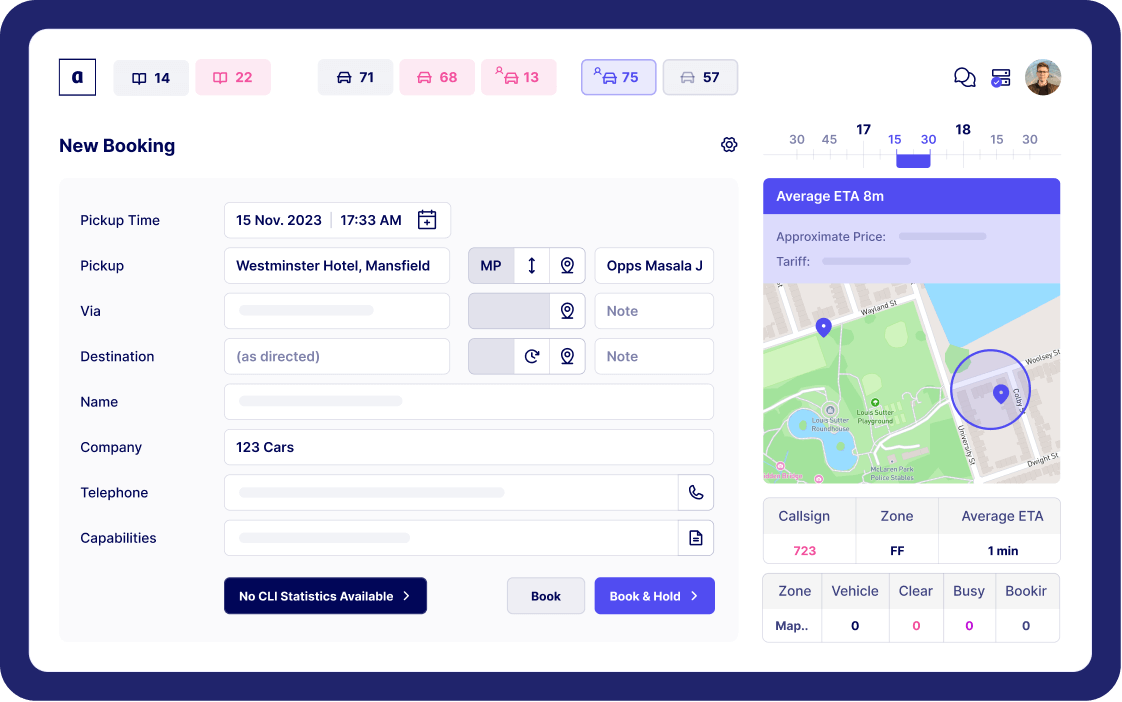
Phantom, its telephone product, is particularly telling. It includes automated voice booking, interactive voice response and a feature that recognises a returning caller’s number to supply a vehicle update. The endlessly familiar “Where’s my taxi?” can become a system response. Drivers and passengers can also be connected without exposing their telephone numbers to each other.
The Driver Companion app puts job information, earnings reports and document uploads on iOS and Android devices. Destination mode offers jobs with pickups toward a driver’s chosen destination. The passenger-facing products provide booking and tracking; the Accounts Portal deals with corporate trips and billing. Each tackles a different interruption that might otherwise return to the office as a call, a message or a piece of paper.
Vancouver needed the accounts to catch up
Black Top & Checker Cabs supplies a useful example because its problem was specific. In Autocab’s case study, the Vancouver operator’s accounts management and dispatch systems did not fit together well. The resulting administrative friction made it harder to respond to customers and compete.
The operator chose Autocab for closer accounting integration, support for market-based fares and usability. It adopted the Accounts Portal. Implementation still required adjustments to North American dispatch processes: a reminder that software built around one taxi market does not arrive fluent in every other one.
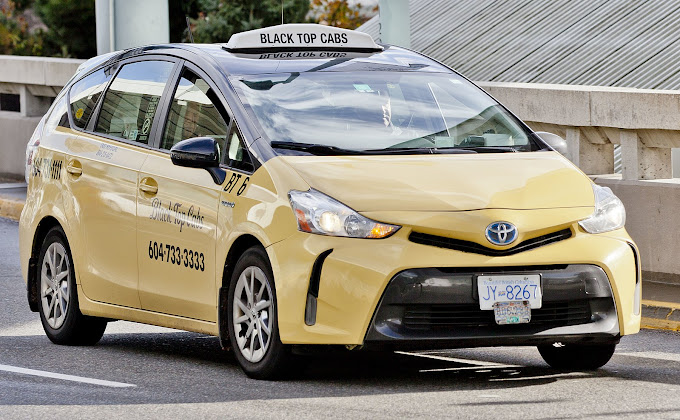
The case study reports faster dispatch, greater flexibility and a move from paper to digital account processes. These are vendor-published outcomes, rather than independently measured savings. The useful lesson is the order of operations: identify the broken connection, configure the regional workflow, then judge whether staff have less work to repeat.
Scale introduces another test. In October 2025, Autocab announced an agreement with zTrip covering a planned rollout to 3,600 vehicles in 40 cities across 20 US states. The rollout was phased. That figure describes the announced scope, not proof that every vehicle had already migrated or that earnings had risen.
“We’re working hand in hand with the Autocab team to ensure a smooth, phased rollout of the platform.”
Bill George · WHC Worldwide founder
zTrip partnership announcement, October 2025
A network only earns its keep when cars are available
iGo supplies Autocab’s clearest commercial distinction: additional demand delivered into the same system that dispatches a fleet’s existing work. Operators select the demand partners they want to use. Autocab describes participation as optional. That choice is essential to its pitch, particularly when one possible partner is also its owner.
In January 2026, the company announced that Legion Cabs had become the first Australian taxi fleet to connect to Uber demand through Autocab. Legion, with around 175 vehicles in Sydney, had adopted the platform in early 2024. The new connection brought Uber requests into the dispatch environment its drivers already used, alongside established work.
Phone · app · web · accounts
Including Uber via iGo
Schematic: participation does not guarantee local demand or profitable trips.
The economic logic is straightforward: a useful extra booking can occupy time that would otherwise be idle. But more requests are only helpful if drivers can serve them on acceptable terms. A fleet already short of cars at the evening peak has a capacity problem. Additional demand alone cannot solve it. Pickup distance, fare, timing and existing commitments still decide whether a job is attractive.
Autocab also faces direct software competition. iCabbi offers cloud dispatch, configurable fleet management and passenger and driver products. Simply being in the cloud is therefore a weak basis for choosing between them. The stronger comparison is how each handles a fleet’s actual work, and whether Autocab’s demand connections are useful in that particular town.
The price is in the workflow
Autocab sells subscriptions to operators, with sales conversations and demonstrations shaping the purchase. Its demo page specifically addresses fleets with 30 cars or more. Its iGo page says access to demand generators comes at no extra cost; buyers should distinguish that access statement from the commercial terms attached to individual journeys.
The sensible cost comparison includes more than the software invoice. An operator should map configuration, migration, training, telephony, payment arrangements and ongoing support against the work being replaced. A cheaper contract can become poor value if dispatchers must keep re-entering information or accounts staff spend afternoons reconciling journeys by hand.
A practical demonstration starts with awkward jobs. Put through a recurring account booking, an airport collection with a delayed arrival, a cancelled trip and a busy-period allocation. Follow each through to the driver and the invoice. That exercise is an editorial recommendation, not a claim about guaranteed savings. It makes the buying decision measurable in the language of the office.
The small changes drivers actually notice
Autocab’s recent product work is refreshingly concrete. Its March 2026 E-Booker redesign followed user feedback and observation. Payment selection moved earlier in the booking process; operators gained adjustable airport arrival buffers and different advance-booking limits for cash, card and account trips. For card-only systems, passengers could obtain a quote without first registering.
In August, Autocab described a floating fare meter for Driver Companion+ on iOS, keeping the meter visible within the app while drivers navigate. September’s passenger-app update highlighted pickup verification codes, live journey sharing and rules for particular locations. These are modest changes to moments where confusion can make a journey harder.
The people behind that work now have Frans Hiemstra as CEO, according to Autocab’s current team page. Its published employment offer includes hybrid working and up to four weeks working from anywhere each year. Those policies are more concrete evidence of the advertised workplace than the usual claims about being a family.

For a fleet owner, Autocab’s appeal ultimately rests on two questions: can it remove work from running the business, and can it bring in journeys worth doing? The failed consumer app is a useful restraint on the ambition. Local operators buy technology to strengthen their businesses. Autocab earns its place when the familiar name on the taxi still has a business worth running.
Follow the next journey
EXPLORE AUTOCAB
WATCH THE PRODUCTS ON YOUTUBE