In March 2020, an international business lesson began with a closed border. Arizona State University’s Executive MBA students had planned to visit Seoul. As COVID-19 spread, the school brought in Austral Group to arrange an alternative in Peru. Then Peru closed its borders, too. The replacement trip was canceled the day before the class was due to leave.
By March 2021, the practicum had become a five-day virtual program. Students met international business and healthcare leaders and joined cultural activities from home. One participant, Ronny Horvath, noticed a practical advantage: without journeys between venues, the group could hear three or four presentations daily instead of roughly two. The first thing to fail had been the itinerary. Access to people could survive.
- Business schools buy managed learning programs, company access and local coordination.
- Student consulting projects typically run 2-6 months; participating companies are offered them at no cost.
- The useful output can be a pricing model, market evidence or a continuing professional relationship.
The scarce thing is a useful conversation
Austral’s business makes more sense once you separate the plane ticket from the encounter. Founded in 2005 by Shaun Sheffield, the company designs international learning programs for universities and corporations. It combines company visits, faculty-led sessions, consulting assignments, cultural experiences and the considerable work of getting everybody to the right place.
Its buyers include business schools running MBA and EMBA programs, other university cohorts, and corporate teams seeking executive learning. Students get opportunities to question people running businesses. Faculty get an applied setting for their curriculum. Program administrators get help coordinating accommodation, transport, speakers and local support. Each group needs a different piece of the same week.
Austral reports relationships with more than 300 universities and operations in more than 50 countries. Those are company figures. The more revealing detail is its locally embedded education teams: relationships and cultural knowledge are part of the delivery system. An institution can organize a trip itself, but building that network takes work. That combination places Austral between educational travel and applied learning, with program design and business relationships forming part of what institutions buy alongside practical coordination.

A real problem needs an owner
A consulting engagement stretches the learning beyond a visit. Austral’s published process starts with faculty and program specialists agreeing on scope, workload, timing and deliverables. Companies propose projects; the university selects them. Before students begin, faculty and company leaders discuss expectations.
Teams receive company information and agree on milestones. They work with an identifiable company contact, supported by Austral, and finish with a presentation, questions and, where required, a written report. Company leaders evaluate the work. The full consulting format typically runs two to six months, with remote, in-person and hybrid options.
That sequence is something a reader can copy: find a decision worth making, appoint someone who owns it, agree on evidence and schedule feedback before the final presentation. A broad instruction to “study our business” leaves too much room for a handsome answer to an irrelevant question. A bounded assignment gives both sides something to test.
- 01Define
the decision - 02Match
the team - 03Review
the evidence - 04Present
and refine
Free advice still requires a budget
Austral advertises these student consulting partnerships to participating companies at no cost. The commitment includes briefing students, answering questions and reviewing their work. The company supplies a problem and access; the students supply analysis. Faculty help keep the educational work on course.
The institutional side involves paid program contracts. One public Dublin City University award names Austral as the winner of a €425,000 field-trip management contract, concluded in July 2025. Its scope describes an Executive MBA engagement visit to New York involving company meetings, academic visits and cultural activities. That is a contract value, rather than a student ticket price or a standard package rate.
The distinction matters. A host company’s free project and a university’s managed international program sit on different sides of the arrangement. Travel coordination, teaching objectives and executive access all have to be reconciled within the institutional budget.
Institutional services contract; concluded July 2025.
The buyers were on the telephone
Consider Luciérnaga, a Panamanian lighting business preparing for North American expansion. In Austral’s September 2026 account, student consultants called retail buyers and interviewed lighting distributors. They found a mismatch: a business built around architects and designers had an online presence weighted toward consumers.
The recommendation was to align the website with business buyers. The team also built an Excel model for production costs, wholesale discounts and pricing. Direct conversations supplied a reason to reconsider the digital approach. A spreadsheet made the recommendation usable.
Another Panamanian company, Effluz, worked with Rice University and American University students on its move into Spanish literacy materials. Some consultants did not speak Spanish, which helped them examine the books as beginners. According to the company’s account, a former Rice student later joined Effluz’s board.
“For you in your university, this is a project, but for us, it’s our life.”Taylin Luzcando / Founder, Effluz
Some questions refuse a tidy ending
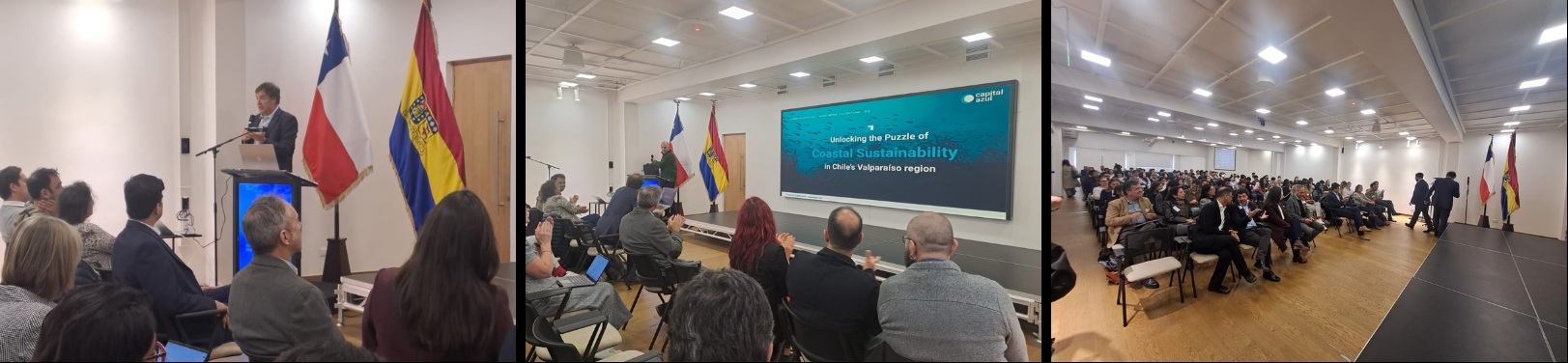
In September 2026, Austral described 80 Imperial Business School MBA students working on ten challenges in Chile’s Valparaíso Region. Their brief covered issues including wildfire recovery, historic funiculars, marine protection and port development. They met residents, officials and other local stakeholders. The stated aim was to reframe problems and test possibilities, rather than claim to solve them in a week.
The practical limits follow from the method. A company needing an immediate operational decision may struggle with a semester-long timetable. Teams need information, responsive contacts and faculty involvement. A short visit can expose competing interests; sustained implementation still belongs to the organizations living with those interests.
The work behind the encounter
Austral’s London Business School risk-management interview supplies the less photogenic detail: vetted transport, suitable accommodation, local medical arrangements, translation and escalation procedures. Those tasks shape whether a professor can concentrate on teaching. Local access has value only if the group can use it safely and reliably.
Travel also carries an environmental cost. Austral says it favors lower-emission transport where possible, offsets its corporate footprint and is improving measurement of program emissions. It describes itself as a Certified B Corporation. Those commitments deserve to be read alongside its acknowledgment that a fuller emissions-reduction plan is still being developed.
A useful measure of this kind of education is what remains after the group leaves: a better question, a model somebody uses, a relationship that continues. Austral’s proposition depends on arranging encounters substantial enough to produce those things. The destination gets students through the door. The work gives them a reason to stay interested.