The difficult number in Augusta Hitech’s account of an enterprise carve-out is 269. That is how many issues the business reported after migration. Before that came the impressive logistics: 94 applications, more than 200 integration pipelines, six months to separate a business without interrupting it. Then the new arrangement had to survive ordinary working life.
- Augusta combines enterprise engineering with its own AI products.
- Its territory is the handoff: between inbox and ERP, requirements and tests, old systems and new operations.
- The useful lesson: make the business stable before making it different.
94 applications, then the hard part
In its published account, Augusta says it resolved 223 of those 269 issues while avoiding disruptive downtime. It connects that support work to a follow-on transformation commitment valued above $1.1 million. These are the company’s figures for an unnamed client. The number describes a subsequent engagement, rather than the original migration bill.
The interesting detail is the distance between launching a system and making an organization comfortable using it. Enterprise software has to carry payments, customer service, and operational routines across a change in ownership. The people answering the support queue participate in the acquisition as surely as the people signing its documents.
Augusta occupies this practical corner of technology. Its company profile describes more than 200 engineers working across product, cloud, data, and automation engineering. The firm’s pitch emphasizes getting from a business problem to a development-ready process with fewer organizational delays. That is a promise a buyer can test: ask who maps the process, who builds it, and who answers when it stops.
The email that never reached the ledger
Consider the gap Augusta targets with Sirena. A buyer sends a purchase order. The supplier replies with a different quantity or delivery date. The financial system contains the original order; the change sits in somebody’s inbox. Until a person reconciles them, two versions of the transaction coexist.
Sirena is designed to extract the supplier’s response, compare it with the order, and flag discrepancies. Its scope extends into invoices, sales correspondence, and receivables. The published design gives agent outputs a confidence score and reason, directing uncertain results to a person before they affect a financial workflow. Goods-received records come from the ERP or warehouse system, rather than being invented from email.
“Your ERP can’t see what’s happening in email”Augusta Hitech’s description of Sirena
That boundary makes the proposal intelligible. A useful assistant should distinguish what a supplier said from what a warehouse received. The practical benefit for procurement and finance teams is less hunting through messages, with attention reserved for exceptions that need judgment.
- 01Supplier email
- 02Extract + compare
- 03Review uncertainty
- 04Governed record
Seven layers, one practical wager
The underlying system is Genesis, Augusta’s modular enterprise AI architecture. Its seven layers cover interfaces, integrations, agents, models, workflows, security, and data connections. Models supply part of the intelligence; the surrounding machinery gives it somewhere useful to go.
The company presents Genesis as something that connects with an existing stack. That matters to organizations already running substantial ERP and CRM environments. Replacing everything requires a different decision from improving one expensive workflow. Augusta’s modular proposition lets a buyer start with a specific task and consider broader integration afterward.
Its enterprise systems services include Salesforce lifecycle work, CPQ, SAP and JD Edwards modernization, and the middleware connecting customer-facing applications to operational systems. That places Augusta among engineering and integration providers, with proprietary software alongside the services. Buyers can also consider internal teams or capabilities available within their existing platforms.
The test has to remember the promise
Another product, Hadal, applies the same connecting instinct to software delivery. Augusta describes a system spanning business requirements, design checks, builds, and testing. Its materials also identify it as TestQ AI. Video walkthroughs and business documents become inputs to a workflow intended to preserve the original intent as work passes between teams.
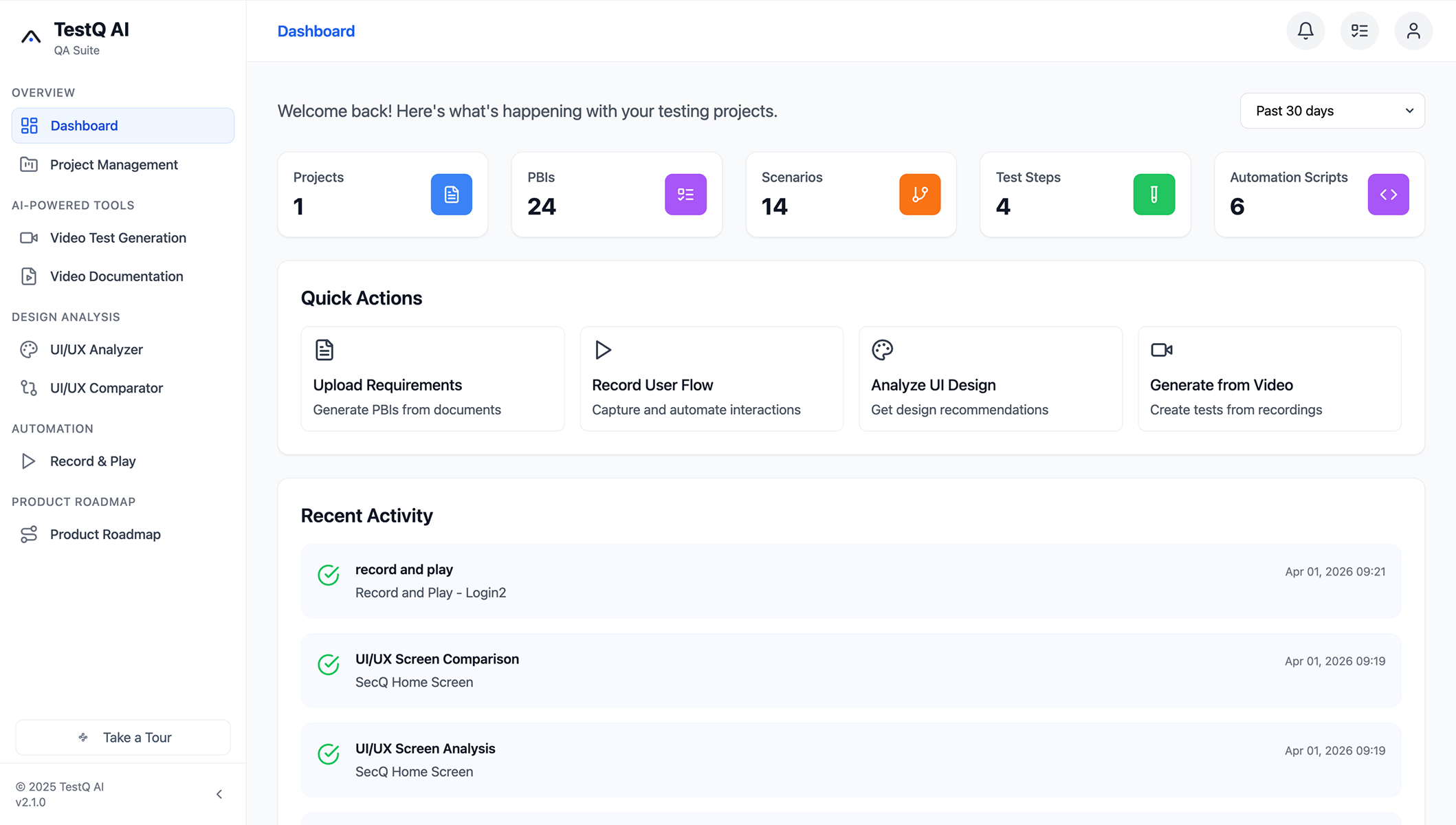
The problem is familiar even outside software. A requirement gets explained, translated, implemented, and checked. Each translation can lose something. Hadal’s advertised output includes manual test cases and automation scripts, with support for Playwright, Cypress, and Selenium. The buyer’s question is whether those tests still express the business requirement after it changes.
SecQ AI tackles a different queue: vendor security questionnaires. It combines response automation with a Trust Center for sharing documents such as SOC 2 reports and FAQs. Its named audiences include SaaS providers, banks, healthcare organizations, and compliance teams. Here, too, the commercial opportunity begins with repetitive information exchange.
First make the business run
Augusta’s most transferable idea appears in its M&A guidance: “Stabilize First, Transform Second.” In one account involving hundreds of servers and more than 300 terabytes of data, it describes consolidating legacy ERP systems into a standalone SAP environment before pursuing the larger Oracle Cloud transformation. Operational continuity and redesign become separate jobs.
A manufacturing example explains what can change a platform decision. Plant consolidation made the existing, heavily customized SAP arrangement a poor fit for the new operating footprint. Augusta describes retaining SAP for corporate finance and reporting while putting plant-level operations on Oracle Cloud. Financial objectives shaped the architecture. Data translation, timing, and error handling then became essential integration work.
That example also exposes the condition for success. Two systems need agreed meanings for product codes, transactions, and responsibility when something fails. Without those agreements, adding a platform adds another reconciliation job. The same test applies to AI: identify the authoritative record, name the exception owner, and decide when a person must intervene.
Augusta sells engineering, integration, advisory work, and ongoing support alongside its software. Its public positioning emphasizes long client relationships and collaboration across disciplines. The appeal is clearest for organizations whose complexity already consumes substantial staff time. A simpler business may have less need for a custom integration program.
The purchase order is a useful place to end. It looks complete on a screen. Somewhere else, a supplier has changed the terms. Augusta’s business lives in the distance between those two facts.
Augusta Hitech · LinkedIn · X · Facebook · Knowledge Hub · Hadal overview & demo