BREAKING Fauna Bio mines 452 mammal genomes for human medicine Eli Lilly deal reportedly worth up to $494M NASA funds hibernation-in-space research Ground squirrel heart rate: a few beats per minute CEO Ashley Zehnder: boarded avian vet + Stanford PhD 20+ papers in Cell, Nature, Nature Medicine BREAKING Fauna Bio mines 452 mammal genomes for human medicine Eli Lilly deal reportedly worth up to $494M NASA funds hibernation-in-space research Ground squirrel heart rate: a few beats per minute CEO Ashley Zehnder: boarded avian vet + Stanford PhD 20+ papers in Cell, Nature, Nature Medicine
Founder File Ashley Zehnder, co-founder and CEO of Fauna Bio
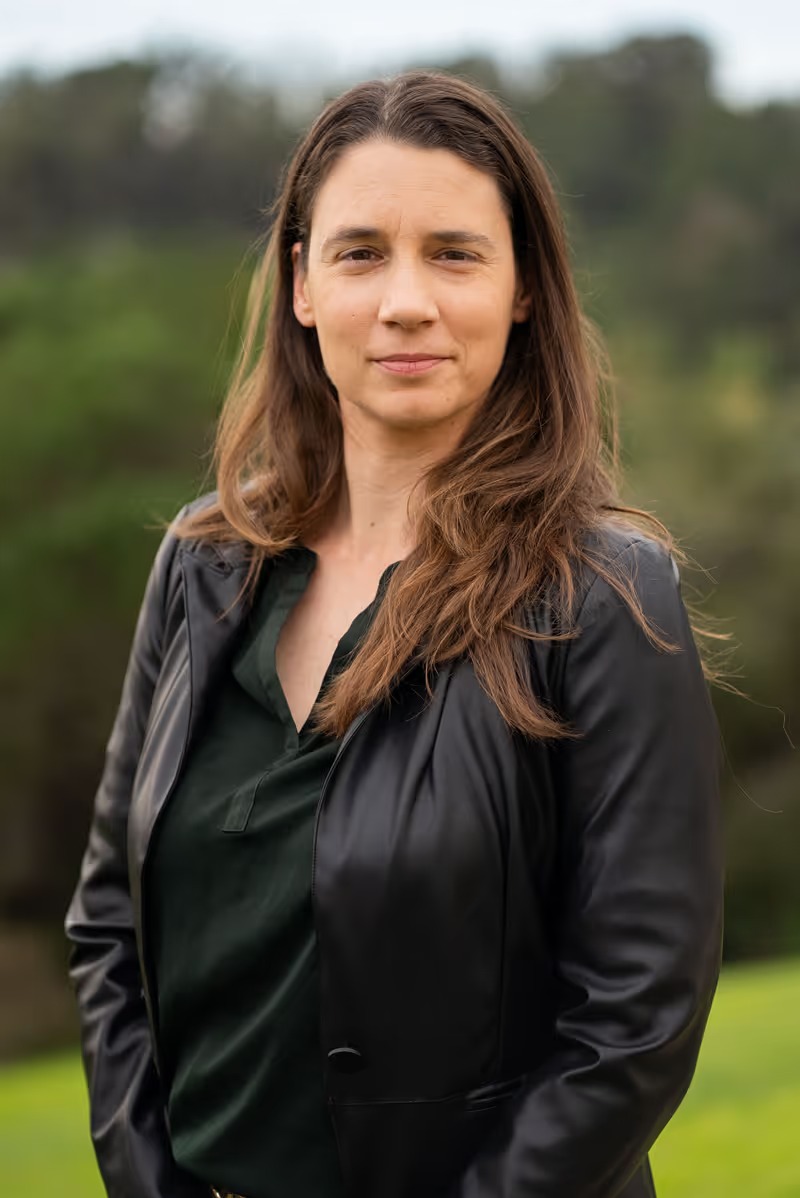
Ashley Zehnder, photographed for Fauna Bio. She trained to heal parrots. She ended up rewriting the rules of drug discovery.
Berkeley, California - The Genome Edition

Ashley Zehnder

The vet who looked at a hibernating squirrel and saw a pharmacy. Co-founder and CEO of Fauna Bio, she reads 80 million years of evolution for drugs that already work.

The Pitch

Nature already ran the experiment. She just reads the results.

Most drug discovery starts with a sick mouse in a lab. Ashley Zehnder starts somewhere stranger: a 13-lined ground squirrel that drops its heart to a few beats a minute, triples its body fat, shrugs off insulin resistance, and wakes up in spring with no damage done.

That animal solved problems pharma has chased for decades - obesity, muscle wasting, metabolic collapse - and it did it across millions of years of evolution. Zehnder's company, Fauna Bio, exists to find those solutions in the genomes of "extreme mammals" and translate them into targets for human drugs.

It is a contrarian bet, and she knows it. The entire biomedical machine was built around a handful of standard lab species. Fauna Bio looks at the other 6,000-plus mammals - the ones that hibernate, regenerate, resist disease - and asks what they know that we forgot.
How did we figure out that genes cause cancers? It wasn't by studying human cancer. It was by studying the Rous Sarcoma Virus. - Ashley Zehnder, on why animals matter to medicine
452
Mammal species in the platform
65
Hibernators studied
$494M
Potential value, Eli Lilly deal
20+
Peer-reviewed papers
The Origin

A parrot, a chemo drip, and four words that built a company

Picture the scene. A Stanford PhD interview. The candidate is a boarded avian veterinarian who has, in the course of her work, given chemotherapy to a red-lored Amazon parrot.

A senior cancer-biology faculty member studies her resume, looks genuinely puzzled, and asks the question that would reroute her life:

"Birds... get cancer?"

The disbelief in that question landed hard. Here was one of the smartest people in oncology, and he had no idea that a parrot could grow a tumor - or that studying it might matter. Zehnder realized the biomedical research complex rested on a quiet, flawed assumption: that only humans suffer "human" diseases.

She has spent the years since closing that gap. Animal medicine and human medicine, she argues, are very often the same thing wearing different fur.

EXHIBIT B

Healer, age 7

She volunteered at a vet clinic as a child - the antiseptic smell, the anxious dogs and cats - and decided then to "speak for the animals that cannot speak for themselves." She entered vet school at the University of Florida at 20.

The Star Witness

What a hibernating ground squirrel does that you can't

During deep torpor, the 13-lined ground squirrel becomes a different machine. Then it reverses every change without harm. Fauna Bio reads the genes that flip those switches.

Metabolic rate in torpor1-9% of normal
Heart rate in torpora few beats / min
Metabolic surge during arousal~400-fold spike
400x
Fuel switch: carbs → fatnear-total

SOURCE: Fauna Bio research on the 13-lined ground squirrel - the company's emblem of "extreme mammals."

The Machine

From animal DNA to a drug target

01 / BIOBANK

Collect the survivors

An animal biobank captures tissue and omics data from extreme mammals - hibernators, regenerators, the disease-resistant.

02 / CONVERGENCE AI

Read the patterns

The Convergence platform uses graph neural networks across genomics, proteomics and transcriptomics to find traits conserved all the way to humans.

03 / CENTAUR GRAPH

Connect to disease

The Centaur knowledge graph links extreme animal traits to human disease pathways, surfacing targets a drug could actually hit.

The biomedical research complex was built on a flawed assumption: that only humans suffer "human" diseases. - Ashley Zehnder, on the gap between animal and human medicine
The Moonshot

Hibernating astronauts. Yes, really.

If a squirrel can survive five months of near-stillness without losing bone, muscle or its mind, that talent is worth a lot to a space agency planning a trip to Mars.

Fauna Bio's hibernation science drew NASA funding through the STASH project - Studying Torpor in Animals for Space-Health in Humans - which explores whether torpor could protect the body during long-duration spaceflight, including against the bone loss, muscle wasting and cosmic radiation that make deep space so hostile.

The same biology that could treat obesity on Earth might one day let humans sleep their way across the solar system.

The Path

Clinic to genome to boardroom

A child healer became an exotic-animal vet, became a cancer biologist, became the CEO arguing that evolution is the best drug-discovery lab ever built.

AGE 7
Volunteers at a veterinary clinic. Decides to become a healer.
2001-2005
DVM at the University of Florida - entering vet school at 20.
RESIDENCY
Trains at Manhattan's Animal Medical Center; Companion Exotics residency at UC Davis.
2009-2015
PhD in Cancer Biology at Stanford. The "Birds... get cancer?" moment.
POSTDOC
Joins Carlos Bustamante's lab at Stanford alongside future co-founder Linda Goodman.
2018
Co-founds Fauna Bio with Katie Grabek and Linda Goodman. Becomes CEO.
2019
Research collaboration with Novo Nordisk on obesity therapeutics.
2023
Eli Lilly collaboration on obesity targets, reportedly worth up to ~$494M.
2024
NASA early-stage grant funds hibernation-in-space research (STASH).
In Her Words

The case for reading nature first

How did we figure out that genes cause cancers? It wasn't by studying human cancer; it was by studying the Rous Sarcoma Virus.

A melanoma in a dog doesn't behave the same as it does in a corn snake or on the toe of a rabbit.

I wanted to speak for the animals that cannot speak for themselves and become a healer.

The biomedical research complex was built on a flawed assumption: that only humans suffer "human" diseases.

The Co-Conspirators

Three scientists, one heresy

Fauna Bio was born in a Stanford lab from three complementary minds. Zehnder brought the clinical eye of a veterinarian. Katie Grabek, the CSO, brought a PhD in human medical genetics and years studying the proteomics of hibernation. Linda Goodman, the CTO, brought computational biology from Cambridge and Harvard and time at the Broad Institute reading mammalian genomes.

Together they pitched a then-radical idea: that data from "non-traditional animal models" could improve human health. The investor base that bought in skews toward longevity and deep tech - the same circles that backed Loyal, Rubedo, Mammoth Biosciences and BillionToOne.

RECOGNITION

On the record

SF Business Times "Women Who Lead in Life Sciences." An "Emerging Woman Founder in Bio" from the Wave Summit. The face of Fauna Bio for the Fortune AI Minute. Mentor to founders through On Deck Longevity Biotech and Nucleate Bio.

THE NETWORK

Advisors who know wild genomes

The bench includes Broad Institute vertebrate-genomics director Dr. Elinor Karlsson and veteran hibernation researcher Dr. Sandy Martin - people who already speak the language of extreme mammals.

The Margins

Five things that make her hard to file

Pass It On

Share this profile