Arvinder Pal Singh was barely a year into building Enquero when he found himself discussing scale in New Orleans. The panel had the conveniently ambitious title “Building Scale.” A young company could hardly have asked for a more pointed assignment. First, build something. Then explain how it will get bigger.
His short May 2015 note about the RevAmerica event sounds pleased to be in the conversation. A month later, announcing Enquero’s new website, he offered a more personal assessment of the preceding year: a “long year of experiential learning for me.” He was enjoying the journey. He was glad of the team. And, he wrote, “the work has merely begun.”
Read those early dispatches beside his later career and a useful thread appears. Singh keeps choosing the busy territory between an enterprise’s technological ambitions and its ability to put them into practice. The business cards change. The work keeps requiring software, judgment, and people willing to understand one another.
A first year, before the finish lines
Before Enquero, Singh had worked at Infosys as a senior partner. He attended Punjab Engineering College. His move into entrepreneurship in 2014 therefore came with an existing acquaintance with enterprise technology and consulting. The new undertaking gave that experience a company of its own.
Enquero began in Silicon Valley in April 2014. Its remit brought together data engineering, analytics, digital engineering, architecture, and enterprise applications. Those are capacious descriptions, but they point toward a practical customer: the large organization with systems to connect, decisions to improve, and rather more moving parts than a product demonstration suggests.
There is charm in that first-anniversary website announcement precisely because it is an ordinary piece of company life. A founder invites friends to visit. A team has something new to show. The scale of the eventual business is still ahead of the writer. His attention is on learning the job while doing it.
- 2014Enquero begins
- 2021Joins Genpact
- 2023AuxoAI begins
- 2026Series A announced
Software with people attached
A revealing detail from Singh’s Enquero years is his involvement in conceiving PowerMe, the company’s flagship product. His interests included data catalogs, integrated analytics, and the combination of services and software. He used the compact term ServWare for that last pairing. Technology does enjoy saving syllables, occasionally at the expense of the reader.
The pairing matters to his story. A consulting business learns through customer problems. A software product asks which parts of the answer can be made repeatable. Someone interested in both is working across two different demands: understanding the particular organization and building something that can travel beyond it.
Singh’s product involvement adds that dimension to a career otherwise easily described through executive titles. He was thinking about the means of delivery as well as the delivery team. The interest would have a recognizable echo in his next venture, where engineers work with a proprietary workbench. The continuity is an editorial reading of his work, rather than a claim that the two products are the same.
In a discussion of business data transformation, Singh also emphasized the ease of connecting information across an enterprise. Gathering everything into one large platform was less compelling to him than making those connections work smoothly. It is a useful distinction for understanding his outlook. Storage has a location; useful information has a journey.
That perspective gives the catalog interest some context. A business user needs to locate information and understand its relationships before drawing conclusions from it. The work involves arranging access and meaning, with enough confidence for somebody to act. Singh’s attention to that connective work helps explain why products and consulting both appear in his professional story.
January 2021: a change of scale
On January 5, 2021, Genpact announced that it had acquired Enquero. Singh would continue leading the business, and Enquero’s employees would join Genpact. The company would carry the description “a Genpact company.” An acquisition can turn a corporate name into a rather crowded sentence.
Singh explained the attraction in terms of reach: Genpact brought industry knowledge, process experience, a global footprint, and a large customer base. His short verdict was that joining was the logical next step. The rationale concerned what the combined organization could deliver to more customers.
That helps explain the transition as an operating decision. Enquero had built capabilities around data and cloud technology. Genpact wanted more depth in those areas. For Singh, the next chapter included continuing responsibility for the business he had helped create. The announcement made the acquisition a beginning for that work inside a larger organization.
“Joining Genpact is the logical next step for us.”
Arvinder Pal Singh · January 2021
Even the Jedi need reliable data
By September 2022, Singh was appearing as Genpact’s global business leader for data services. At Cypher, his session addressed modern DataOps and the passage from insight to action. It is a wonderfully revealing stretch of professional territory: the point where knowing something is supposed to change what an organization does.
He gave the subject a less solemn entrance in a LinkedIn essay published that month. Luke Skywalker, Yoda, and Harrison Ford appeared in a discussion of data operations. His recalled customer conversations concerned information that could not readily be found, used, or managed. Even a galaxy of computing power has trouble with a missing address book.
The technical argument brought three practices together: organizing reliable data flows, maintaining machine-learning models, and applying analytics to IT operations. The illustration below condenses that argument. It also shows why his attention kept returning to the work around a system. A model depends on data; a working service depends on maintenance; a decision depends on trust.
The humor is a small but useful clue to his public voice. He is willing to give a dense subject a familiar story. Readers may arrive for the Jedi and leave thinking about data pipelines. That is a respectable transaction for a technical essay.
The sentence to leave unsaid
Ask a chief executive about success and the answer can quickly acquire a suit of armor. Singh’s 2021 answers were more approachable. He emphasized perseverance, learning, family time, and a team excited about growth. He wanted colleagues to be comfortable offering ideas without feeling judged.
The sharpest moment came when he was asked what a business leader must avoid saying. His answer: “That I am smarter than you.” It is an admirably economical way to remove a familiar managerial temptation from the room. Expertise becomes rather less helpful when everyone else is expected to applaud it.
These were his stated values, and they illuminate how he wanted to lead. They also supply a human context for all the discussion of architecture and delivery. A company that depends on people understanding a customer’s problem needs those people to speak. His family, he said, helped him improve; his colleagues gave him energy. Learning, in that account, was a social activity.
Starting again, closer to the work
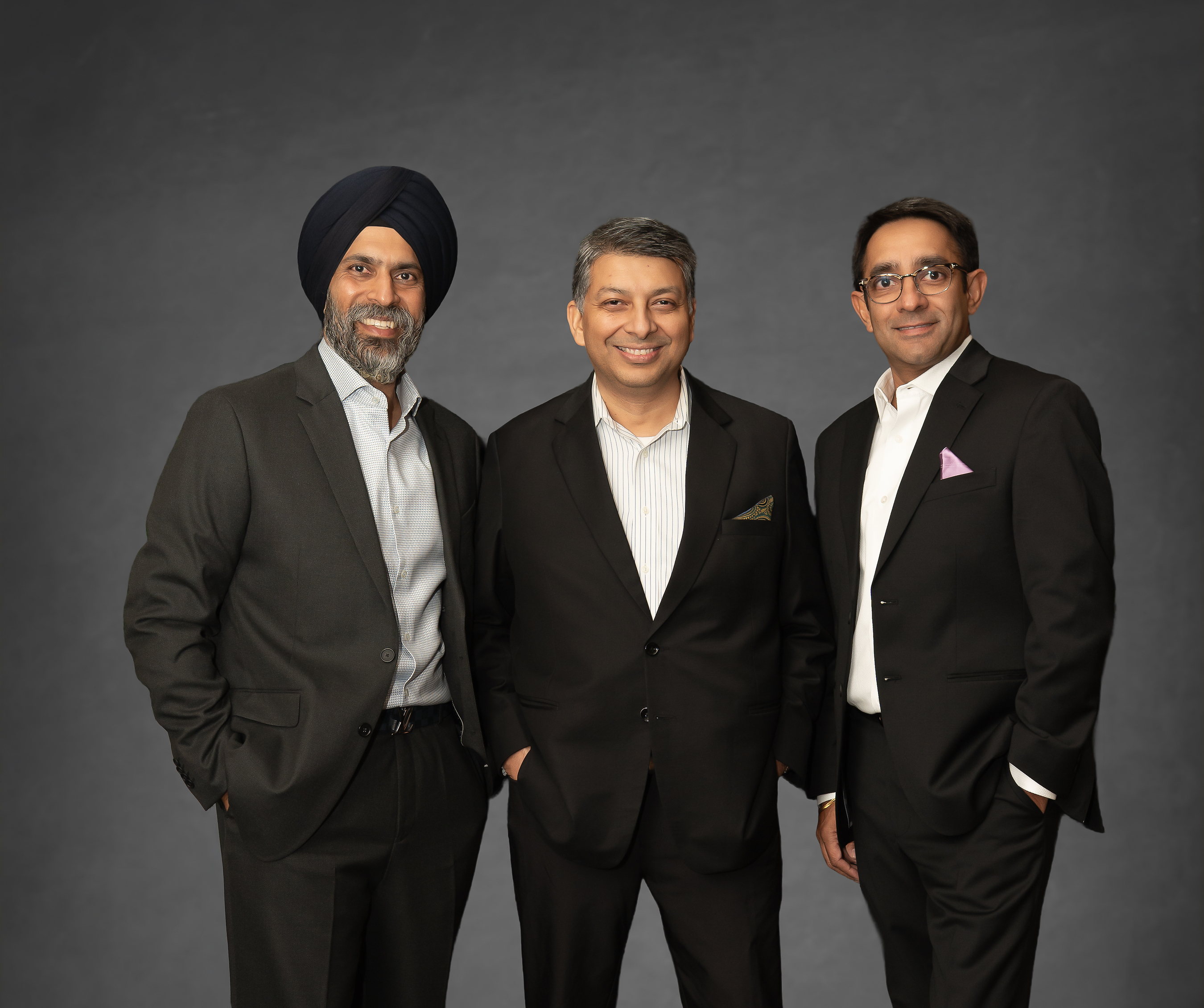
In 2023, Singh co-founded AuxoAI with Amaresh Tripathy and Kabir Singh. Its current team page places him in the San Francisco Bay Area. It is another enterprise technology venture, this time organized around bringing AI into the way large businesses operate.
AuxoAI describes a model in which strategists and engineers work alongside customer teams, following a problem through discovery, design, deployment, and adoption. The appeal is continuity. The people learning why something matters remain close to the people making it work. Anyone who has watched an explanation deteriorate as it passes through successive meetings can appreciate the ambition.
The company operates across the United States, Europe, and India. Its delivery approach makes proximity a matter of understanding the work, even within a global business. For Singh’s career, this offers another version of a longstanding concern: how to connect technical capability with the organization expected to use it.
There is software inside this delivery model, too. Damia, AuxoAI’s workbench, combines reusable skills with a layer of enterprise knowledge and context. In the company’s description, the latter captures how decisions are made, exceptions handled, and functions connected. The practical premise is that some of an organization’s most useful knowledge lives in people’s understanding of their work.
That knowledge has to be discovered before it can support an automated system. Damia is intended to preserve and reuse it. Here, the earlier interest in services alongside software becomes relevant again: customer work produces understanding, and software gives some of that understanding a more durable form.
What the next chapter has to prove
On October 20, 2026, AuxoAI announced a $20.7 million Series A led by NTTVC. The company said it had worked with more than 40 clients. The new capital would support its deployment teams, proprietary technology, and wider presence. For Singh and his fellow founders, the announcement gives the next stage resources and a fairly clear assignment.
Series A led by NTTVC
The interesting part now lies in execution. Can the understanding gained close to customers survive growth? Can the software preserve what teams learn without losing the details that made it useful? Those are questions raised by the model itself. They are also familiar territory in a career that has repeatedly put products beside people.
Return to the founder announcing a website in 2015. His company had completed a year; he felt he had completed an education of sorts. The later milestones have grown considerably larger. His early observation still fits the present assignment. There is another business to build, another set of customers to understand, and plenty of work left to begin.