In the photograph, the robot is blue, the workshop is bright, and Arnaud Mournetas is standing beside a manufacturer. It is 31 March 2026 at ST Group’s premises in Labège, near Toulouse. Beside him is Stéphane Trento, the company’s president. Around them are the machines of a business that makes composite parts for aerospace, defence and space. A stock exchange might seem an unlikely visitor. For Mournetas, the setting brings the argument into focus.
ST Group would become the first company to complete an initial public offering on Lise, the exchange he co-founded. The offering opened in April and raised €2.07 million. The amount is modest beside the transactions that usually dominate financial headlines. At a manufacturer, however, the relevant scale is the next stage of the business. Money has jobs to do before it has a headline.
Mournetas had spent the preceding decade helping build companies and ways to finance them. He co-founded the startup studio Redstart in 2016. Kriptown followed in 2018. Lise grew out of that financing venture. His current role is co-founder and managing director of Lise, and the factory photograph offers a useful way into the story: start with the business the financial machinery is supposed to serve.
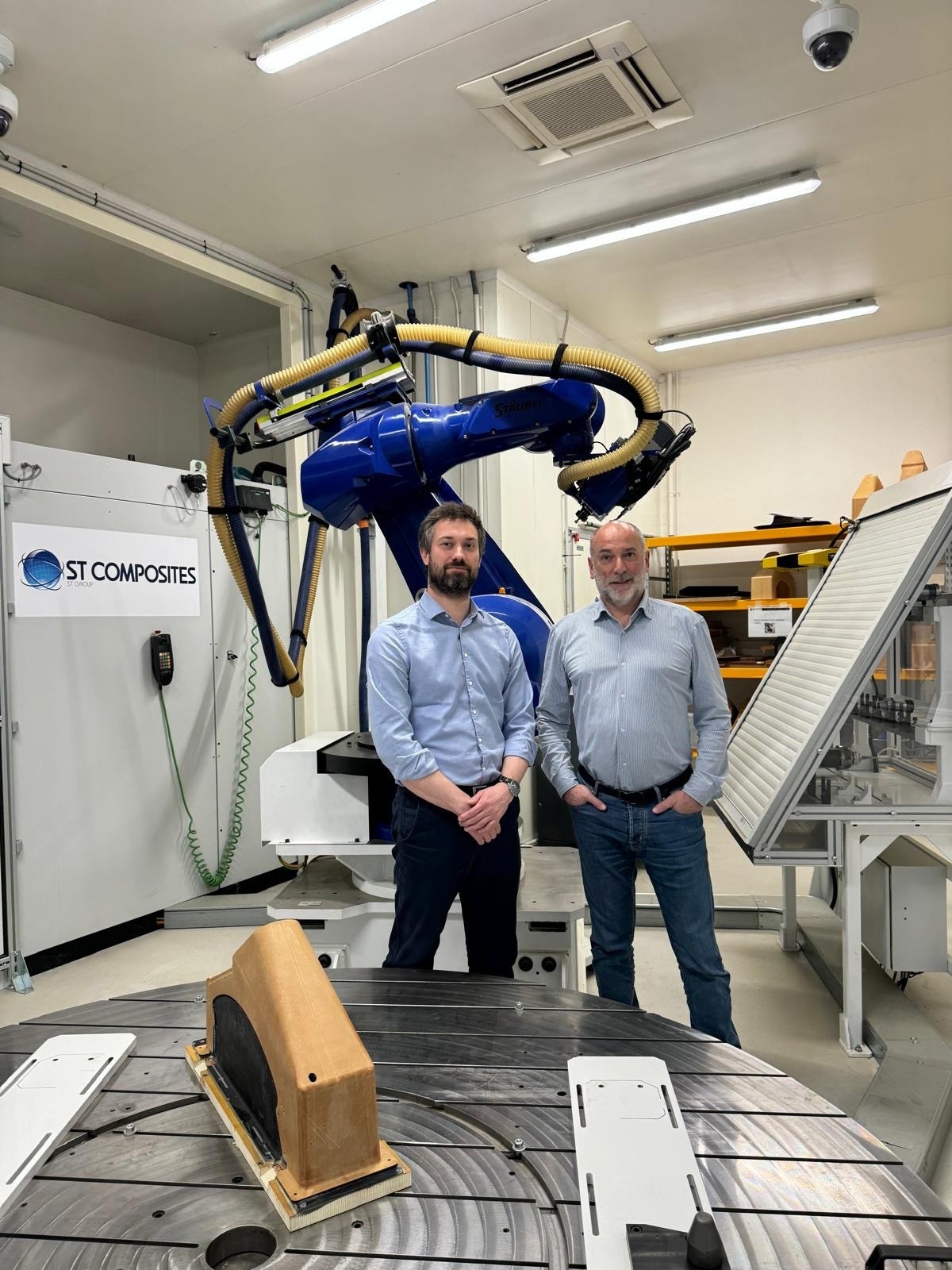
Before the exchange, the workbench
His own first venture involved applications for polymer materials, started while he was still a student. He subsequently worked in consulting. His education includes a specialized master’s in entrepreneurship at Arts et Métiers; his professional profile dates that study to 2011-2012. There is an industrial thread here before the arrival of stock-market vocabulary.
In 2015, he was credited among the Theano Advisors contributors to research on growth models for the French food industry. The subject was an established industry facing questions about markets and competitiveness. It makes a useful early marker in a career that would repeatedly return to how businesses find room to develop.
With Redstart, he and his partners took on the beginning of that process. The studio’s own description is unusually literal about participation: an operating team joins the founding effort. Its contribution includes time, expertise and a network, exchanged for equity. The work extends into commercial development, finance, recruitment and company structure. Someone must still deal with the less photogenic parts of having an idea.
“Before looking for ideas, we look for people.”
Arnaud Mournetas · translated from French, 2024
The practical details give that sentence its weight. Redstart’s 2023 program laid out successive phases for matching ideas with entrepreneurs, testing assumptions, securing first customers and developing the business. Its support continued into financing and, later, monitoring its holdings. Each stage asked the company to become more substantial before the next commitment.
Ownership made the arrangement consequential. In the model Mournetas described in September 2024, Redstart took a 15 percent stake while entrepreneurs retained a large majority. That is a dated description of the model, rather than a quotation for every future deal. It nevertheless shows the bargain clearly: the studio’s operating contribution carried a share of the outcome.
Time and operating expertise, exchanged for a share in the company.
A classroom across the Mediterranean
The work also crossed into Tunisia. RedStart Tunisie lists Mournetas among its founders, alongside CEO Douja Gharbi and Fathi Trigui. Its relationship with the French studio connects entrepreneurs with expertise, mentors and investors. The organization has developed regional points of contact in El Kef, Kairouan and Gabès, bringing support closer to businesses beyond the capital.
Mournetas participated in the 2020 launch webinar for Red’Innov, a program supporting Tunisia’s innovation ecosystem. His contribution placed the entrepreneur and the team at the centre of a company’s prospects. That emphasis fits the person-first approach he later described at Redstart. Here it had an audience facing the practical demands of starting and financing businesses.
He also co-led a workshop on business-angel financing with Clément Pétiot, a co-founder of Betterway. The published agenda covered the investor’s role, negotiations, shareholder agreements and exits. These are useful subjects for a classroom precisely because they can become awkward subjects around a negotiating table. Enthusiasm is easier to share than a carefully worded agreement.
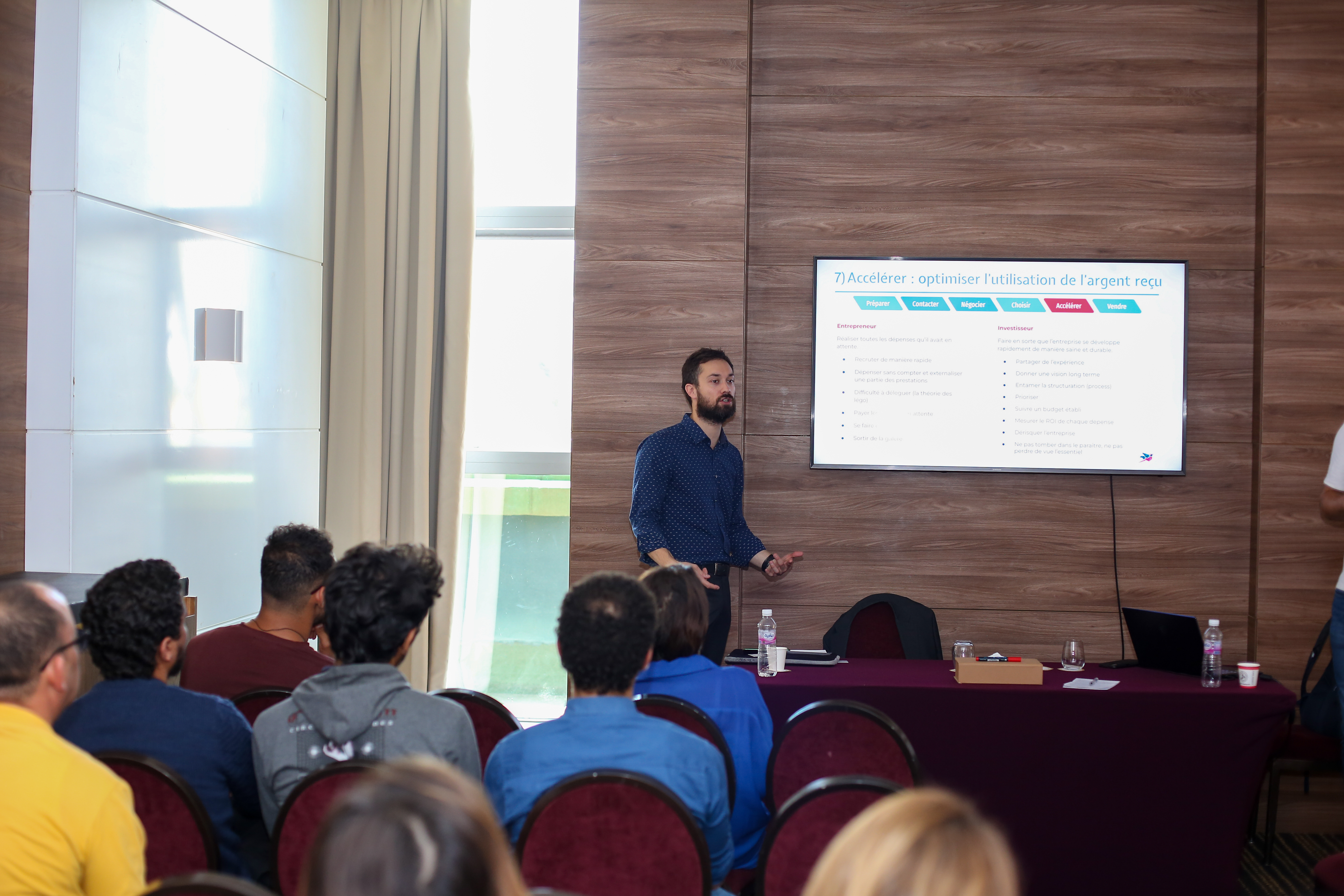
In the workshop photograph, Mournetas stands beside a screen explaining how to use money after receiving it. It is a pleasingly practical sequel to the fundraising announcement. The participants face him from rows of chairs. The picture captures one of the tasks that recurs across his work: making the mechanics of financing understandable to the people who have to use them.
The eight years inside an announcement
The financing venture had its own long apprenticeship. In a retrospective posted in 2024, Mournetas dated his meeting with Mark Kepeneghian, Jérémy Lachaud and Mathieu Esteve to 2017. They shared a concern about a missing financing route for smaller companies. Kriptown launched the following year and began its first financing operations.
The subsequent milestones arrived at a less theatrical pace than a launch announcement suggests. Investors came in during 2019. Seed financing from ACCURAFY4 followed in 2022. A €4.2 million Series A was announced in 2024, with BNP Paribas, Bpifrance and Centilux joining the capital. Mournetas’s retrospective put eight years of work behind that announcement, beginning with Redstart.
The sequence matters. A team had to form before a platform could begin operating. Financing operations preceded later funding rounds. Those rounds supported the work toward a stock exchange. The polished account of a venture can put every milestone on the same line; the calendar insists on putting years between them.
- 2016Redstart begins
- 2018Kriptown launches
- 2024€4.2m Series A
- 2025Lise authorization
- 2026First company IPO
The partners matter throughout that progression. Mournetas’s present title at Lise is managing director; Kepeneghian is its co-founder and CEO. Redstart’s connection with the venture is part of its history, but a market infrastructure requires its own team, shareholders and authorization. The career becomes more interesting when the other people remain in the frame.
Permission to build the market
In October 2025, Lise announced authorization to operate its distributed-ledger trading-and-settlement system. The project had moved into regulated market infrastructure. Its institutional shareholders include BNP Paribas, CACEIS and Bpifrance. For an entrepreneur working toward a new financing route, obtaining the ability to operate was a consequential step before inviting companies onto it.
Lise combines trading, settlement and securities custody within one infrastructure. In plain terms, the system brings together finding a buyer or seller, completing the exchange of money and shares, and maintaining the ownership record. It offers continuous trading and instantaneous settlement. The unfamiliar term, tokenization, describes the digital form of the financial instrument on the ledger.
The shares retain their legal rights as shares. That detail is helpful when the technical vocabulary threatens to take over the conversation. The company still has shareholders. It still has a business to run. The infrastructure changes how securities are issued, held and exchanged. Its relevance to Mournetas’s earlier work lies in making another financing path available to operating companies.
- 01TradeMatch buying and selling orders
- 02SettleExchange shares and money
- 03RecordMaintain securities ownership
The commercial test sits beyond the technical description. A smaller business must decide whether a listing suits its plans. Investors must decide whether they want to own its shares. An exchange supplies a mechanism for those decisions to meet. Mournetas’s work reaches toward that meeting, where a complicated infrastructure has to explain its usefulness in ordinary business terms.
The first listing has a factory
ST Group supplied a concrete first case. Its April 2026 offer concerned new ordinary shares in tokenized form, priced at €18.25 each. The company sought equity to support its development in aerospace, defence and space. The completed raise of €2.07 million gave Lise a transaction whose result could be examined, alongside the ambitions that preceded it.
The distinction between an offering’s target and its completed result matters. A proposed maximum describes what might be raised; the final amount records what investors subscribed. Here, the completed financing is the milestone. The company’s production, orders and subsequent decisions carry the story forward after the subscription period closes.
Raised in the first completed IPO on Lise.
By September 2026, the explanation was continuing in front of an industrial audience. Lise published a video of Mournetas’s presentation at SEPEM Industries on financing SMEs through the stock market. There is a recognizable continuity with the Tunisian workshop: technical arrangements become something a business owner can consider, question and compare with the demands of a particular company.
His trajectory now spans the beginning of a business and the point at which an established company seeks another means of growing. Redstart supplied operating participation. Kriptown developed a financing platform. Lise brought the effort into the stock market. Each chapter has its own people and institutions; all three put the company’s next stage at the centre of the work.
Return to the factory photograph. Mournetas and Trento stand in front of machinery, with no trading screen in sight. The picture gives the financial argument an address and a scale. An exchange has arrived at a business that makes things. Once the offering is over, the business gets back to making them.