Arcads is for the marketer who does not need another brainstorm. They need twelve versions of the brainstorm already approved. Give the web app a script, choose an AI actor, and it generates a vertical, creator-style video without a shoot, a couriered sample or a string of messages asking whether the talent can redo line three. The practical promise is less glamorous than “replace production.” It is: make enough plausible ads to discover which opening sentence earns another second of attention.
That distinction matters. Arcads began as a focused AI UGC generator and has grown into a broader creative workshop. The current product advertises more than 1,000 actors, custom avatars, product placement, voice and emotion controls, translation, captions, image and video models, an editing layer, a canvas for repeatable workflows, an automated agent and ways to create through an API or MCP client. It is moving from vending machine toward production desk.
Who should put this on the company card?
The cleanest fit is a performance team selling an app, subscription, course, lead-generation offer or other product that can be explained by a face and a voice. Co-founder Romain Torres said in a 2025 interview that most customers sold digital products, even though physical-product brands also used the platform. That makes sense. A person can convincingly describe an invoicing app without physically interacting with it. A generated hand applying eyeliner, opening a fiddly package or holding a device at the correct angle has more ways to betray the trick.
Agencies are another natural buyer. One approved script can be cast across ages, voices and settings, then localized for several markets. The workflow suits weekly creative testing: change the hook, actor or delivery, keep the offer fixed, and send the survivors to the media buyer. Arcads’ MCP connection takes that logic into Claude and other compatible clients, while its API supports teams that want generation inside an existing pipeline.
A founder seeking one flagship launch film should be more cautious. So should a local business whose credibility depends on a recognizable neighborhood, actual technician or genuine customer. A slightly rough real person can carry context that an immaculate synthetic presenter cannot. Arcads is at its best when iteration has economic value and the brand can tolerate a few uncanny takes on the cutting-room floor.
The workflow, without the confetti
Arcads’ model shelf now includes names such as Seedance 2.5, Sora 2 Pro, Kling, Nano Banana and GPT Image. The point of that menu is not model collecting. Different jobs need different machinery: a talking actor, a product still, an extended scene, an alternate camera angle. Studio provides direct control, Agent tries to assemble the finished ad, and Create Workflow lays the pieces on an infinite canvas for teams that repeat the same recipe.
The company also advertises actor swapping, background removal, transcription, voice changes, upscaling and translation into more than 30 languages. Its December 2025 funding announcement used the figure “more than 35.” Treat localization as a production accelerator, then have a native speaker check idiom, pronunciation, claims and subtitle timing. Fast wrong copy travels just as quickly as fast right copy.
The YesPress reality meter
Pricing: the missing public scene
There is no public pricing table on Arcads’ main marketing site. Current help documentation instead describes the allowance: Starter carries 8,000 monthly credits and Creator 16,000. Credits on those plans reset at renewal and do not roll over. Higher Pro, Scale and Business tiers can roll unused credits forward while a subscription stays active, with overage billing and lower per-credit rates at volume. The company’s terms say API access requires a customized offer.
Independent 2026 pricing reports commonly place Starter around $110 per month and Creator around $220, often estimating roughly ten and twenty conventional talking-head videos respectively. Promotional screens have shown lower amounts, and newer models can consume credits differently. Those numbers are a planning range, not a promise from Arcads. Check the in-app paywall and the credit charge for the exact model, duration and output you intend to use.
| Option | Where it wins | Watch before buying |
|---|---|---|
| Arcads | Large actor library, ad variations, multi-model workflow | No public price list; generation misses can make iteration costly |
| Creatify | URL-to-video and performance-ad automation | Compare avatar style and final-edit requirements |
| HeyGen | Presenter video, avatars and localization | Broader communications focus than paid-social testing |
| Higgsfield | Stylized generation and camera-led visual concepts | May require a different assembly workflow for UGC ads |
| Human creator | Real product handling, lived detail and accountable testimony | Slower coordination, usage rights and reshoots |
Buying rule: calculate cost per ad you are willing to launch, not cost per file generated. If five renders produce one usable clip, that survivor carries the price of all five.
What the reviews are really arguing about
Public feedback splits along a familiar fault line. Product Hunt shows 4.7 out of 5, but from only three reviews. Early commenters praised the scalability and idea while others objected to paying before trying. A 2025 Indie Hackers user called Arcads “one of the best options on the market” yet still reported odd character movement and said it did not solve their problem. Recent Trustpilot and Reddit posts include sharper complaints about support, refunds, lip sync, long generations and the loss of unused credits.
These are user reports, not controlled tests, and several discussion threads attract recommendations from rival tools. Still, the pattern is useful. Buyers care less about whether Arcads can generate an impressive demo than whether it can reliably produce usable variations under deadline. The company’s July 2026 documentation says failed technical generations can be reimbursed and explains how to track cash refunds or credit reimbursements. Read those rules before a campaign is due, not after a stuck render.
Buy it when
- You ship paid-social creative every week.
- You already know the audience and offer.
- Talking-head variations are a proven format.
- Localization or API automation saves real labor.
Pause when
- You need one hero video, not a testing batch.
- The product must be handled perfectly on camera.
- You cannot review every claim and visual artifact.
- An unclear monthly credit value makes budgeting hard.
The curious little company behind the crowd
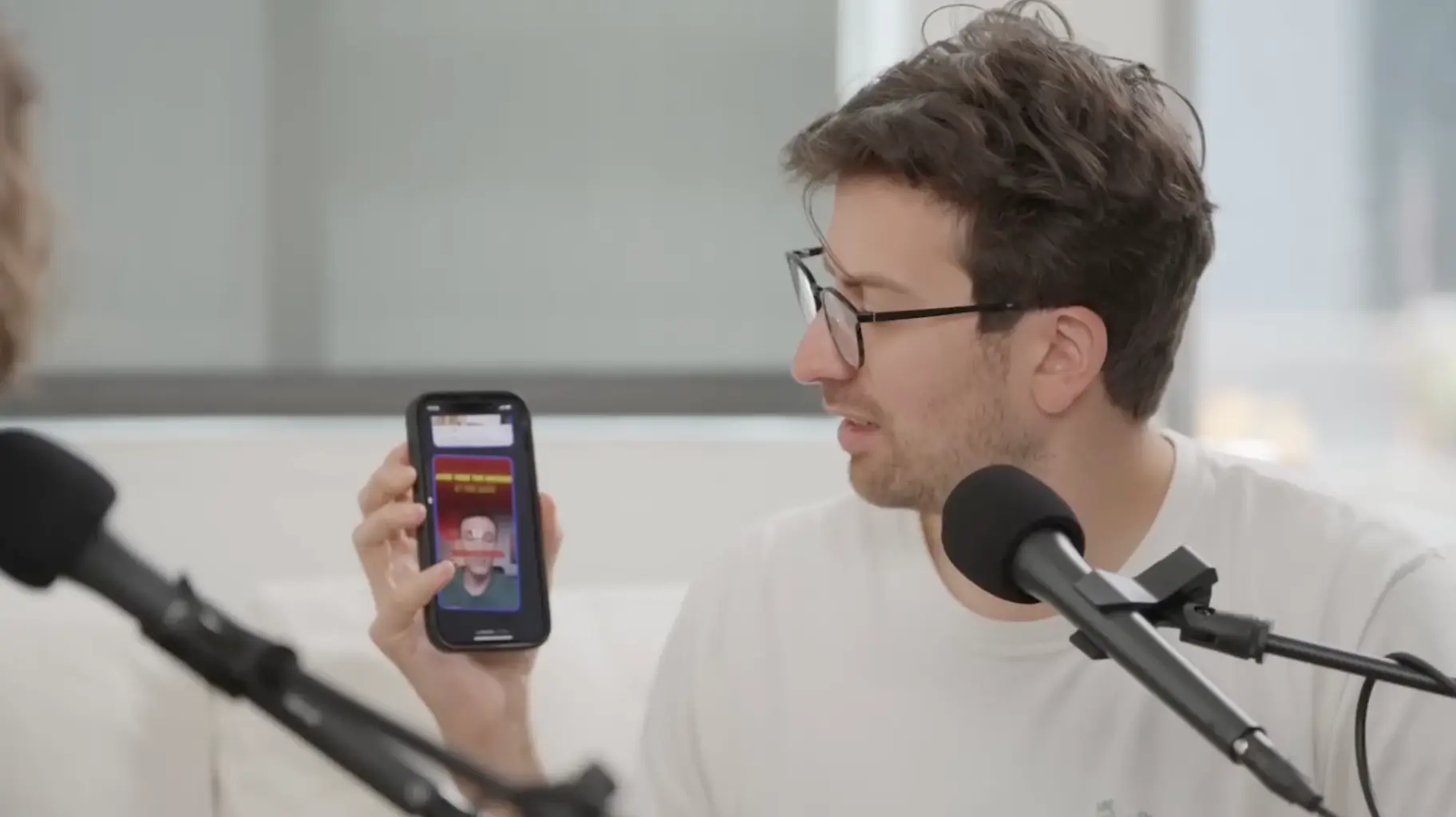
Arcads was founded by Dylan Fournier and Romain Torres after their experience running WeFast, a women-focused fasting app. Paid acquisition taught them that consumer software could devour creative faster than a small team could shoot it. Torres has recalled sending an early prospect a Google Drive link to an AI-made ad and asking what they thought. The first customer arrived in January 2024.
The internal operation sounds like a mirror of the product. In a May 2025 interview, Torres described roughly 100 automated agents supporting a team of about five engineers. One watched competitors’ Facebook ad libraries, transcribed new ads, rewrote ideas with ChatGPT and delivered them to Slack. By November 2025 he reported $10 million in annual recurring revenue, more than 6,000 customers and eight staff. In December, legal operator FRESHR SAS announced a $16 million seed round led by Eurazeo, with Alpha Intelligence Capital and others participating, plus plans for a San Francisco office.
That growth does not settle the creative debate. It does reveal why Arcads feels so specific: it was made by operators who regard ads as a stream of experiments rather than miniature films. For the right team, the product removes calendars, cameras and casting from dozens of low-stakes iterations. The human work moves upstream into strategy and downstream into judgment.
Final take
Arcads is easiest to recommend to mature performance marketers with evidence that spokesperson ads work for their product. They can exploit the huge cast, batch variations, localization and growing production toolkit while treating weak renders as normal testing waste. It is harder to recommend as a first experiment for a cash-conscious founder. The lack of public pricing and standard try-before-you-buy path asks newcomers to purchase before they know whether a particular actor, language or product interaction will hold up.
The smart trial is deliberately small. Bring three strong hooks, one narrow audience and a plain offer. Generate controlled variations, inspect them on an actual phone, and compare their cost per usable asset and campaign result with a real creator, a static ad and one competing tool. Keep the winner. Retire the synthetic cast if the audience can see the strings.