The register looks like a modest place to build a software business. Names, dates, a mark against each child. Yet that daily ritual opens onto almost everything a school needs to know: who is missing, who needs help, which families need a call and which figures must reach the trust office. Arbor Education has spent its life following those connections. Its proposition is simple enough to fit on a staffroom noticeboard: stop making people do the same administrative work twice.
The company’s current about page reports more than 12,500 schools and 930 multi-academy trusts. That reach puts Arbor deep inside the machinery of British education. Teachers take registers, office teams contact parents, leaders investigate attendance and trust staff compare schools. The business sells the software beneath those activities, then adds more of the activities around them.
Its ambitions now stretch across HR, finance and timetabling. There is also AI to draft messages and process absence voicemails. The interesting question is how much of an ordinary school day that combination can return to the people working it.
A school is a surprisingly complicated office
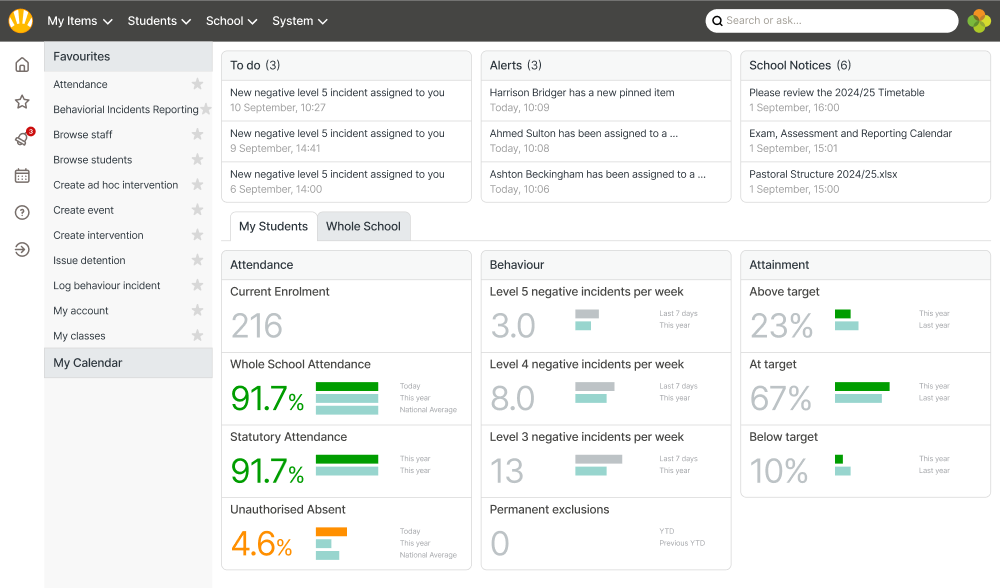
Arbor’s School MIS, or management information system, keeps student and staff records alongside attendance, behaviour, assessment and reporting. It also handles the surrounding transactions: meals, trips, clubs, payments and messages home. Its customers include primary, secondary and special schools, with provision for alternative provision and pupil referral units.
The point of bringing these jobs together is the connection between them. A register feeds attendance information; staff can examine that information alongside a pupil’s wider record. A trip can connect bookings with parental consent and payment. The office has fewer places to reconcile, while teachers and leaders can see relevant information through their own access permissions.
Arbor sells three school packages: Core, Comms and Perform. Core covers everyday MIS work; Comms adds parent-facing tools and payments; Perform includes functions such as interventions, classroom management and staff performance. Buyers need to match the package to actual work. A feature sitting unused behind a login does not save anyone an afternoon.
Already in the cloud. Still ready to leave.
Hinchingbrooke School offers a useful antidote to the idea that moving online solves everything. In an account published by Arbor in October 2022, the comprehensive, then described as having 2,000 students, was already using a cloud MIS. Staff nevertheless felt restricted by it. The trust wanted every school on one system, creating an opportunity to reconsider how the secondary worked.
What had stopped working was the fit between the software and staff’s ambitions. The account describes an MIS underpinning everything from registers to safeguarding and interventions. Simply recreating the previous setup would have missed the point. The school treated the switch as part of its longer-term aims.
“Don’t get married to an idea or a principle of a product.”Hinchingbrooke School’s account of switching MIS, published by Arbor, 2022
That is the useful lesson to copy: bring a troublesome task to the demonstration and ask someone to complete it. Then ask what happens next. Arbor competes in a market that includes SIMS, Bromcom and Compass. Its connected products and trust tools deserve examination, but a familiar brand or an attractive interface cannot settle the buying decision.
The trust wants the same answer from every school
A multi-academy trust has another problem: several schools can produce several versions of the same answer. Arbor’s MAT MIS offers central dashboards, school-level detail, attendance thresholds and tools for applying policies across sites. Trust staff can create common user-defined fields and inspect census completion without chasing every school separately.
The appeal is organisational. A central team can establish consistent reporting while still drilling into individual pupils and schools. BI connections and a managed data warehouse extend that work for trusts with more demanding analytical needs. The software is most useful when the organisation agrees what it wants to measure and who should act on the result.
Record
School attendance
Compare
Trust-wide patterns
Follow up
Staff review and action
Support is part of the product’s practical value. Arbor’s partner directory includes NYES Digital and HFL Education. NYES describes hands-on assistance, staff training and help with census processes. A school can buy cloud software and still want somebody on the phone who understands its calendar, terminology and particular variety of panic.
Then Arbor bought the next set of problems
Arbor launched its MIS in 2011. By October 2024, it was presenting a school management suite spanning Arbor MIS, Arbor Finance, TimeTabler and SAMpeople. The expansion followed a clear line through the back office: schools must manage money, allocate teaching time and employ people as well as maintain pupil records.
The July 2024 acquisition of SAMpeople and FusionHR was especially revealing. Arbor’s announcement acknowledged that MIS products did not provide the people-management functionality growing trusts needed. Some customers were still managing teams with spreadsheets or paper. The acquired businesses combined HR and recruitment software with a payroll bureau, advice and consultancy.
This was a change in the scope of Arbor’s answer. Specialist knowledge would sit beside the MIS. Arbor also said SAMpeople would remain available to schools using other MIS products, and Arbor customers could keep other HR systems. The suite’s promise depends on useful connections between products, with room for schools’ existing choices.
Arbor Finance is positioned for local-authority-maintained schools, while TimeTabler addresses the specialist scheduling job. Together, these products give Arbor more reasons to be involved in a school’s working week. They also give buyers more integration details to check.
The bill has more than one line
Public procurement documents make Arbor’s business model unusually tangible. Its 2024/25 licence schedule priced primary Core at a £2,100 base plus £3.15 per pupil; Comms at the same base plus £6.30; and Perform at the base plus £10.50. These are historical published rates, not a September 2026 quote.
The same schedule separately lists onboarding and training services, including £2,500 for secondary onboarding over 12 weeks. Scale discounts complicate comparisons further. The sensible budget covers the licence, the transition and any services the school needs to run the system confidently.
Arbor’s 2024 ROI report suggests where savings can come from. Respondents reported eliminating an average of 2.3 third-party systems; school staff reported saving 71 minutes a week. Its methodology records 397 respondents to a business-manager and operations survey and 6,909 to a broader user survey, with response rates of 5.5% and 3.4% respectively.
Those are customer-reported results from voluntary surveys. They offer useful evidence of experience, rather than a guaranteed return for the next buyer. Arbor’s January 2026 numbers page promotes a separate 117-minute weekly saving. These figures should not be plotted as a measured improvement without comparable methods. For a school, the cleaner test is to time its own tasks before and after adoption.
AI meets the absence voicemail
Arbor’s AI ambitions are easiest to understand through Auto Absence. The feature listens to absence-related voicemail, transcribes and translates it, and prepares the record for staff approval. That places automation in a recognisable morning chore, with a person still reviewing the result.
Other AI functions draft communications, summarise student information and suggest report formulas. Ask Arbor lets users ask questions about information in the system. Arbor says access follows user permissions and that its agreements prohibit providers from using customer data to train their models. For school leaders, these controls belong alongside the demonstration of what a feature can produce.
The company won the 2026 Bett Award for AI in Education - Workload Reduction. Its head of AI, Stephen Higgins, previously worked as a secondary teacher and middle leader. After earlier years on Arbor’s product team and a period working on other data and AI products, he returned in 2024. His published roadmap focuses on automation and helping staff interpret information.
There are still decidedly manual details in the wider system. Arbor’s 2026/27 migration guidance supports one- or two-week timetable cycles. It warns that imported lessons with multiple staff may arrive with only one teacher attached, requiring checks and corrections. A school with more unusual scheduling needs should investigate that fit before committing. Migration needs time, ownership and patient inspection.
The people behind the new school office
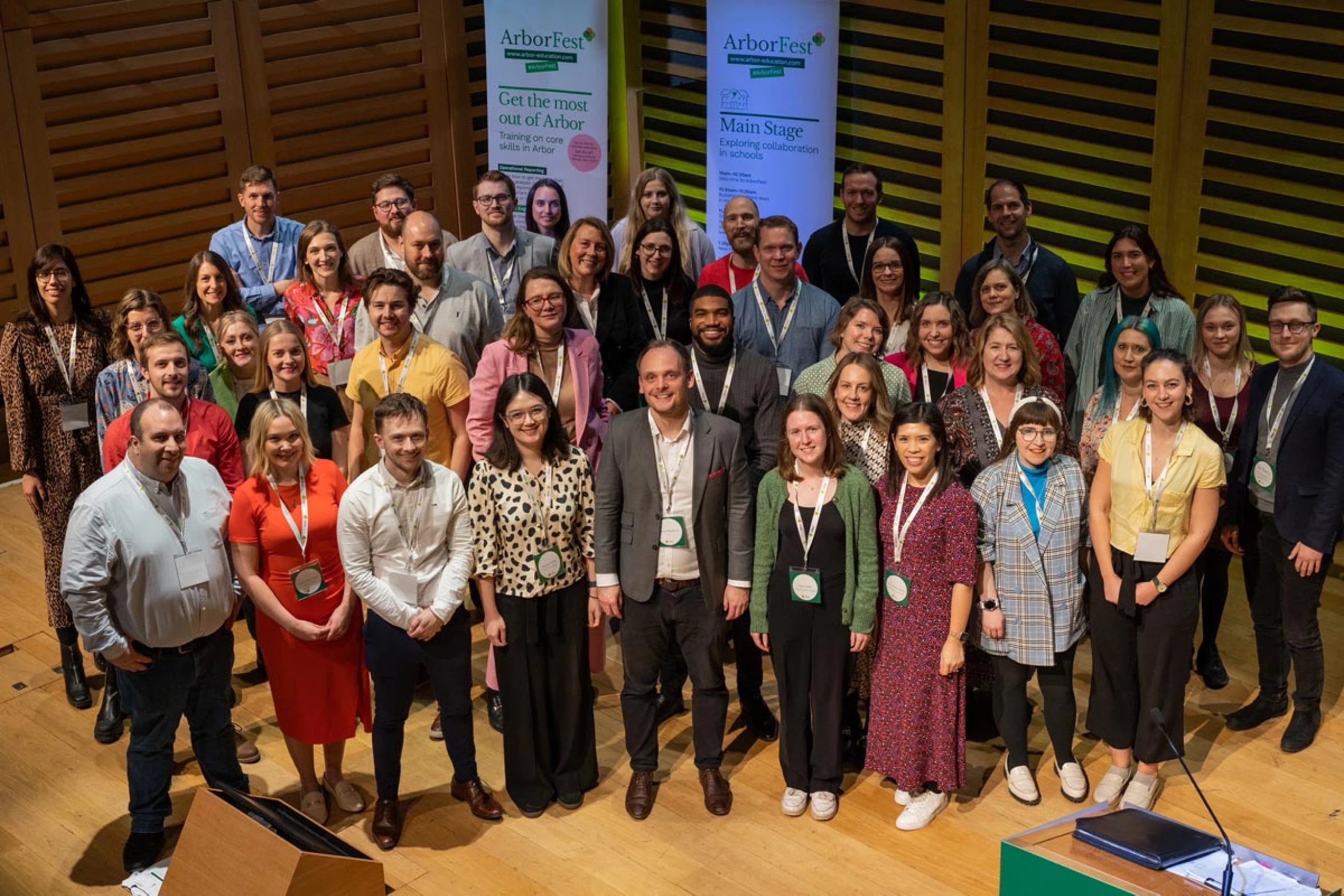
Co-founder and CEO James Weatherill leads a business whose declared mission is to improve how schools work. Its team includes former teachers, school staff, engineers and data specialists. In 2020, Arbor described using customer feedback and the RICE prioritisation framework to shape product decisions. In September 2025, its change log announced Document Manager, a feature chosen through an ArborFest vote. Customers had voted for a very ordinary frustration to disappear.
The financial story has changed considerably. Nesta first invested in 2015 and participated in a £2.5 million Series A in 2017. Arbor’s sale to The Key was announced in December 2020. Then, on November 20, 2025, Permira’s majority investment in parent The Key Group closed. The transaction adviser described plans to double group research and development investment over the following years, with an emphasis on AI.
That gives the business a larger development agenda. Schools have a more immediate one: accurate registers, usable reports, manageable staffing and fewer jobs spilling beyond the working day. Arbor has assembled a broad set of tools around that demand. Its value will be felt in the small moments when a member of staff finishes a task, closes the screen and gets on with the school.
Meet the software
Explore the products, watch a demonstration or follow the company’s updates.