Consider two people looking through glass. One is admiring a painting. The other is standing inside an office tower. Both want a clear view. Beyond that, their requirements diverge: protect the artwork from ultraviolet light; keep the building comfortable; manage reflections; fit the frame; arrive before the contractor needs it. For Apogee Enterprises, those complications are the business. Transparency is merely the starting point.
- The product: glass, aluminum systems, façade services and engineered coatings.
- The buyer: construction professionals, framers, museums and industrial customers.
- The bet: earn more by making the surface do more.
This helps explain a portfolio that otherwise looks rather peculiar. Apogee owns Viracon, an architectural glass fabricator, and Tru Vue, whose glazing protects framed art. It also owns businesses making aluminum entrances, finishing metal and producing industrial flooring. Follow the materials and you get a miscellaneous collection. Follow the customer’s performance requirements and a more coherent company appears.
First, replace the windshield
The story began in July 1949 with Harmon Glass, a single Minneapolis shop replacing auto glass. Trade publication USGlass identifies Harold Burrows as its founder. In 1955, Harmon moved into contract glazing for buildings. Apogee acquired window maker Wausau in 1968, formed Viracon in 1969 and went public in 1971. The non-glare glass business that became Tru Vue arrived in 1975.
Those steps matter because each added an adjacent skill: installing, framing, fabricating, controlling reflections. By 2004, Apogee had sold Harmon AutoGlass and exited the trade that started it. Its history offers a useful distinction between remaining loyal to a product and carrying useful expertise into another market. The windshield disappeared from the portfolio. Working glass into something customers could rely on remained.
The customer buys the whole problem
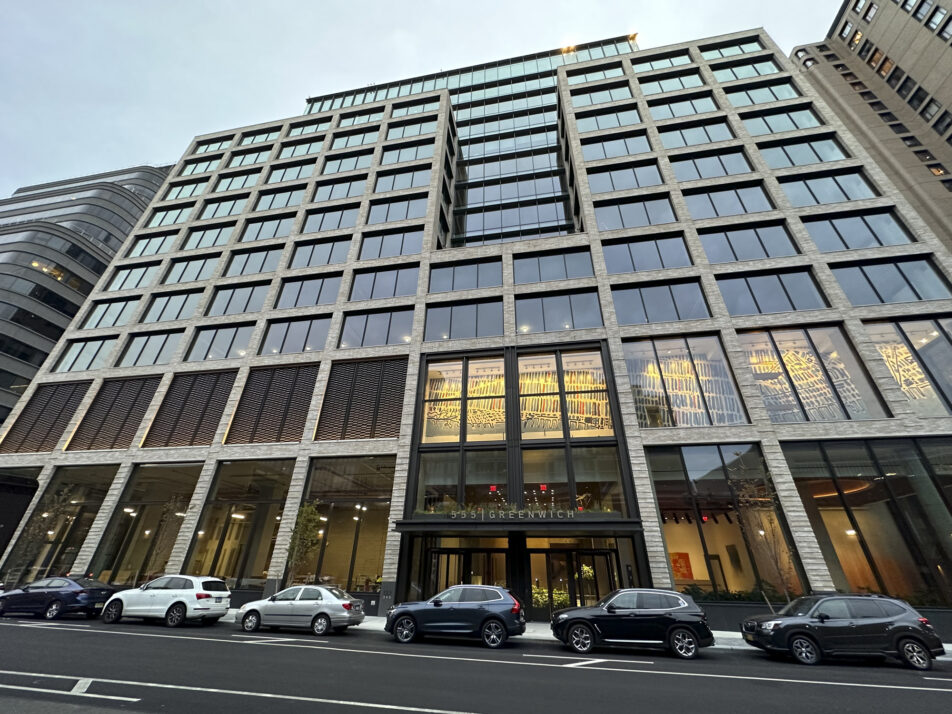
At New York’s 561 Greenwich, Harmon lists a custom curtainwall system alongside Wausau punched windows, plus terra cotta fins, bronze panels and other components. Its project collaborators include architect COOKFOX and general contractor AECOM Tishman. Here is the practical attraction of Apogee’s breadth: a façade involves several materials, technical requirements and people whose schedules must agree.
The company sells through four reporting segments. Architectural Metals supplies windows, storefronts, entrances and curtainwall systems. Architectural Glass fabricates building glass and now includes Kalwall daylighting products. Architectural Services supplies design, project management and installation through Harmon. Performance Surfaces makes coated materials for uses including displays, art and industrial floors. Products generate manufacturing revenue; installation brings project-based contract revenue and execution risk.
Capabilities across the portfolio; the combination depends on the job.
An architect may influence the specification while a glazing contractor purchases the material. A building owner ultimately lives with the result. Apogee’s offering therefore extends beyond a catalogue: technical advice, manufacturing capabilities and installation expertise help customers reconcile appearance, performance, cost and timing. That breadth is a competitive argument. It does not remove competitive bidding or make every project suitable for every brand.
The art of getting out of the way
Tru Vue makes the performance argument unusually easy to see. Museum Glass specifies less than 1% reflection and more than 97% total light transmission. Its UV claim is up to 99% blocking within the stated 300-380 nanometer range. The product lets someone look at a picture with fewer reflections while adding protection against a particular source of damage.

The specification also has boundaries. Tru Vue advises that oversized, frequently transported or breakage-sensitive displays may suit acrylic better. A UV percentage is not a promise against every cause of deterioration. For a buyer, the useful habit is to begin with the object, environment and handling requirements, then choose the glazing. The label alone cannot make that decision.
Buying the next useful surface
Apogee’s recent acquisitions extend the same logic. UW Solutions, acquired in November 2024 for reported consideration of $240.9 million, brought coated printable materials and ResinDek industrial flooring. In July 2026, Kalwall added translucent daylighting; reported consideration totaled $112.2 million, including estimated contingent payments. September brought Latvia’s Groglass, an anti-reflective coatings specialist, for up to €62.5 million, subject to adjustments.
“This acquisition strengthens our Architectural Glass segment”
Don Nolan, Executive Chair and CEO, on Kalwall · May 2026
These are purchases of neighboring capabilities. A warehouse floor is far from a museum wall, but both can reward a manufacturer for engineering a surface to meet demanding requirements. The inference is that Apogee wants more of those opportunities. Whether the acquisitions produce the expected returns depends on integration, customer demand and the price paid.
The shift was informed by more than managerial taste. Apogee says its strategic review included customer input and competitive benchmarking, followed by decisions about which businesses to expand and which underperforming activities to address. That is a process another company can borrow: test where customers value your expertise before committing capital to the next market.
The bill behind the view
The accounts keep the story honest. Fiscal 2026 sales rose 3.2% to about $1.40 billion, helped by UW Solutions, while operating income fell from $118.1 million to $84.5 million. Higher aluminum costs and lower volume weighed on performance. Project Fortify Phase 2, substantially completed that year, incurred $27.4 million in pretax charges. Management estimated roughly $26 million in annualized savings. The charge happened; the savings estimate describes an expected run rate.
Adjusted EBITDA margin by segment
Fiscal Q2 2027, ended August 29, 2026. Adjusted EBITDA is a non-GAAP measure, distinct from operating or net profit.
By the second quarter of fiscal 2027, sales were up 9.2% to $391.1 million, with Kalwall, pricing and mix contributing despite lower volume. That combination explains both the appeal and the limit of the strategy. Better products and tighter operations can help; they cannot guarantee a busy construction market. Readers can copy the discipline of separating acquisition growth, price and volume before declaring a turnaround.
For customers, the next step is concrete: bring a performance specification to the relevant Apogee brand and ask how the product will be fabricated, delivered and supported. For other businesses, the lesson is equally practical: identify an expertise that travels, then check its economics in each new market. Apogee’s portfolio makes more sense when viewed through that lens. The glass is clear. The business deserves a closer look.