For his twenty-ninth birthday, Antoine Moissenot announced a company. Other people ask for a watch. In January 2024, he went on LinkedIn to introduce Neuralk AI, name his co-founder Alexandre Pasquiou, mention a partnership with a major French retailer and ask whether anyone knew a good chief technology officer. It was a birthday greeting with a recruitment brief attached.
The announcement concerned online shopping. Moissenot wanted to improve the experience and address its environmental challenges. Beneath that familiar ambition sat a less familiar choice: to build AI around the structured information businesses already held. Product records. Customer records. Transactions. The things that make a company run, usually arranged in rows and columns and rarely invited to glamorous parties.
That choice has become the central work of his career. Neuralk began in late 2023; by February 2025 it had announced $4 million in seed funding. In June 2026, Moissenot was explaining predictive AI on VivaTech Studio. The distance between those moments contains a friendship, an earlier business in public procurement and a persistent interest in getting complicated systems to do something useful.
A birthday announcement, a much older friendship
Moissenot and Pasquiou did not meet over an investor's conference table. In an October 2024 post celebrating his colleague's forthcoming appearance at AI Pulse, Moissenot said they had first met more than twelve years earlier. They had been working full time on Neuralk for almost a year. The relationship had a long history before it acquired a company name.
His post was pleased and personal: an old acquaintance was about to speak at a conference whose roster included Xavier Niel, Michael Dell and other figures in AI. Moissenot directed readers to Pasquiou's session. The scientific presentation belonged to his partner; the public encouragement came from someone who remembered the years before the stage.
“It's been over 12 years since I first met him.”
Antoine Moissenot on Alexandre Pasquiou, October 2024
Their education supplied different kinds of preparation. Moissenot entered École Polytechnique in the X2014 cohort and completed his fourth year at École des Ponts et Chaussées. Pasquiou trained at Centrale Paris and earned a doctorate in computational neuroscience at Inria. At Neuralk's early stage, Moissenot was CEO and Pasquiou chief scientific officer.
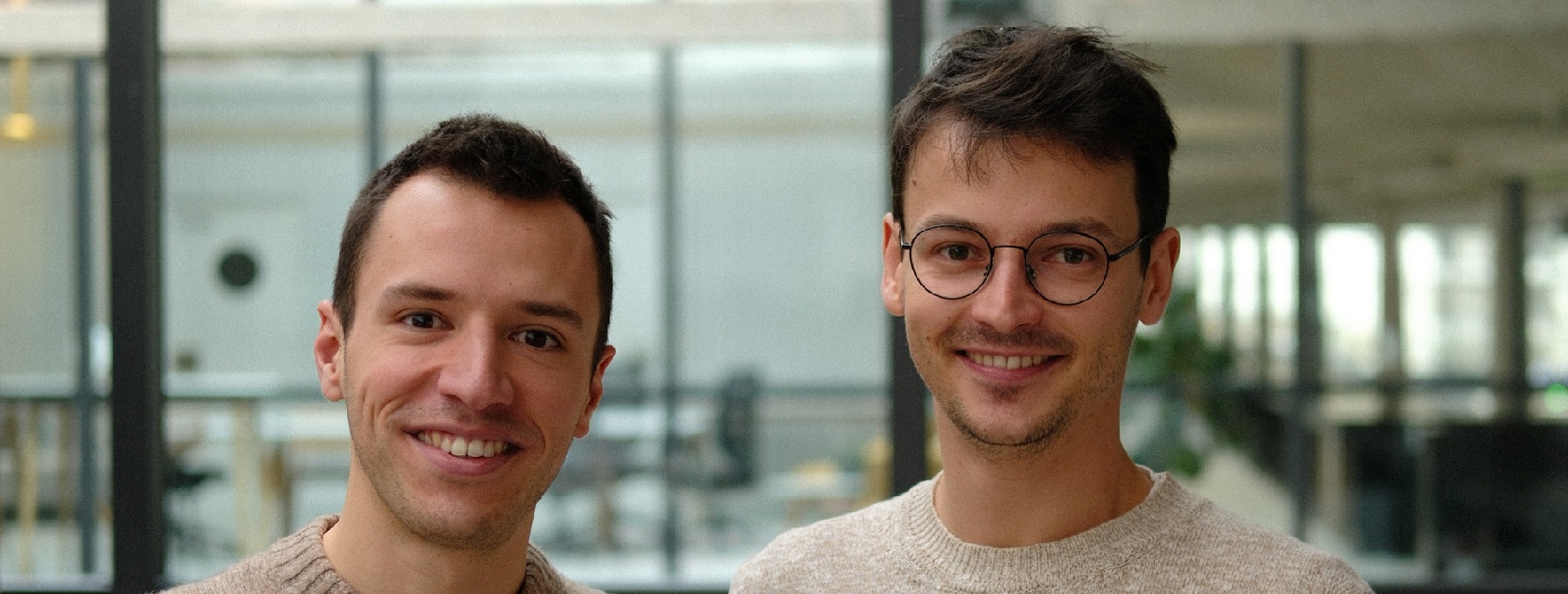
By June 2026, the company identified Moissenot as co-founder and COO; a September appearance identified Pasquiou as CEO. The titles have changed as the work has developed. The partnership remains a useful way to understand Moissenot: his career includes engineering, strategy and the practical business of bringing an offering to customers.
Before the model, the market
At Stim, where he worked from February 2019 to August 2021, Moissenot helped large companies launch products and services. His assignments covered areas including urban mobility, rail transport and energy distribution. He also handled internal operations. These are useful places to encounter the gap between an appealing idea and an organization capable of delivering it.
In September 2021, he started ATEXO Academy, a training activity specializing in public procurement. Its subject was the world of tenders and the rules businesses need to understand to pursue public contracts. By October 2022, he was listed as the academy's director for a webinar with CCI Vienne Formation about the commercial approach to those markets.
A public tender is an unusual classroom for an AI founder. It brings deadlines, procedures and buyers with requirements that cannot be wished away. The connection to his later work is an editorial reading of his career: both activities deal with businesses trying to extract value from something they find difficult to use. In one, the obstacle is the machinery of procurement. In the other, it is the information inside a database.
His own description of the academy role was thoroughly operational. It included building the training offer, developing sales, managing partnerships, putting processes in place and recruiting the team. A founder's job, in that account, involved a great many verbs. “Invent” was allowed company, but “organize” had plenty to do.
The duplicate hiding in the catalogue
Neuralk's early retail work offers a concrete example of what Moissenot was selling. With Mirakl, the company tested ways to remove duplicate entries from product catalogues. This is a modest-sounding problem until a catalogue becomes large enough that manual inspection is a profession rather than an afternoon.
Think of a hypothetical product recorded by two suppliers under slightly different names. A system has to work out whether the records describe the same item. A shopper sees the result as a catalogue that makes sense. Behind that experience are decisions about matching, grouping and organizing information. This illustration explains the task; it is not a reported incident at a Neuralk customer.
In early 2025, Moissenot said the team had identified around 45 use cases and was working with four or five retail testing partners. E.Leclerc, Auchan and Mirakl were among the names associated with that work. Catalogues provided a starting point; assortment, personalization and logistics offered other places to apply the approach.
He also kept the distinction between research and a finished service visible. At that point, the API was not open. The team was working with testing partners. A list of use cases described possibilities; it did not mean that every possible task had already been solved. For a company building both technology and a market, that difference matters.
Five places in a programme, four million dollars
During 2024, Neuralk joined the European AI Startup Program organized by Meta with Hugging Face, Scaleway, the HEC Paris incubator and Station F. It was one of five selected startups. The programme offered FAIR research mentoring, access to development tools and computing resources, and business support.
Moissenot's announcement emphasized building models for structured data and working with those partners. For a young research business, the practical attraction is easy to understand: access to scientists, infrastructure and people who have already wrestled with the problem of turning a model into a product. Neuralk also appeared in Station F's Future 40 for 2024.
The seed round brought another kind of network. Alongside Fly Ventures and StemAI were angels including Hugging Face co-founder Thomas Wolf, Mirakl's Philippe Corrot and Nagi Letaifa, and Artefact's Vincent Luciani. The names connected research tools, marketplaces and enterprise AI. Some of the people backing the company worked close to the commercial problems it hoped to address.
Funding buys the ability to keep working. It does not settle whether a model is useful on a customer's actual records. Moissenot's public thank-you to early clients included Auchan Retail, E.Leclerc, Mirakl and Lucky Cart. The investor list and the customer list were both part of the announcement, which is a sensible habit for a founder whose product needs two kinds of confidence.
A prediction has to survive the customer's table
In June 2025, Neuralk introduced TabBench, an open-source framework for evaluating tabular machine learning on industry tasks. Product categorization and deduplication were among its initial concerns. Its workflows organized the steps from loading data through prediction and evaluation, helping make comparisons more consistent.
That work placed measurement alongside the company's model development. A convincing demonstration can be selected carefully. A useful evaluation has to ask harder questions about the data, the preparation and the comparison. TabBench made those questions part of Neuralk's public output, although the company did not release private industry datasets with it.
On May 13, 2026, Neuralk announced that its Seldon API was open for free testing. The earlier closed testing phase now had a public route in. For Moissenot's commercial story, this was a tangible change: someone outside the first partner group could bring data and try the service.
The June 2026 Seldon report also acknowledged a useful complication. In Neuralk's evaluation, established tree-based models remained competitive on industrial problems even where foundation models performed strongly on public datasets. The company reported results favorable to Seldon, but its account still showed why a customer should test a model against existing methods. Industrial data has a habit of spoiling a tidy theory.
Back at the microphone
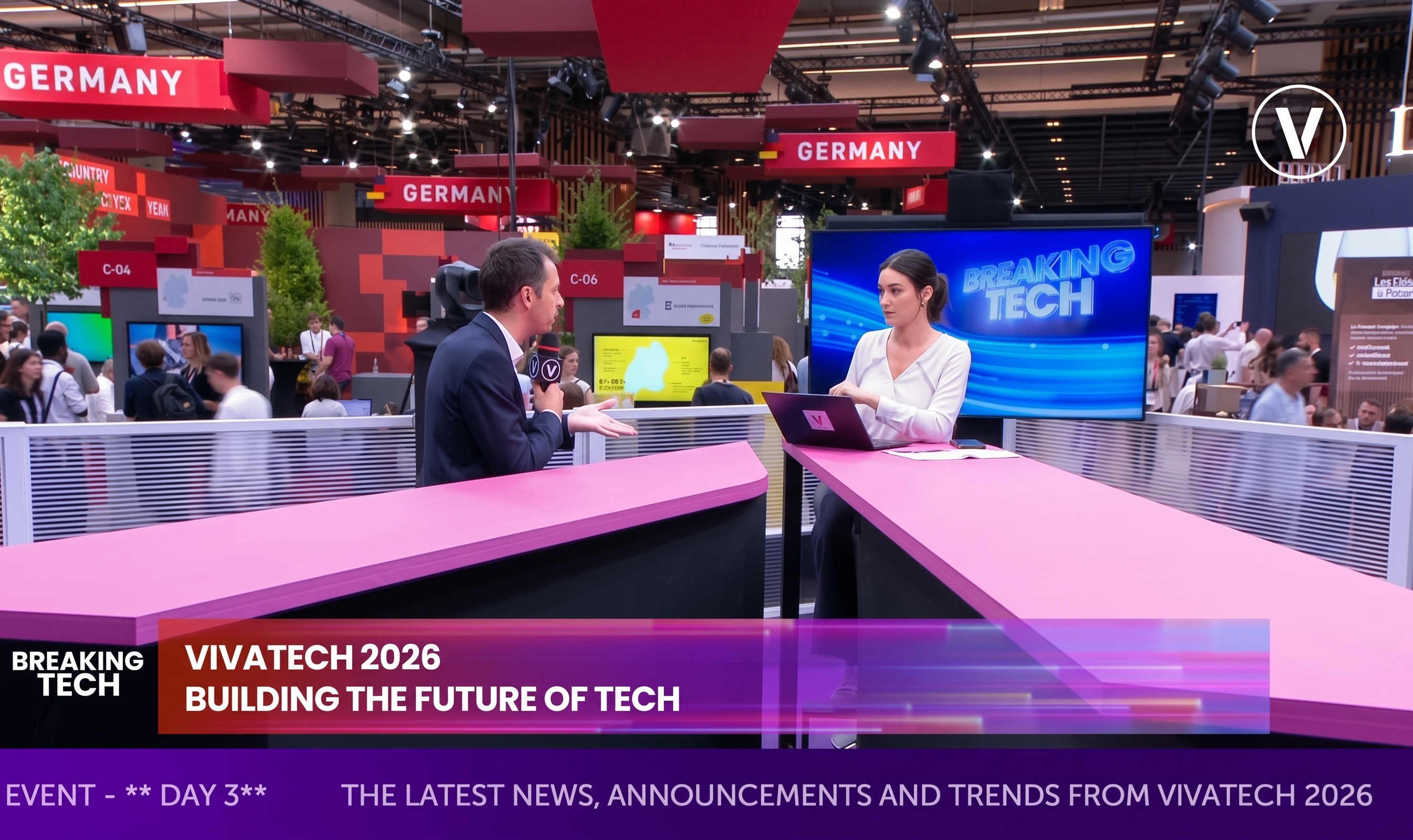
At VivaTech in June 2026, Moissenot discussed predictive AI and using foundation models to produce predictions from structured enterprise data. His early announcement had focused on e-commerce. The later conversation addressed a broader business audience. The work had moved from a retail starting point toward the company's wider predictive-AI ambition.
His public self-description offers a small, useful detail about the person doing the explaining. On his professional profile, he described himself as ambitious, enthusiastic and someone who enjoys meeting new people. Those are his words about himself, rather than a psychological assessment. The posts about his colleague, partners and recruitment give that description a recognizable setting.
The birthday launch remains a fitting opening to the story because it contains so much of the work that followed: a relationship, a customer, an ambition and a vacancy. Moissenot announced an idea while also looking for someone who could help build it. The practical question at the end was already there at the beginning: who will join, what will they make, and will a business find it useful?
Neuralk's next answer will be found in the tables its customers bring. Somewhere among those rows is a duplicate to catch, a category to assign or a decision to improve. Moissenot has made a career of bringing people closer to systems they can use. Now the system has a model, an API and a familiar friend on the other side of the desk.