Andrew Petersen's first great advantage was that there was nowhere to hide. Wellington, Texas, sits in the Panhandle, where the horizon looks less like scenery than a policy of radical transparency. When Petersen arrived as a family physician, the town held roughly 2,000 people. In a place that size, the person across the desk does not dissolve into a chart when the appointment ends. You may meet again by the cereal aisle. Their cousin may coach the team. Their story remains stubbornly attached to a name.
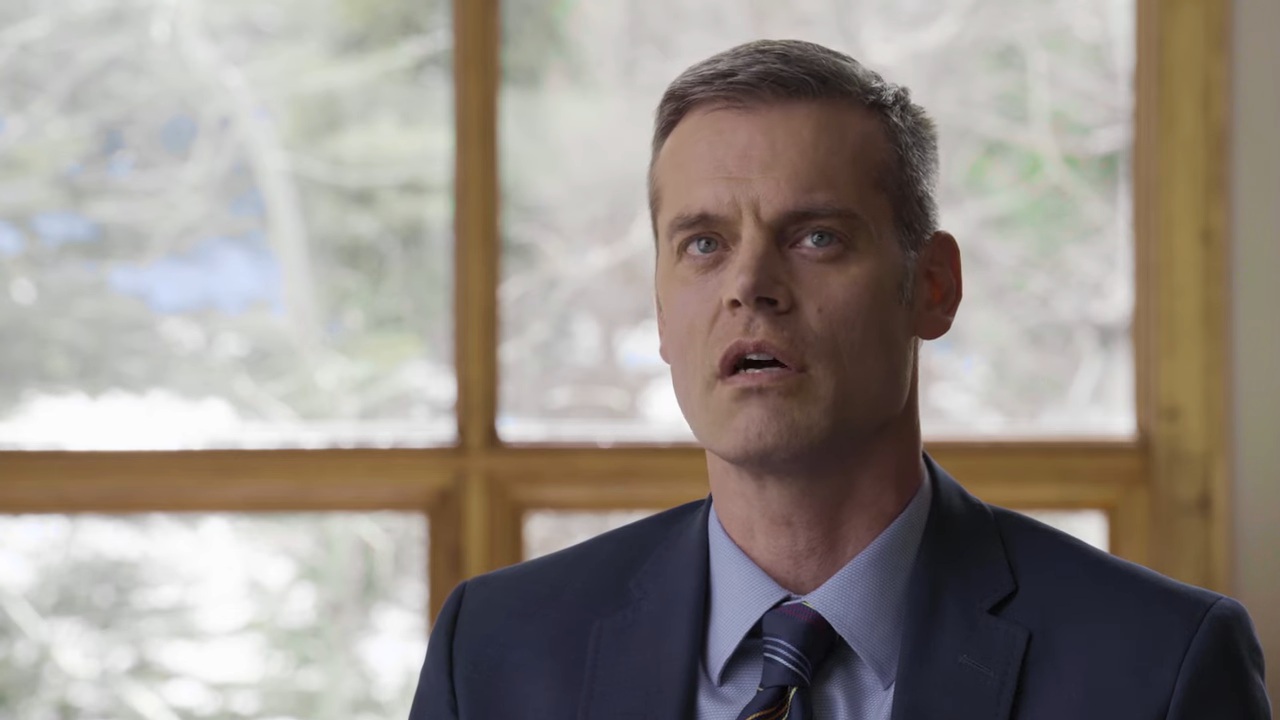
Petersen has described the effect without varnish. “When you're a doctor in a town of only 2,000 people, you know everyone,” he said in a short film about his work. He also knew something less flattering and more useful: he could not solve every problem brought to him. Familiarity made that limit personal. It converted professional frustration into a question that followed him home.
This is not the usual founder's origin myth. There is no lemonade stand, no garage, no precocious sketch of a nationwide organization. Petersen studied microbiology at Brigham Young University from 1994 to 1996, then earned his osteopathic medical degree at the University of North Texas Health Science Center in 2001. A family-medicine residency in Altoona, Pennsylvania, followed. By training and temperament, he says, he was drawn first to the evidence.
“I was more interested in the science.”Andrew Petersen, on why he first chose medicine
The confession is bracing because it declines to retrofit destiny. Petersen did not claim that a celestial memo arrived in childhood. Purpose came later, after the credentialing, during the work. The people of Wellington supplied the missing curriculum. Science could tell him much. Proximity taught him why the unanswered parts mattered.
The education after education
Rural family practice is broad by necessity. Petersen worked at Collingsworth Family Medicine, served as a hospital chief of staff in Wellington and also spent time in emergency care at Pampa Regional Medical Center. The roles demanded different speeds: continuity in one room, urgent judgment in another, institutional responsibility upstairs. Together they offered an unusually complete view of how a medical system behaves when resources are finite and everybody knows everybody else.
His conclusion was not that expertise did not matter. It was that expertise had to remain restless. “There's something that you don't know that you need to know,” he said, describing the feeling of reaching the edge of his own answer. The sentence contains a founder's operating system in miniature. It treats uncertainty not as an embarrassment to conceal but as work left on the desk.
In 2012, Petersen carried that restlessness to Utah and founded Whole Health Medical Group. The name was earnest in the way medical names often are, but the organizational choice underneath it was precise: make room for a broader view, build a team around it, and give difficult questions more than a brisk encounter. The practice grew in Provo and West Jordan. Petersen became both clinician and operator, two occupations that share a building but rarely a calendar.
Founding a practice is mostly a collection of unromantic decisions. Who joins the team? Which tools deserve trust? How should information move? When does a useful exception become a repeatable method? A white coat cannot answer any of these. Petersen had to convert a personal habit - keep looking - into an organization that could function on a Tuesday morning when the schedule was full and the printer had chosen rebellion.
Petersen's career moved through five distinct roles - scientist-in-training, family physician, hospital leader, practice founder and network executive. His public account ties them together with one idea: unfinished questions deserve more attention, not less.
Two clinics meet a larger idea
By 2019, Whole Health Utah's Provo and West Jordan offices were no longer merely local practices. They became two founding locations of Forum Health, launched that June as a national platform joining medical practices, clinical software and a professional-products business. Chicago's Agenixs was the other founding practice. Petersen entered the new organization as a clinical leader and cofounder; today, Forum Health identifies him as chief of staff.
The shift in scale matters, but not for the obvious reason. A national network brings purchasing, systems, data and a louder microphone. It also introduces distance - precisely the thing Petersen's small-town education had denied him. The executive challenge became one of preserving attention while adding locations. What works between a doctor and a neighbor must somehow survive meetings, dashboards and geography.
A career measured in widening circles
Forum Health's structure offered Petersen a way to turn the instinct into infrastructure. Its technology arm, built around the Power2Practice records platform, made long histories and patterns easier to see across time. Its practice network created a venue for clinicians to compare experience rather than operate as islands. Petersen's part in that story is not the lone genius with a miraculous notebook. It is the physician as convener: assemble more context, invite more minds, and keep the inquiry open.
The cofounder title can obscure how plural the founding actually was. Forum Health began by joining established practices whose leaders had already spent years refining their own methods. Petersen brought Utah; Paul Savage's Agenixs brought Chicago; Phil Hagerman led the parent company. The platform was designed as a federation, not a personality cult. That arrangement suited a physician whose most memorable public sentence begins by acknowledging what he does not know.
Petersen had already tested another version of that translation as cofounder and executive medical officer of WholeMedix. Moving among practice ownership, product decisions and clinical leadership forced him to speak several professional dialects. A physician asks whether an idea is sound. An operator asks whether it can be delivered reliably. A founder has to ask both, then persuade a room of people who carry calendars, budgets and perfectly reasonable doubts.
The memberships on his biography show a similar willingness to work outside one institutional lane. He became a fellow of the American Academy of Anti-Aging Medicine and served on the board of the International Lyme and Associated Diseases Society. Whatever the conference badge said, the practical value was access to other practitioners working on difficult questions. For Petersen, connection was not ornamental. It expanded the number of people who could challenge an assumption.
That posture has a cost. Open questions are slower than slogans. Collaboration invites disagreement. A network of independent practices can resemble an orchestra in which everyone has arrived with a slightly different score. Chief of staff is the role built for that awkward music: establish common standards, protect professional judgment and make the ensemble coherent without sanding away every local edge. It is administration, but administration with consequences.
That is also why his public work widened. He has appeared on podcasts, conference panels and educational programs, including a 2020 LymeMIND panel, a 2024 Tick Boot Camp interview and Forum Health's own series. In 2026 he continued hosting conversations with other clinicians and promoting the Midwest Functional Medicine Symposium. The audience changed from one room to many; the essential task - making a complicated idea understandable without flattening it - did not.
A calling, eventually
The most revealing part of Petersen's account arrives near the end of the Forum Health film. He remembers the gap between the student he was and the practitioner he became. “Medicine changed me,” he says. “I wasn't this way when I said, ‘I'm going to be a doctor.’” The line lands because it allows a profession to be formative rather than merely expressive. He did not find a career that perfectly reflected him. He let the career revise him.
There is a managerial lesson here, though it is one most management books bury under diagrams. Institutions improve when their leaders permit reality to edit the original plan. Petersen's reality was a town where missed signals could not be filed away as somebody else's department. The later companies, titles and affiliations came after that encounter. They are consequences, not prologue.
“It wasn't a calling at first. It's a calling now.”Andrew Petersen
Calling is an overworked word. It can make ordinary labor sound like thunder from the mountaintop. Petersen's version is more interesting because it is retrospective. The calling arrived by accumulation: one baffling conversation, another late night, a practice to build, colleagues to gather, a larger network to help steer. It was less revelation than repetition.
His official biography lists the expected markers - degrees, leadership posts, fellowship, board service. They establish competence. The two-minute film explains the appetite beneath them. “I can't go to bed yet,” he remembers thinking. “I have to figure this out.” It is not a promise of omniscience. It is a compact with curiosity.
Today Petersen works from Utah, with Forum Health listing him across its Orem and West Jordan practices while he serves the larger organization. The setting is no longer a single Panhandle town, and the faces now arrive through teams, events, recordings and a network spread across the country. Scale has made the map busier. His story argues for keeping the method simple: know that the person in front of you will remain a person after the meeting; admit when the answer is incomplete; stay at the desk a little longer.
That is not a dramatic formula. It does not fit neatly on a conference lanyard. But it explains how a microbiology student became a rural physician, how the rural physician became a founder, and why the founder still talks about the people who changed his mind. Wellington was small enough to make attention unavoidable. Petersen's ambition has been to see whether that kind of attention can travel.