The checkout is an unforgiving editor. It removes most of the romance from money. You can have an elaborate theory about the future of finance, but the person at the till would quite reasonably like the payment to go through. Andrew Grech has spent much of his working life trying to bring cryptocurrency to that small, exacting moment.
In his early account of CryptoSpend, the company he co-founded, Grech described a gap between owning digital assets and using them. Crypto had attracted attention as something to hold or trade. Spending it was another matter. The ordinary verbs of a financial life - pay, send, withdraw - came with an extraordinary amount of explanation.
His answer developed into a Sydney payments business, an Australian Visa-backed card, and eventually Wayex. The company's name changed in 2024. The question underneath it remained recognisable: how much work should a person have to do before their money becomes useful?
That question gives Grech's career a rather pleasing destination. An industry fond of talking about the future can find itself answering to a grocery receipt. Milk is a stern judge of technological progress. It will not wait while you explain your architecture.
An office, a friend, a starting point
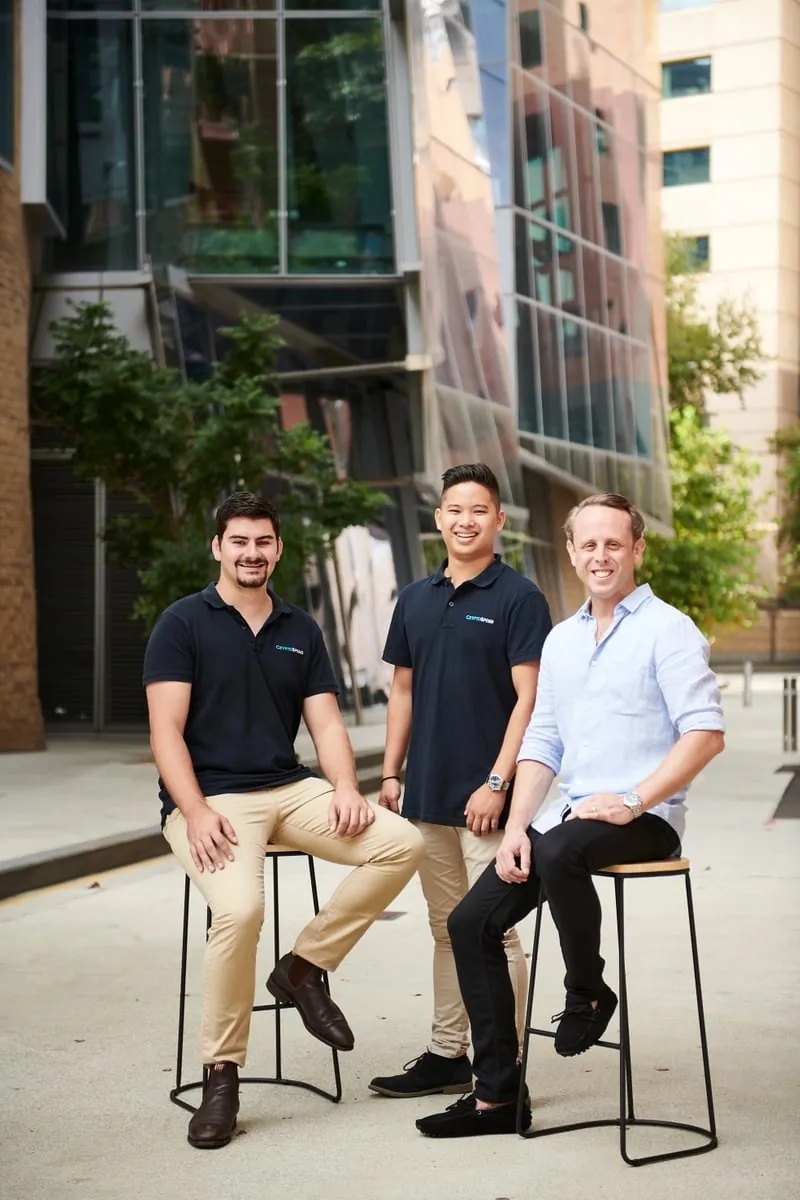
Grech and Richard Voice met at the University of Technology Sydney. They became friends with a shared interest in cryptocurrency, then co-founders. In 2018, they started CryptoSpend with support from UTS Startups. Grech became chief executive; Voice took the chief operating officer role.
The university connection was practical as well as social. UTS Startups provided their first office space and helped introduce them to people in the industry. The early work included wallet infrastructure and a minimum viable product for instant cash-out. Before there could be a payment card, there had to be a way to move value.
It is tempting to compress a university startup into the instant of inspiration. An idea, a friend, a company. The office and the introductions deserve their place in the story too. An address gives an idea somewhere to be worked on. A connection gives its founders someone new to ask.
For Grech, the overlap between a technical problem and a financial one became the business itself. A digital balance needed a route into established payments. Someone using the product needed to understand the result without taking a course in how it was assembled.
Experience joins the table
In March 2020, payments entrepreneur Andrew Porter took a minority stake in CryptoSpend and joined its advisory board. Porter had helped build OFX and had run the local operation of World First. His involvement brought the young company into contact with experience in moving money and growing a financial business.
Grech welcomed that combination of payments, fintech and startup experience. Voice explained the importance of having someone who could help them navigate the difficulties of building and scaling. The connection was specific: these founders were trying to join a new kind of asset to payment habits that already existed.
The early product plan shows the mixture. Holders of several cryptocurrencies would transfer assets into a wallet linked to a physical or digital prepaid card. Payment would involve converting digital currency into conventional money. Familiar payment channels, including Australia's New Payments Platform, were part of the intended connection.
There is a particular discipline in that kind of company. The founders may be excited by a new technology, but their product has to negotiate with systems used by people who have other things to do. The cashier has a queue. The customer has a shopping bag. Neither has volunteered to become a payments engineer.
Three years inside a tap
By 2021, the card was moving from plan to product. CryptoSpend worked with Visa and Novatti, its card issuer and programme manager. The proposition was familiar enough to fit in a wallet: a card for in-store and online purchases, with physical and digital versions and support for Apple Pay and Google Pay.
Grech's launch announcement was shorter than the work it celebrated. “It's finally out!” he wrote. He said he and Voice had begun the journey three years earlier, and credited the team and everyone who had worked to make the card real.
The excitement makes sense. A founder can spend years inside a problem that the customer meets for a few seconds. The visible result is a tap. Behind it sit the app, partners, conversion processes and controls that make the tap possible. Grech's announcement briefly opened that backstage door.
In the early Australian model, the customer's chosen cryptocurrency was converted into Australian dollars at the point of sale. The merchant received an ordinary card payment. Acceptance did not depend on the shopkeeper learning how to receive a particular token.
That arrangement expressed Grech's original interest in usability. It located much of the complexity behind the customer experience. A person could use digital assets while performing a payment action they already recognised. The novelty belonged in the plumbing; the purchase could get on with being a purchase.
When the shopping basket changed
By early 2023, Grech was describing a change in what customers bought. Earlier spending had included occasional purchases, expensive restaurants and luxury items. He was now seeing more necessities. Fuel, supermarket shopping and takeaway food were among the everyday uses he discussed.
CryptoSpend announced a A$5 million Series A capital raise that February. The founders described customer growth and plans for more products, hiring and international expansion. These were plans for the business, rather than a personal fortune for its chief executive. The amount was an announced fundraising target.
The change in purchases offered a more intimate kind of evidence. A payment method used for a special occasion occupies one place in someone's life. A method used for routine shopping occupies another. Grech was watching the product enter the part of life where people repeat themselves.
He also had a less polished explanation for getting through a difficult period in crypto. He credited both careful checks and good fortune. The company had considered Luna and UST and had looked at FTX as a liquidity provider, then moved away from those possibilities.
“It’s been a combination of due diligence and luck.”
Andrew Grech, February 2023
There is something useful in that admission. A founder's history includes the partners chosen and the possibilities left alone. The decisions that do not produce a launch announcement can still shape what happens next. Luck is an unusually candid guest at a corporate table; Grech gave it a seat.
A name with more room in it
On 17 April 2024, CryptoSpend announced it would become Wayex. At that point, the company said it had 32,000 customers. The new identity was intended to accommodate a business growing beyond its formative offering. Grech wanted the brand to reflect its future.
CryptoSpend had the virtue of explaining itself quickly. It also tied the business closely to one activity. Wayex gave the founders more room to describe spending, trading and a broader financial platform. The rebrand was a statement about scope, with the familiar task of making the expanded product useful still ahead.
CryptoSpend begins at UTS
Australian Visa card launches
The name becomes Wayex
Global account detailed in February
A name cannot move money. It can tell you which questions a company now wants to answer. For Grech, the story had widened from helping an Australian customer spend crypto to connecting accounts, currencies and payment channels across borders. The old checkout problem was acquiring a passport.
A dollar account with a longer reach
In February 2026, Wayex described a global platform combining a unified US dollar balance with Visa card access, using its partnership with Bridge, a Stripe company. The company reported payment access across more than 160 countries. Card issuance was available in 18 countries at that time.
The distinction matters. A platform's routes for moving money and the places where it can issue a card are separate parts of its reach. Grech's international ambition requires those parts to work together. A world map can be coloured in quickly; a usable financial service has to be assembled country by country.
Wayex Global's reported reach in February 2026. Two capabilities, two counts.
“We didn’t set out to build a bank,” Grech said. Wayex is not a bank: the global prepaid Visa card is issued by Lead Bank and managed by Bridge Ventures. The account-like experience reflects a collection of partnerships and payment routes.
In his global launch message, Grech described money arriving through different currencies and channels but landing in one USD balance. His stated ambition was to make the underlying chain invisible and the dollar accessible. That is a product aspiration, with a recognisable echo of his early thinking about everyday use.
Wayex added another institutional milestone in August 2026, announcing its own Australian Financial Services Licence. The longer the company operates, the more its story includes the formal structures around the experience Grech wants to simplify.
From the university office to the global account, the scale has changed. Grech's recurring subject has been the distance between possessing money and being able to use it. His career so far is an attempt to shorten that distance. The checkout, mercifully indifferent to a founder's ambition, will continue to have the last word.