Death is a gifted administrator. It creates appointments, documents, passwords, invoices, phone calls and decisions at precisely the moment when a family has the least appetite for any of them. The ceremony may last an hour. The practical consequences keep office hours for months. Andrew Feagler built Laurel in the space between those two facts.
Feagler is a funeral director by training and an operator by instinct. In the Kansas City area, his company works as a funeral concierge: part planner, part coordinator and part calm keeper of the list. A family can bring Laurel in before a death to gather wishes and information, at the time of death to coordinate a service, or afterward to work through the residue of modern life. A credit-card account does not recognize bereavement. Neither does a utility company. Someone still has to call.
Laurel is a local service business built around face-to-face trust, professional training and the old-fashioned miracle of remembering what needs doing next. Its raw material is not novelty. It is follow-through.
A calling with dirt under its nails
Feagler grew up on a farm in southeastern Wyoming. The geography matters. Farm life makes abstractions scarce: weather arrives, animals need care, machinery breaks, work gets finished. His public biography says he felt drawn to the funeral profession from a young age. That is an uncommon childhood ambition, but it contains a practical logic. Funeral work is ceremony, certainly. It is also transport, timing, forms, rooms, flowers, people and a hundred details that must come together only once.
He first earned a bachelor's degree in business administration from the University of Wyoming. After graduation, he moved to Fort Collins, Colorado, and took a full-time job in a funeral home. At the same time, he studied mortuary science at Arapahoe Community College. The schedule offers an early clue to his temperament: he was learning the science while already absorbing the work.
He advanced quickly enough to lead and manage a funeral-home location while still young. Then came a detour. Feagler left the industry for a period, only to return to it. His official account gives the return a plain explanation: he was drawn back to work he loved. Some careers are ladders; this one behaved more like gravity.
A farm upbringing, followed by business studies at the University of Wyoming.
Full-time funeral-home work alongside mortuary-science school.
A return to the profession and the discovery of a service gap around traditional care.
An Executive MBA used as preparation for building Laurel.
The missing middle was everywhere
After moving to Kansas City and continuing in funeral service, Feagler noticed that families were being asked to become instant project managers. A funeral home could handle the funeral. A cemetery could handle the plot. Clergy could lead a service, a florist could fill a room, and a caterer could feed it. Each professional knew a part. The family stood in the middle, expected to know how the parts fit.
Then there were the tasks that did not fit neatly anywhere: ordering additional death certificates, notifying financial institutions, deciding which bills should transfer, securing accounts, handling household services and tracing benefits. These chores are painfully ordinary. Their ordinariness is the point. Grief does not make them disappear; it merely makes each one heavier.
Feagler enrolled in the Executive MBA program at Rockhurst University to prepare for starting a company. He graduated with the class of 2022. Laurel emerged as the practical answer to what he had observed, a business willing to operate across institutional seams. It does not require a family to abandon its funeral home, church or other trusted providers. It coordinates with them.
“We worked with Andrew to plan both of my parents' services. He was extremely organized, punctual and thoughtful.”John M., a Kansas City client
Organized, punctual and thoughtful are not glamorous adjectives. In a business of last things, they are close to the whole brief. The same client said Feagler anticipated the family's needs, allowing them to be present on the day of the services. Presence is the scarce resource Laurel is really trying to return.
Record wishes, gather vital details and prepare a practical guide while choices can still be made without urgency.
Coordinate the funeral, providers and personal details while the family attends to one another.
Work through certificates, accounts, household affairs and the administrative tail that follows a death.
Concierge can sound like a luxury word, the sort attached to hotel lobbies and impossible dinner reservations. Here it means a single point of coordination. The value is not that one person performs every specialized task. The value is that someone can see the whole field. Funeral director, cemetery staff, clergy, caterer and florist each arrive with their own expertise and timetable. Banks, insurers and government offices enter later with their own documents and rules. A family should not have to build the control tower while the planes are already landing.
That position also requires restraint. Laurel's role is not to crowd out the people and institutions a family already trusts. It is to keep the handoffs visible, translate the sequence and catch what might otherwise fall between organizations. Good coordination is almost invisible when it works. The flowers are where they belong. The right person has the right address. The copies have been ordered. The next call happens before a worried relative has to ask whether anyone remembered it.
Before, during and the long after
The three-part model looks obvious once written down. Before. During. After. Yet most of the funeral economy concentrates on the middle, where duties are clear and rituals have centuries of rehearsal. Feagler widened the frame. Before can include legal and financial information, end-of-life wishes and the whereabouts of everyday essentials. After can stretch into weeks of notices, transfers and closures.
The company describes its role as handling small details so clients can focus on what brings them peace. “Small” is doing diplomatic work in that sentence. A misplaced document may be small in size and enormous in consequence. A forgotten subscription may be trivial until it keeps charging an account no one can access. Laurel's bet is that care can be expressed through administrative exactness.
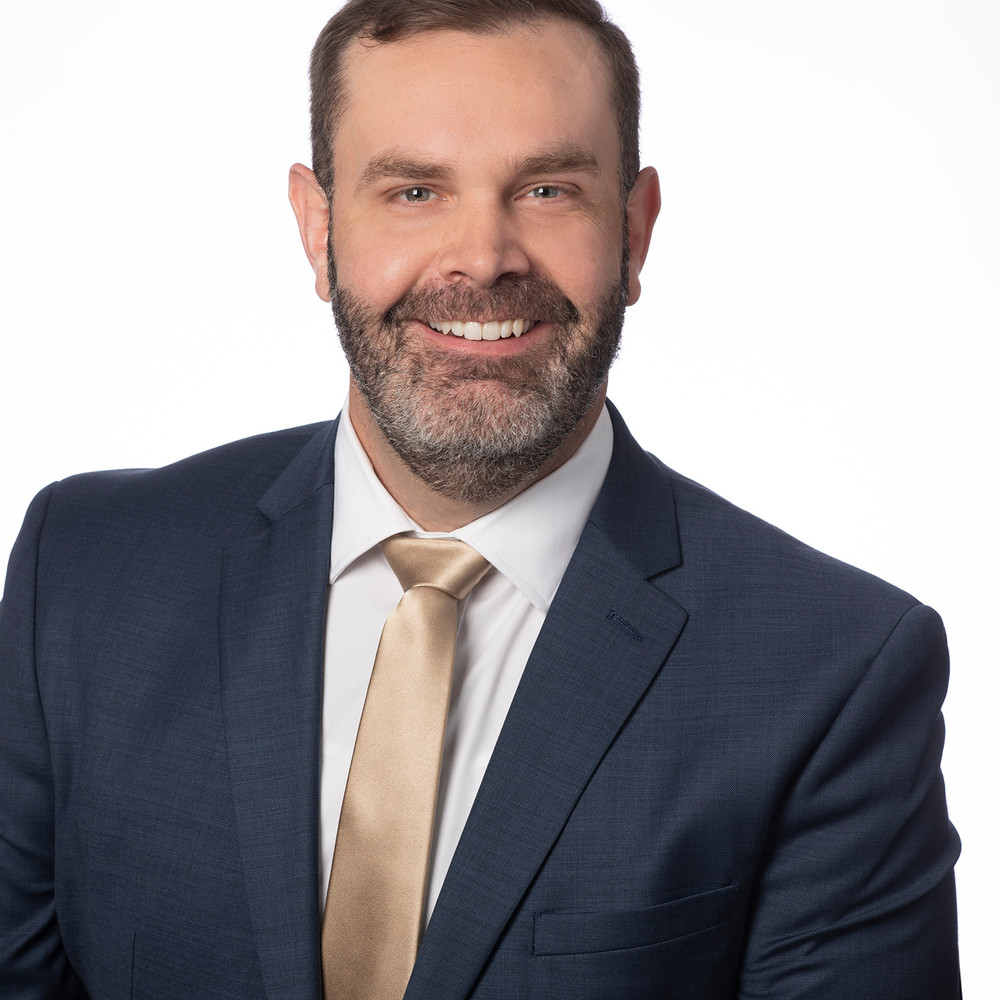
His work outside the company follows a similar line. Since 2022, Feagler has served on the advisory board of LIFT KC, a group organized around relationships among local leaders. The organization describes him as someone who cares deeply about older people and preserving their voices with dignity. That detail reveals a useful distinction. End-of-life planning is often sold as risk reduction. In Feagler's practice, it can also be an act of authorship: deciding what matters, saying it clearly and leaving fewer guesses for everyone else.
There is a civic dimension to that work. Every death touches a small local economy of care: professionals, congregations, neighbors, relatives and public offices. Feagler's advisory role places him among Kansas City leaders trying to strengthen relationships across sectors. His company applies the same principle on a family scale. Know the people. Understand the boundaries. Make the connection before a gap becomes a crisis.
A serious trade, lightly held
Feagler's public writing does not pretend the subject is easy. It does suggest that solemnity need not occupy every inch of the room. One of his 2025 essays gave the retiring American penny an obituary, a funeral director's joke applied to pocket change. Another framed end-of-life planning during the holidays as a gift to one's family. The range is revealing: ritual can carry humor; planning can carry affection.
There is also a quiet symbolism in the company name. The laurel wreath has long been associated with eternity, remembrance and victory. For this Laurel, the meaning is less about triumph than continuity. A family moves forward while carrying a life with it. The concierge stays near the practical edge, where memory meets the calendar.
Feagler lives in Fairway, Kansas, with his wife, Becky. Away from work he enjoys travel, golf and time with family and friends in Colorado, Wyoming and Missouri. Those places trace his story neatly: the farm country that formed him, the state where his funeral career began, and the city where he found the missing job.
The ceremony has a closing line. The administration rarely does.
Founders are often celebrated for seeing the future. Feagler's more useful talent was seeing the present clearly. Families were already coordinating providers. They were already sorting accounts and certificates. They were already trying to make consequential decisions while exhausted. The unmet need was not hidden. It was sitting in plain sight on the kitchen table, probably under a folder marked important.
Laurel gives that folder an owner. The company is modest in reach, serving the Kansas City metropolitan area, and exacting in ambition: make a difficult passage less chaotic. Feagler's career has supplied the craft, his education the structure and his return to funeral service the conviction. The result is a business built for work that nobody wants to do, at a time when having the right person do it can feel like grace.