Charles Reynolds has spent much of his working life persuading people to go somewhere. Fly to Tokyo. Visit Cozumel. Return to Los Cabos. Trust a logistics company with the awkward journey between here and there. Buy protection for the delicate object you carry everywhere. Advertising made distance his raw material. His latest proposition is measured in a few familiar roads, horse trails and clubhouse conversations in Rancho Santa Fe.
The change in scale is almost comic. Reynolds once led the Western United States region of Young & Rubicam, an operation he says grew under his leadership from $12 million to more than $300 million, with over 250 associates. Now he is campaigning for a seat on the Rancho Santa Fe Association Board, where the agenda includes the golf club, tennis courts, equestrian trails, a snack bar, a historic ranch and arguments about development. Yet the method he describes has barely changed: listen before taking a position, understand who carries the consequences, and make a decision sturdy enough to outlast the room.
Figures reported in Reynolds's public campaign biography. The later organization employed more than 250 associates.
First, learn to hear the room
Reynolds graduated from the University of Missouri School of Journalism, an education built around questions, evidence and the useful suspicion that the first version of a story may not be the whole story. He entered public relations as a trainee at Burson-Marsteller. Early assignments took him to London, Brussels and Geneva, followed by work in New York and Chicago. Business travel extended across Asia, South Africa and beyond.
It was a wide apprenticeship in context. A message that lands neatly in one market can arrive dented in another. Reynolds says those years gave him a broader perspective and reinforced the value of understanding different viewpoints. The observation sounds polite. In practice, it is demanding. Listening means allowing new information to disturb the answer you brought with you.
“Good leadership isn't complicated, it's about listening carefully, weighing different perspectives, and applying sound judgment to make decisions you stand behind.”Charles W. Reynolds
At Young & Rubicam, perspective acquired a balance sheet. Reynolds led the Western region through more than twenty-fivefold growth while, by his account, maintaining strong profitability. The interesting conjunction is growth and discipline. Plenty of organizations know how to get larger. Fewer can explain what each new layer is for, or remain answerable when a large bet disappoints.
His takeaway was accountability, a word less glamorous than creativity and much more expensive. A leader can invite debate, but eventually a name belongs beside the decision. Reynolds's public philosophy returns repeatedly to that moment. Gather the views. Evaluate them. Then own the result.
He had done big. Then he chose boutique.
In 1991, Reynolds founded Reynolds & Associates. The company calls itself a privately held communications and marketing services agency. Its menu stretches from brand building, advertising and media to direct response, public relations, social media and online work. Its portfolio names airlines and logistics firms, tourism boards and resorts, real-estate companies and consumer brands. ANA, AeroMexico, Pelican, OIA Global, UTi Worldwide, Newport Beach, Los Cabos and Cozumel all appear in the agency's body of work.
But its most revealing claim is about what it does not seek. The goal, the firm says, is not to be the biggest. Its preferred virtues are fit, stability, continuity and teams shaped around the client. Reynolds had already occupied the large corner office. Starting over let him choose proximity to the work.
The agency calls its philosophy the “+ Factor,” a promise to find added value across the communications process. The phrase is pure agency shorthand, cheerful enough to survive a presentation deck. Underneath it sits a sober operating choice. A smaller firm cannot hide behind its own acreage. It has to notice the detail, connect disciplines and make each relationship last. Reynolds describes the company as consistently successful and profitable for more than three decades. Endurance is the least theatrical form of evidence, and among the most persuasive.
The work also reveals Reynolds's appetite for complicated products. A holiday can be sold with a beach and a blue horizon. A global supply chain is harder to put in a photograph. Reynolds & Associates worked across both worlds, presenting resorts and destinations on one hand, freight forwarding and protective equipment on the other. The common task was translation: find the human benefit inside an organization full of routes, specifications and operational detail. A Dreamliner service becomes a new way to reach Tokyo. A rugged case becomes confidence that an expensive device will arrive intact. Logistics becomes the relief of knowing that someone else has mapped the trouble.
That range helps explain the firm's insistence on integrated work. An advertisement can earn attention, but media placement, sales material, public relations, promotions and digital experiences determine what happens afterward. The agency's public description prizes measurable results over trophies, even while noting the creative awards its staff has won. It is the outlook of an operator who learned that applause and performance can occupy different columns.
The long route to a quieter address
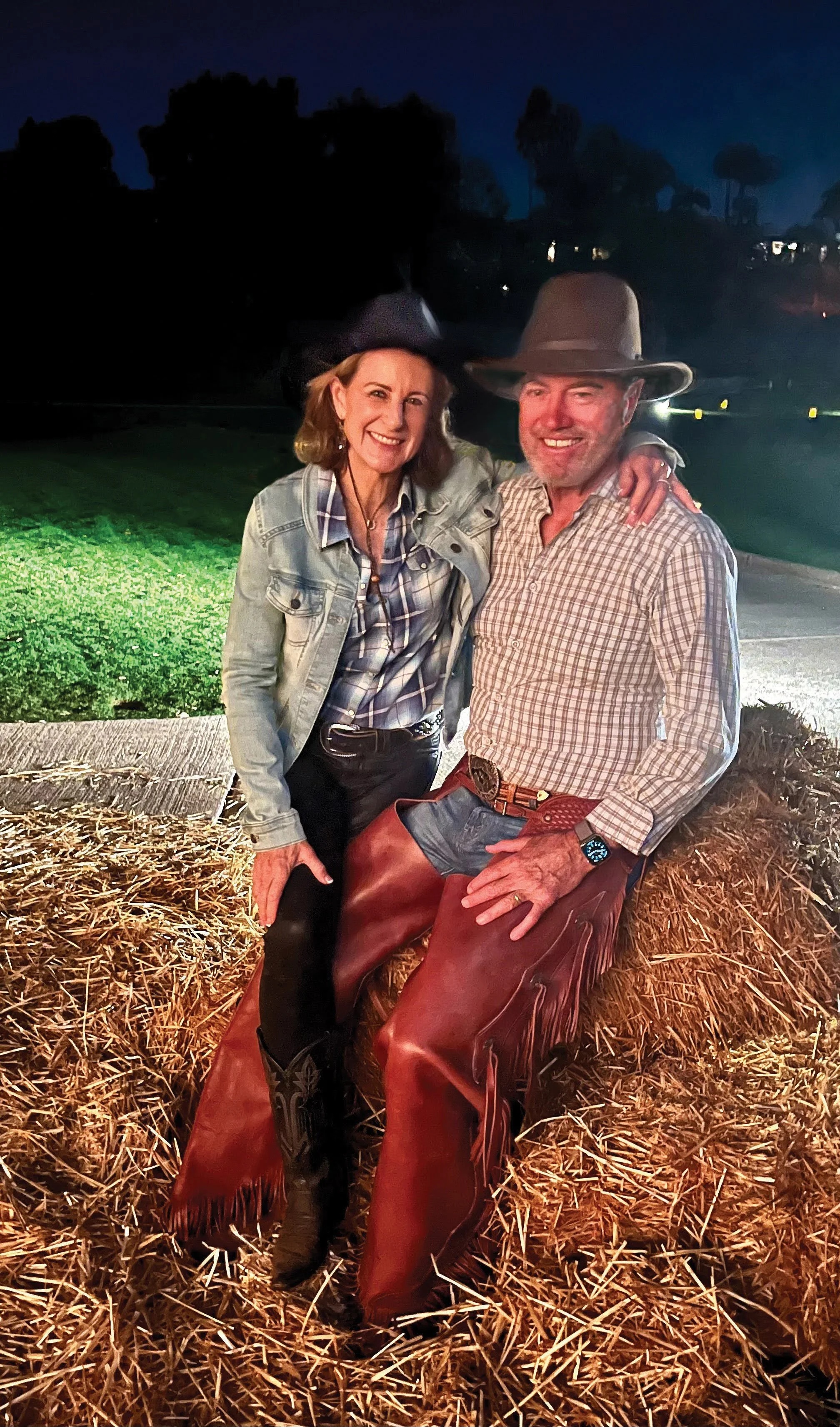
After London, Brussels, Geneva, New York, Chicago and Manhattan Beach, Charles and his wife, Cheryl, went looking for more room and a quieter rhythm. They explored communities along the Southern California coast. Rancho Santa Fe offered the combination they wanted: equestrian life, golf and a tangible sense of community. They moved to the Covenant around 2020.
Their two adult children and three grandchildren are part of the life they enjoy there. This is not incidental biography. It explains why Reynolds talks about the community in the language of inheritance. Privacy, open space and tradition matter because someone must receive them later. The trails and clubs are amenities in a property brochure; to a resident, they are shared institutions with maintenance bills, competing users and histories longer than the latest disagreement.
Reynolds joined the Rancho Santa Fe Infrastructure Committee in 2025. His campaign for the Association Board now applies an executive's framework to the neighborhood. He argues for clearer and more consistent decisions, proactive communication, broad representation, data-informed judgment and attention to long-term priorities. It is not a fireworks platform. Fireworks are generally a poor instrument for infrastructure.
The move from agency management to community service is less abrupt than it first appears. Both jobs begin with constituencies who use the same words to mean different things. “Access” pleases one group and alarms another. “Preservation” can mean careful maintenance, strict resistance to change or enough adaptation to keep an institution viable. The leader's work is to expose those differences before a vote turns them into resentment. Reynolds's answer is more communication, earlier in the process, with an explanation of how and why decisions were reached.
The Reynolds decision loop
Every amenity contains an argument
His positions read like miniature operating briefs. The equestrian trails need investment, connectivity and protection because they help define the Covenant's rural character. The golf club needs an excellent member experience paired with disciplined financial stewardship. The tennis club should maintain quality, encourage use and deliver long-term value. A renovated clubhouse restaurant and snack bar should be welcoming without forgetting financial sustainability. Osuna Ranch should preserve its authenticity while becoming useful to more members.
The hard questions begin where two reasonable aims collide. Reynolds describes the Silvergate proposal as carrying benefits as well as concerns about traffic, density and community character. He resists a predetermined answer and asks for broad input and attention to both near and distant effects. His sharpest sentence is also his least comfortable: doing nothing is not always neutral. Reject one proposal and another may follow, bringing a different set of compromises.
“Common sense starts with listening, as the best decisions come from understanding the full community, not just a few voices.”Charles W. Reynolds
“Common sense” is a dangerous political phrase because everyone wishes to claim it and no one volunteers to oppose it. Reynolds gives it a more useful definition through process. It means hearing people beyond the loudest faction, making the reasoning visible, checking short-term pressure against long-term consequence and accepting that inaction has a cost. Common sense, in this telling, is less an opinion than a discipline.
The discipline matters most when every option leaves somebody dissatisfied. A club can raise standards and strain its budget. A popular facility can invite more use and lose some of its ease. A historic property can remain authentic and still need a practical purpose. Reynolds does not promise to dissolve these tensions. His case is that a board should name them plainly, collect the relevant information and choose with the whole membership in view. Consensus is welcome when it appears. Judgment is what remains when it does not.
There is also an advertising lesson hiding here. A brand is not merely what an organization says. It is the pattern people learn from repeated encounters. A community works similarly. Each opaque decision teaches residents not to trust the next one. Each neglected asset revises what the place promises. Each clear explanation makes disagreement a little easier to survive.
Reynolds's career has moved from public relations to advertising leadership, from a large regional business to an independent shop, and from international travel to local committee work. The distances shrink while the stakes become more intimate. It is one thing to market a destination. It is another to help govern the destination where your family gathers.
He is not offering Rancho Santa Fe novelty. He is offering habits tested elsewhere: ask questions, respect the numbers, communicate before rumor fills the gap and do not confuse delay with prudence. The old agency executive has made countless pitches. This one is unusually personal. The client is also the audience, the neighbors are also the critics, and he has to live inside whatever comes next.