In September 2022, more than 90 leaders from HBM Holdings and its operating companies gathered in St. Louis. They came from businesses that made lime, gears, packaging adhesives, and flow control equipment. Anderson Fincher, HBM’s CEO, had a compact message for this varied audience: “Growth and talent are interdependent. You need both for long-term success.”
It is a useful sentence to carry into a room full of industrial managers. An acquisition can add a factory to a portfolio. Finding and developing the people who can run it takes another kind of work. The meeting included a leadership panel and an improvisation workshop, which seems a pleasantly mischievous addition to an industrial company’s calendar. Even the people responsible for precision components were asked to try something without a script.
Fincher’s career gives that sentence some weight. Before HBM, he ran Dover Engineered Systems, overseeing ten operating companies and more than 8,500 employees worldwide. At HBM, he leads a privately held industrial group with an explicit preference for long-term ownership. The machinery has changed along the way. The recurring question is how to help the people closest to a business make it better.
First, the trailer business
Fincher’s route into leadership passed through industrial manufacturing. His education paired a bachelor’s degree in mechanical engineering from Tennessee Technological University with an MBA from the University of Tennessee. Engineering and business sit comfortably beside each other in this career: one concerns how things work; the other concerns how an organization makes that work repeatable.
His early career began at The Heil Company, within Dover’s portfolio. By January 2005, he was president of Heil Trailer International. He held that job until May 2009, then became executive vice president of Dover Industrial Products. In November 2011, he moved into the executive vice presidency of Dover Engineered Systems. Each move widened the field of responsibility, from a particular manufacturing business toward a collection of them.
There is a practical distinction between managing one operating company and managing several. A local decision may turn on a customer’s specifications, an employee’s experience, or a production constraint. A group executive has to understand those particulars while deciding where capital and attention should go across the whole organization. Fincher’s succession of roles placed him on both sides of that relationship.
Heil Trailer International
Dover Engineered Systems
HBM Holdings
Ten businesses, one wider view
In March 2014, Dover reorganized its operating units into four segments and appointed Fincher president and CEO of Engineered Systems. The appointment made him responsible for a business whose scope would later be described as $2.6 billion. It was substantial experience in the central problem of diversified industrial management: many businesses, distinct requirements, and shared expectations about performance.
In 2014, his work included a five-year segment strategy, a technology and innovation roadmap, the integration of an acquisition, and productivity improvements that helped margins. These are less picturesque accomplishments than a factory opening. They concern the decisions that determine what the factory will be able to do several years later.
During his last three years at Dover Engineered Systems, he executed eight platform acquisitions. A platform acquisition brings a business into a group as a base for further development. Doing that repeatedly requires attention beyond the purchase itself. A deal has a closing date; operating the resulting business has a much longer calendar.
Business unit led by Fincher, with ten operating companies and more than 8,500 global employees.
A new job with an old inheritance
At HBM, Fincher entered a different ownership setting. The group’s roots run back to Harry B. Mathews’s founding of Mississippi Lime in 1907. The Harry B. Mathews Trust later created HBM Holdings to diversify and expand the business. Industrial ownership here came with a history that preceded both the holding company and its incoming leader.
His first HBM appointment was as president and chief operating officer. Mike DeCola remained CEO during a transition, retaining responsibility for overall strategy, people, and transactions while Fincher took oversight of the operating companies. By 2019, Fincher succeeded DeCola as CEO, with DeCola moving to vice chairman of the board. It was a succession with an intermediate step.
That detail matters because Fincher’s story at HBM begins with taking responsibility for an existing institution. He arrived with acquisition experience and a background in operations. The task was to apply both within a family ownership culture. His appointment remarks connected his interest in building businesses with HBM’s emphasis on people. The two concerns would recur in the years that followed.
The owner who intends to stay
HBM describes its operating arrangement as supported autonomy. The operating companies retain room to run their businesses while drawing on the parent’s resources and expertise. Its investment criteria also make the ownership horizon unusually plain: it seeks businesses looking for their last owner. That phrase turns a transaction into a question about what follows it.
For Fincher, the arrangement creates a particular leadership challenge. Headquarters must offer something useful while leaving enough authority with the operating teams. In a group spanning mineral products, precision components, adhesives, valves, and fertilizers, expertise is distributed. The person who understands a corrugated packaging customer may have little reason to decide how a gearing business should pursue its next program.
HBM’s current financial criteria target businesses with EBITDA between $25 million and $50 million and margins above 20 percent, or a clear route there. Add-on acquisitions have broader criteria. These are selection standards, rather than reported results for the portfolio. They show the scale of the businesses the group wants to own, alongside its preference for capable management and differentiated products.
People development, with a little chocolate
The leadership gatherings make this arrangement tangible. In 2024, Fincher and Amy Fields opened an enterprise HR summit in Nashville, emphasizing HR’s role in growth and culture. Teams from across the portfolio discussed talent, rewards, employment law, and emerging technology. The agenda put the people function in the same conversation as the business’s future.
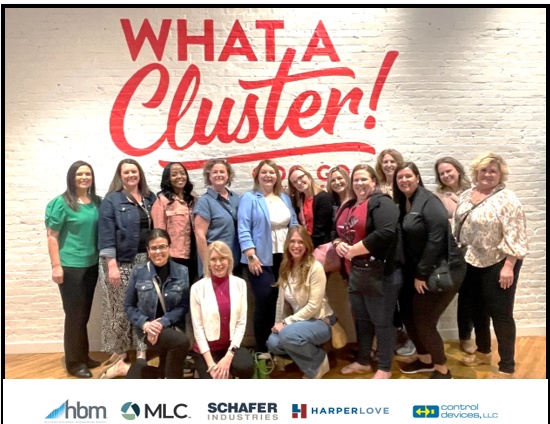
There was also music and chocolate-making at the Goo Goo Cluster Factory. A holding company can produce an earnest agenda with impressive efficiency; this one left room for confectionery. The outing supplied a modest human counterweight to discussions about systems and planning. The people responsible for supporting colleagues across separate companies got time to spend together.
Fincher’s leadership network also changed through appointments. Kenny Messer took the helm of HarperLove in 2022. Patrick Fitzgerald became HBM’s CFO in 2023, succeeding Don Roberts. That June, Scott Nieberle joined to lead corporate development and strategy, including acquisitions and planning. All three appointments joined operating or functional experience to the group’s growth agenda. Building a portfolio involves building the team that can support it.
The fertilizer company that kept its leaders
In September 2024, HBM acquired Calcium Products, an Ames, Iowa-based manufacturer of calcium-based agricultural fertilizers. Its products included pelletized limestone and gypsum. The company joined MLC, Schafer Industries, HarperLove, and Control Devices. HBM’s year-end account called it the largest platform acquisition in the enterprise’s history.
Fincher’s explanation emphasized product quality, innovation, growth, and the leadership team. Calcium Products’ president and CEO, Mike Hogan, and the existing leadership stayed in place. Approximately 130 employees came into the portfolio. The transaction thus offered a concrete example of the ownership proposition: a new parent, with the operating knowledge continuing inside the business.
For a profile of an industrial executive, this is a revealing event. Fincher’s work is visible in the choice of business and the structure around its management. The announcement did not disclose the transaction price. Its more useful detail was continuity: the people already responsible for the company’s direction would continue to lead it under HBM.
What a longer calendar looks like
By mid-2025, the portfolio’s plans included a vertical kiln project at MLC in Bonne Terre, Missouri, new commercial programs at Schafer, HarperLove’s expansion into markets including Brazil, and a Calcium Products facility in Blair, Nebraska. These were different ways of pursuing growth. Buying another business was one option alongside building capacity, developing products, and finding customers.
In his January 2026 update, Fincher described 2025 as a record financial year for the portfolio. He also reported the enterprise’s largest capital investments to date at MLC and Calcium Products. His review covered an MLC systems rollout, operating changes at Gilmore within Control Devices, and talent planning. That combination gives his job texture: large commitments alongside improvements in the everyday workings of businesses.
The acquisition program continued through 2026. Control Devices added Solenoid Solutions in July, broadening its valve technology and product capabilities. In August, HarperLove acquired ChromaScape’s corrugated products business, extending customer relationships and its packaging product offering. These were portfolio-company transactions, announced by the operating leaders, within the group Fincher runs.
A deal has a closing date; operating the resulting business has a much longer calendar.
The ownership horizon
Return to that St. Louis gathering and the sentence begins to look like a description of the job. Fincher has moved from trailers to diversified industrial management to a holding company that wants enduring ownership. Across that progression, growth keeps creating another requirement: people with the judgment to handle the next stage. A larger portfolio supplies more opportunities. It also supplies more decisions that somebody, somewhere, must make well.