In 2000, Ananth Narayanan faced a choice that looked oddly lopsided. One offer came from Cummins, an engine maker that fitted his ambitions neatly. He had studied engineering, loved cars, and imagined himself working in the automotive world. The other came from McKinsey, a firm he says he had to look up before he understood what it did. He took the less obvious job. He planned to stay two years. He stayed about fifteen.
That small miscalculation has become a useful way into his story. Narayanan’s career keeps moving from a familiar system to one he has to learn afresh: from factories to consulting, from consulting to fashion retail, from running another company’s marketplace to assembling his own portfolio of brands. Each move has brought a new set of arithmetic. At BRND.ME, the company he founded as Mensa Brands in 2021, the most important calculation may be how much attention a brand is worth.
The business was born during a rush of enthusiasm for digital-first labels. It bought them quickly, crossed a billion-dollar valuation within months, and collected the kind of headline that makes a young company look older than it is. But ownership is easier to count than loyalty. A customer must still choose the product, perhaps ignore a cheaper rival, and come back. Narayanan now talks about a smaller group of core brands, cash generation and the slow work of earning trust. The revision gives his story its current shape.
An engineer takes the long way round
He grew up in Chennai, then Madras, and attended Vidya Mandir before studying engineering at the University of Madras. His father worked at Hindustan Motors. Cars therefore had a place in the household imagination, and Narayanan has said he wanted to be an engineer in the auto industry. He went on to a master’s degree at the University of Michigan, where a product-development class made a lasting impression. It joined design, operations and other disciplines in one problem, a pattern he would keep finding in businesses that appeared unrelated from the outside.
McKinsey put that pattern to work. He joined its Cleveland office as a manufacturing business analyst. The choice of Cleveland had a mischievous logic: Detroit looked almost too perfect for someone from Michigan who liked cars, he later recalled. He spent years in China, helping build sourcing work, then worked in Chicago and returned to Chennai to help open an office there. For a spell, before the office had premises, the team worked from colleagues’ homes. The corporate journey had the texture of a startup, just with a more established name on the business card.
He eventually became a senior partner. By then he had spent far longer in consulting than his original plan allowed, but the impulse to try a new operating problem remained. He left for Myntra in 2015. He later said he knew little about fashion or technology and had never run a business at that scale. His first response was to listen. Ask basic questions, he advised in a 2018 conversation, even when a senior title makes that awkward. Expertise can be borrowed for a meeting; the willingness to admit a gap has to be personal.
“You ask the dumb questions because you want to know and you want to understand.”Ananth Narayanan, 2018
At Myntra, one of those questions went straight at fashion’s calendar. Why should a retailer in India obey a two-season rhythm built around spring and winter elsewhere? Narayanan suggested a much faster cycle and helped develop labels such as Moda Rapido and Here&Now with data and shorter production times. It was an engineer’s provocation inside a style business: if the supply chain can change, why should the old timetable survive? The company also integrated Jabong during his tenure and, by his account, expanded several-fold.
A career of new operating systems
- Manufacturing analyst at McKinsey in Cleveland
- CEO of Myntra, later overseeing Jabong integration
- Co-founder and CEO of Medlife
- Founder of Mensa Brands, now BRND.ME
When he left Myntra, he did not walk straight into Mensa. He became co-founder and CEO of Medlife in 2019, another change of category and operating vocabulary. After that chapter, the idea of building a collection of consumer brands took hold. In a podcast, an interviewer noticed the procession of M-names in his life: Madras, Michigan, McKinsey, Myntra, Medlife, Mensa. Narayanan laughed that the pattern was accidental. It is an unusually tidy mnemonic for a career that otherwise resists tidiness.
The speed of buying, the pace of building
Mensa Brands launched in 2021 with a proposition for promising digital-first labels. A young brand might know its product and its customers but lack the capital, technology, distribution and operational depth to grow far beyond its first audience. Mensa would invest in or acquire such businesses, then bring shared capabilities to bear. The early portfolio spread across fashion, home and other everyday categories. The startup reached a billion-dollar valuation within six months of incorporation, according to later reporting. It had the velocity of a company determined to prove its model before the ink on the model was dry.
The comparison with other ecommerce roll-ups was inevitable. So was the question after the deals: what did the parent company actually improve? Narayanan’s answer has become more exact with time. He has described gross margin as the starting point for brand building. There must be enough room in each sale to improve the product, serve the customer, and keep the business standing while awareness grows. A dazzling growth chart is a poor substitute for that room.
The market supplied a lesson in its own way. Advertising became costly. Some of the wider roll-up industry struggled with thin economics and unwieldy portfolios. Narayanan’s company changed emphasis. In February 2026, he said it had bought about twenty brands at the start and later sold those outside its core. The four names drawing the sharpest focus were Majestic Pure, MyFitness, Botanic Hearth and PartyPropz. They sell in different categories and markets, but they share a management problem: each needs product quality, distribution, sensible pricing and a reason for people to return.
His explanation for narrowing the list is refreshingly practical. A small brand can demand as much management attention as a large one, and sometimes more. That makes a sprawling collection expensive in a currency that does not appear as a line item in an acquisition announcement. Attention is finite. A founder can buy twenty businesses; he cannot sit in twenty decisive meetings at the same hour. The portfolio’s new shape is therefore an operating choice as much as a financial one.
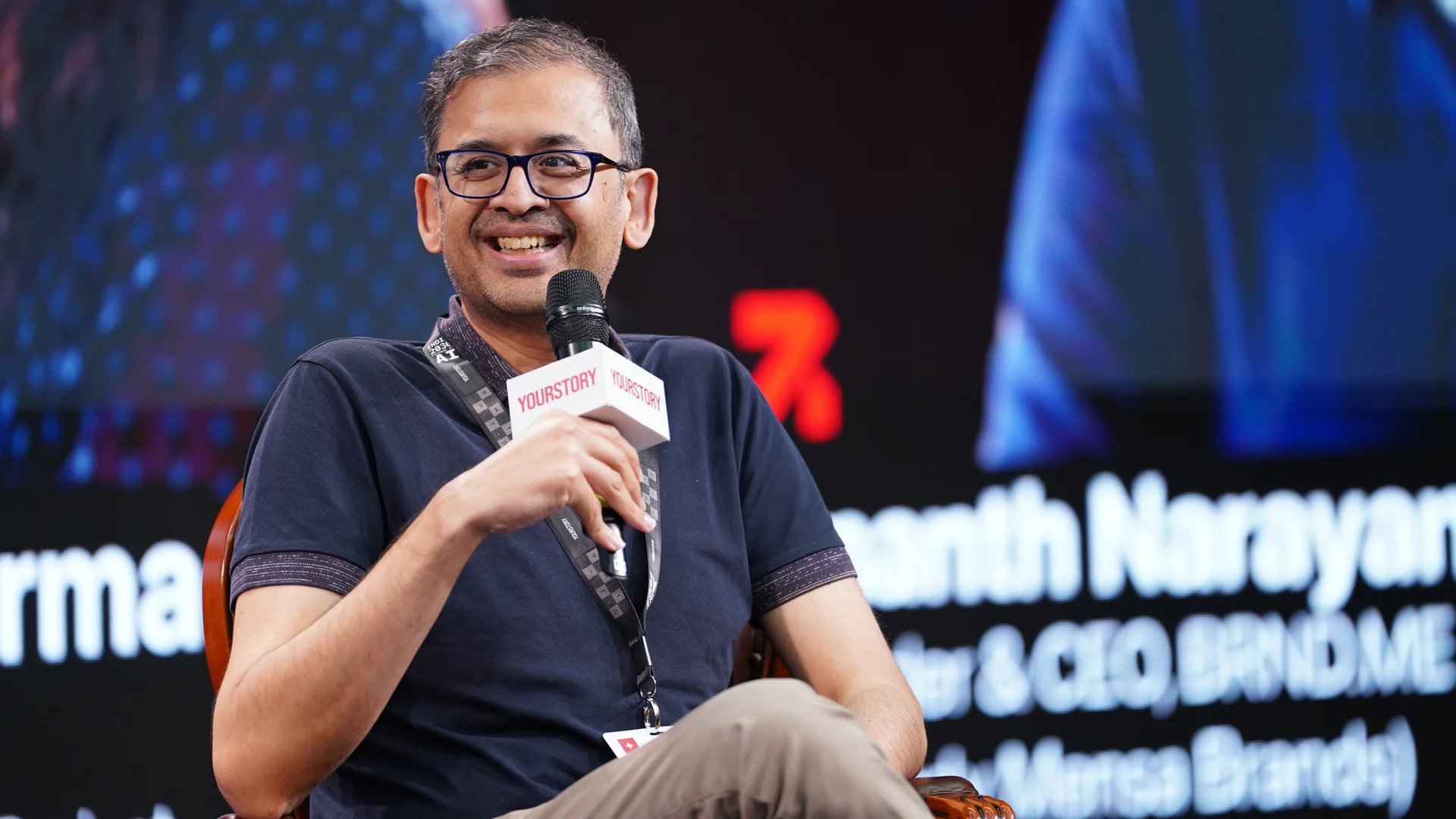
What travels with a brand?
Narayanan’s ambition reaches beyond India. He argues that digital marketplaces have changed the cost of entering another country: a brand can find customers without first assembling a distributor in every market. Better data makes demand easier to read, and Indian producers have established strengths in some categories. Those are favorable conditions. They are not a guarantee that anyone in a foreign household will care about a new label, let alone order it again. That gap between access and affection is where the work sits.
The company’s renaming to BRND.ME in 2025 made the ambition easier to carry across categories and borders. Narayanan has said the new name serves a practical need for a single identity with trademark clearance in its markets. The shift also arrived as the business put more weight behind a few labels. Majestic Pure has an overseas presence; Botanic Hearth has been part of the European expansion; MyFitness and PartyPropz form the other half of the current core. Such a mix is a test of whether common operating tools can help brands without making them all sound alike.
A retail executive knows the temptation to mistake reach for devotion. A listing can put a product in front of someone. A paid ad can make that person click. Neither creates the quiet confidence behind a second purchase. Narayanan, who once spoke about using data to shorten fashion cycles, now also speaks about patience. In a 2026 interview, he said trust cannot be compressed indefinitely. It is the sort of sentence that sounds obvious until a board meeting demands a faster curve.
“You can accelerate growth, but you cannot infinitely shorten the time required to build trust.”Ananth Narayanan, 2026
There is an amusing tension in that view from the founder of a company known for reaching unicorn status so quickly. Valuation has its own clock, written by investors and financing rounds. A brand’s clock belongs partly to strangers. They open the package, use what is inside, and decide whether to pay again. Narayanan has spent years on the machinery of retail; the machine is finally judged in a kitchen, a wardrobe, or a weekend celebration. No spreadsheet gets to cast the customer’s vote.
The less glamorous number
At TechSparks in late 2025, Narayanan drew attention away from the elastic language of profitability and toward cash generation. BRND.ME was generating cash, he said, and that mattered to him more than competing definitions of earnings. Public financial reporting still gives a more complicated picture: FY25 revenue declined from the previous year and reported losses widened. The distinction is worth holding together. A founder’s description of current cash performance and a filed result for an earlier financial year measure different things. The company’s next accounts will show how the newer strategy looks over a full period.
The proposed next milestone is a public listing. Narayanan has spoken about moving the company’s domicile from Singapore to India as part of that preparation. He has not fixed an IPO date. In June 2026, he described an annual revenue run rate of roughly $200 million and said he could imagine each of the four major brands reaching $100 million in revenue. Those are ambitions, not achievements already booked. The useful question for investors will be how consistently the brands produce cash while they grow.
It would be easy to tell his career as a sequence of titles: partner, CEO, founder. The more revealing sequence may be the questions beneath them. What if a manufacturing analyst goes to Cleveland instead of Detroit? What if an experienced consultant admits he knows little about fashion? What if Indian retail does not need to copy a foreign season calendar? What if the founder of a roll-up discovers that the next act calls for fewer brands? The questions change; the appetite for asking them does not.
BRND.ME is still a work in progress, and so is its founder’s answer to the problem of building brands that cross borders. He has the capital, the operating experience and the advantage of a hard lesson learned in public: a large collection can be impressive, but each product needs its own reason to exist. The engineer who once expected two years at McKinsey has again underestimated the length of the assignment. Building a brand that people trust tends to take more than two years. He seems prepared to stay for the longer calculation.