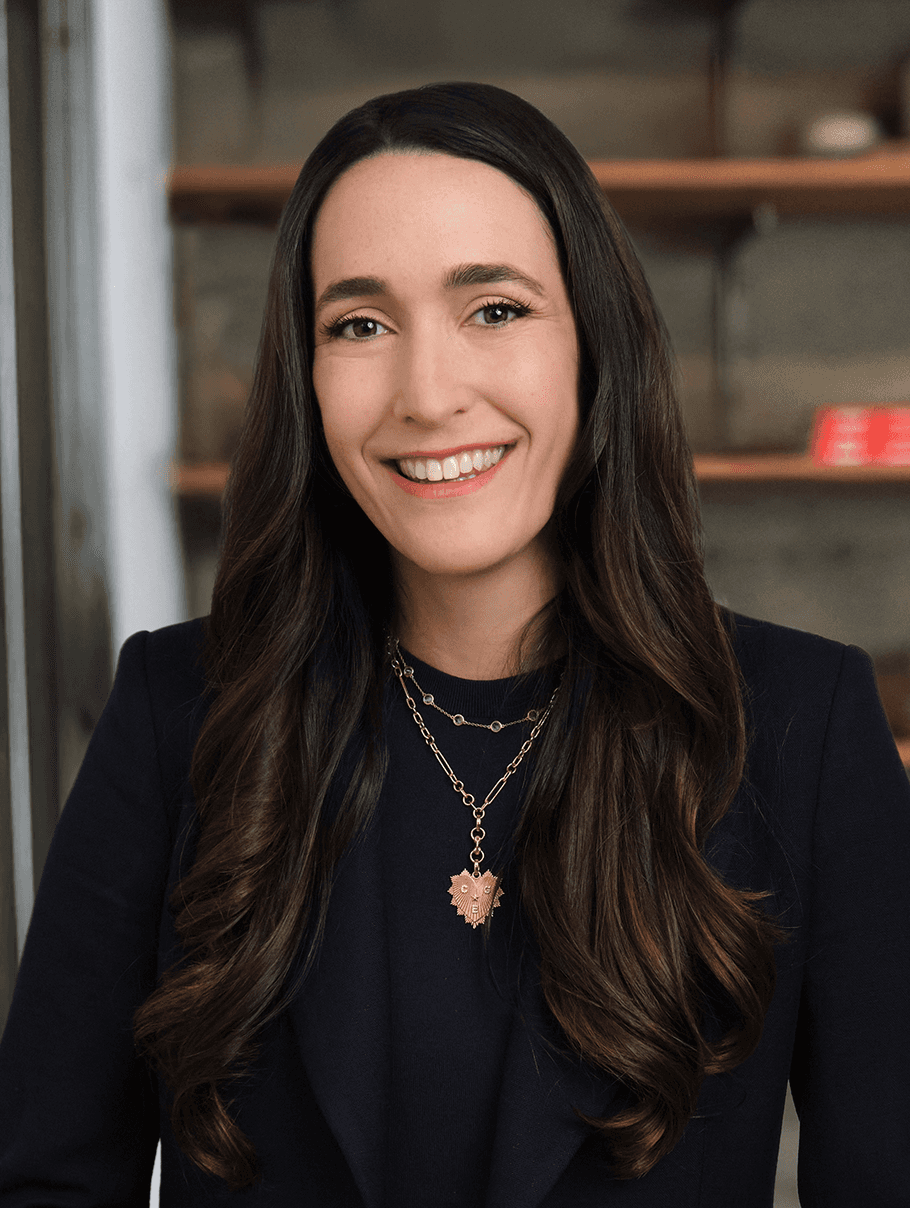
Amy Saper joined Uncork Capital in 2023 from Accel, then took the General Partner title in 2025 when the firm closed its next fund. The seat is the headline. The interesting part is what she does from it.
At Uncork she writes seed checks into AI-enabled B2B founders, the people building API-first infrastructure, developer tooling, and the connective tissue that lets engineering, product, and design teams move faster. Foundation-model plumbing. Workflow tools that look boring on a slide and feel obvious six months later. Companies in stealth. The kind of bets that read as inevitable only after they work.
Before the GP nameplate she spent four years at Accel as an early-stage partner, leading rounds into Gamma, Beam, Complete, Sprinter Health, and WellTheory. Andy McLoughlin, Uncork's managing partner, has told the recruitment story publicly: a foggy spring morning at Zazie, the San Francisco breakfast spot Adele apparently also favors, plates of scrambled eggs, bowls of coffee large enough to require two hands. By the time the check arrived he had decided. "This is it," he wrote later. He called her "fast-talking, sharp-thinking, wide-beaming." He called her "an uncommon find." Most importantly he called her.
The operator years
Saper's resume reads like a coastal hyper-growth tour. Twitter pre-IPO, where she helped scale the company from roughly 200 employees and $20M in revenue to 4,000 employees and $1.5B. She launched advertiser and developer products. She opened the APAC headquarters in Singapore. She racked up stamps in 50 countries before she turned 30, partly because that is what an international expansion job looks like when you actually do it.
Then Stanford GSB for the MBA. Then Uber, doing product management for Uber for Business. Then Stripe, as the second hire on the marketing team, leading product marketing for Connect, Billing, and Atlas, the API-shaped products that make Stripe more than a payments button. If you have ever clicked through onboarding for a Stripe-powered marketplace, you have shaken hands with her output.
Operators turned investors are common in venture. Operators who actually shipped at Twitter, Uber, and Stripe inside the windows when those companies were inventing themselves are not. That is the distinction Saper carries into pitch meetings - and the reason her portfolio skews toward founders building hard, technical things rather than well-marketed flat ones.
What she actually invests in
The thesis at Uncork has stayed coherent: seed-stage B2B SaaS, API-first companies, developer infrastructure, and fintech. Saper sharpens that into AI-enabled applications and the foundation-model plumbing they depend on. She has been particularly vocal about API-layer companies, the ones building the connective tissue that lets engineering, product, and design teams manage models, evaluate them, ship faster, and not break production.
Her Accel-era portfolio names show the range. Gamma rebuilt presentations as a generative product. Sprinter Health sends clinicians to your door. Beam, Complete, WellTheory - each one a wedge into a market that looked sleepy from the outside and was, in fact, on fire. Saper's Uncork-era bets include Buildcheck and a roster of stealth companies she will eventually tell you about over coffee.
The Stanford thread
She went undergrad at Stanford for a BS in Science, Technology, and Society, then came back for the MBA. She was a Mayfield Fellow, the Stanford program that drops a small cohort of engineers and operators into early-stage startups for a hands-on tour. She was president of Stanford Women in Business. She has spent the last several years as a Lecturer at Stanford, teaching entrepreneurship to students who, statistically, will be pitching her in five years.
The teaching is not a side project. It is part of the reps. Lecturers see early-stage founders earlier than seed funds do. They watch a pattern repeat itself across a hundred sections. They build the instinct that lets a partner say yes in fifteen minutes and mean it.
The community part
Saper founded and ran a Women in Product community for years, well before "community building" became a LinkedIn job title. She has described herself as a third-generation woman in STEM, which is the kind of biographical detail you only mention if it matters to you. She mentions it. She also mentions, when asked, that she is a classically trained singer, and that she takes most of her meetings on foot because the calendar tends to eat the gym otherwise.
What she sounds like in a pitch
Quick. Specific. Allergic to abstraction. Her public writing, scattered across Medium posts and a long-form interview on Venture Unlocked, comes back to the same idea: constraints make founders better, and the best ones lean into the limits of their team, their runway, and their market rather than wishing them away. She has been at the table when companies have grown thirtyfold in a few years. She knows what survives.
The dinner-party version of Saper's resume is easy to recite: Twitter, Uber, Stripe, Accel, Uncork. The harder version - the one that explains why founders take her call - is that she has shipped products, opened markets, written the first marketing copy for an API, and then made the leap to the other side of the table and learned to write checks. The arc is unusual not because it includes good companies but because she did real work at each of them.
The next chapter
Uncork's most recent fund closed in April 2025. Saper now sits on it as a General Partner, which in venture math means she has a vote, a check size, and a clock. The clock is the interesting part. Seed-stage funds deploy over years and harvest over a decade. The companies she backs in 2026 are the names we will be repeating in 2031, give or take a few miracles and rewrites.
The pitch is open. The breakfast spot is Zazie. Bring the demo, not the deck.