A research project can change direction in a fortnight. A building is less accommodating. It has pipes, walls, a landlord, and a rather settled opinion about where the electricity should go. Amrit Chaudhuri built much of his career around this disagreement. The scientist wanted the room to keep up.
At SmartLabs, the company he co-founded and ran until 2024, the proposition was to make laboratories available with the operations already attached. Teams could get on with their work while someone else handled the physical environment and the supporting machinery. The room, in this arrangement, became a service with responsibilities.
That idea grew into a business with sites on both American coasts and a $250 million Series B. It also encountered an early model that did not work as expected, a difficult property market, and a change of chief executive. Chaudhuri’s story is most interesting when all those parts stay in the picture. Buildings are complicated. So are the companies that promise to make them simpler.
The experiment was shorter than the lease
Consider the problem from the research team’s side. You have people, equipment requirements, and a program to pursue. You need a place to do it. Taking an empty building means arranging construction, utilities, and the people who will run it. Before the experiment begins, a second enterprise has appeared on your desk: the laboratory itself.
Chaudhuri saw a mismatch between that commitment and the work it served. Research programs might run for a few years. Facilities demanded much longer decisions. The team had to make a durable bet on space while still discovering what it would need from the space.
There is an almost comic confidence to a fixed floor plan. It assumes the future will be courteous enough to resemble the present. Research tends to be less polite. A new method, a different instrument, or an expanding team can make yesterday’s sensible arrangement inconvenient.
SmartLabs put that uncertainty at the center of its proposition. If the work changed, the environment should be able to change too. The challenge was to make that promise physically credible and financially repeatable. A movable wall was only one part of the answer.
A chemist discovers the walls
Chaudhuri came to the question from inside research. He began working in a neurophysics laboratory at the Whitehead Institute as a teenager and studied biomedical engineering and chemistry at Boston University. Rather than continue directly toward a doctorate, he started a company.
Advanced Peptides, founded in 2007, specialized in difficult peptide chemistry. Its work eventually covered more than 3,000 molecular projects for over 120 organizations. That meant repeated exposure to the practical circumstances around scientific work: what could be made, who could make it, and what a team needed to move forward.
The move toward laboratories followed those circumstances. Chemistry had supplied the technical foundation. Running a company supplied a wider view of where projects could get stuck. Infrastructure became a subject he needed to understand because it was part of the work he already understood.
It is an unusual route into buildings. A conventional property career might begin with land, rents, and financing. Chaudhuri arrived with questions about experiments. That difference helps explain why SmartLabs would concern itself with the people and routines inside the space as well as the space itself.
The first room did not fit everyone
Work on the new venture began in 2014; Mass Innovation Labs launched in January 2015. The early facility occupied 124,000 square feet in Kendall Square. It was a substantial place to test an idea, and the test exposed an inconvenient fact: a laboratory is a category containing many different requirements.
Chaudhuri has described the difficulty of making the original economics work. Available capacity was not automatically useful capacity. A space suitable for one team could be wrong for the next. Providing access to research resources was an appealing premise; anticipating every configuration was another matter.
The company’s response was to work on the structure of the laboratory itself. Prefabricated components, computational design, and configurable engineering systems became part of the approach. Flexibility had to extend beneath the appearance of the room, into the utilities and systems that allowed it to function.
This is the part of the career that gives the later growth some texture. Chaudhuri had identified a real obstacle, but the first attempt at solving it needed revision. The venture became more specific by confronting the ways its original proposition failed to match actual demand.
The business of the unglamorous
In its early years, Mass Innovation Labs offered help with supplier arrangements, equipment installation, permitting, training, and waste management. These are the kinds of tasks that rarely appear in a triumphant account of an experiment. They have a remarkable ability to prevent one from starting.
“We are their operations team,” Chaudhuri said. The sentence is brief enough to overlook. It carries a large share of the business model. A tenant needed people and working systems alongside square footage. Outsourcing those jobs could keep a small company from assembling a second team merely to support its first.
The early occupants included CRISPR Therapeutics, Editas Medicine, and Gritstone. For a company trying to begin work quickly, the appeal was practical: spend less time becoming an expert in the arrangements around a laboratory. A supplier account is a modest object until the equipment cannot be ordered without it.
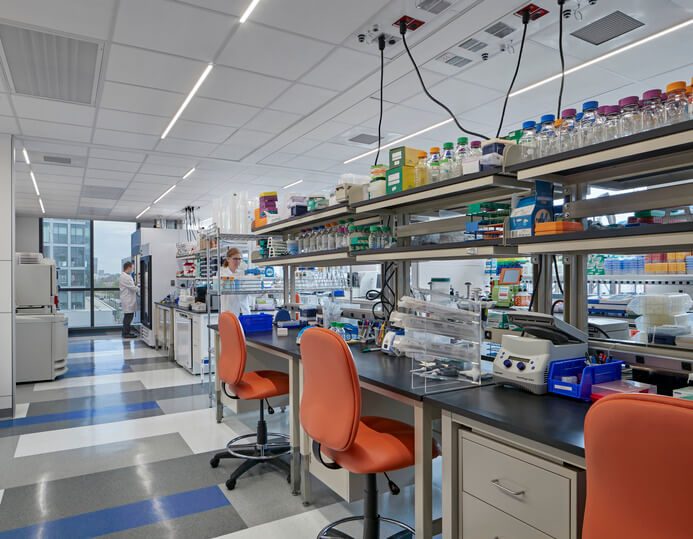
By 2018, Chaudhuri was describing rooms that could move between biology, chemistry, and tissue-culture uses. The design ambition and the service ambition belonged together. Changing a room meant changing its operating requirements too. Flexibility depended on people who knew how to make the next arrangement work.
A name catches up with a company
Mass Innovation Labs became SmartLabs. Around the company accumulated a collection of descriptions: incubator, accelerator, laboratory as a service, managed research center. Each offered a familiar handle. Each could also direct attention toward only one portion of what the business did.
Chaudhuri later wrote about the confusion created by the original name and by those labels. A company dealing with rooms, operations, and changing research requirements did not fit comfortably into a single familiar description. Explaining the offer became a piece of the founder’s job in its own right.
“Sometimes the hardest part is not building it. It is explaining it.”AMRIT CHAUDHURI
There were more concrete ways to explain the scale. In 2020, SmartLabs announced an 80,000-square-foot South San Francisco facility. In September 2021, ArrowMark Partners led a $250 million Series B. The announcement included version 4.0 of SmartLabs OS, the software used to manage laboratory and office operations across its locations.
Led by ArrowMark Partners. Announced alongside SmartLabs OS v4.0.
A laboratory service carries physical obligations. Someone has to finance the capacity, maintain it, and make it available when a customer needs it. The financing and the software belonged to the same story: the company was trying to coordinate an expanding network of places where work actually happened.
The keys change hands
In January 2024, SmartLabs named Brian Taylor interim chief executive, effective January 5. Chaudhuri’s role shifted toward strategic advice. Taylor had already been working in the business as executive vice president of biopharma solutions. The handover placed daily management with someone familiar with its operations.
Later that month, the company announced a $48 million Series C. The change of leader and the new funding marked a different phase from the earlier expansion. In March, reporting described the closure of two South San Francisco locations, including one that had never opened.
Those developments belong beside the growth figures. Providing flexible space does not remove the operator’s exposure to the market around it. The company carrying the building still has to decide how much capacity to commit to and where. A service designed to absorb uncertainty must manage some uncertainty itself.
Chaudhuri’s later reflections on succession focused on endurance. Shared infrastructure should continue to work beyond the founder’s tenure. That is a useful standard for a business built around daily reliability. Customers need the environment to function regardless of who occupies the chief executive’s office.
Two businesses, one persistent question
Today, Chaudhuri is founder and managing partner of Kaliper and founder of APC Science. Kaliper connects infrastructure planning, design, launch, and operations across laboratories and other technical facilities, including data centers. APC Science brings his chemistry experience into scientific strategy and technical consulting.
The two businesses give him different scales at which to work. One deals with facilities and the organizations that run them. The other deals with technical feasibility, partners, and the choices inside a scientific program. Both ask how an intended piece of work can be made possible in practice.
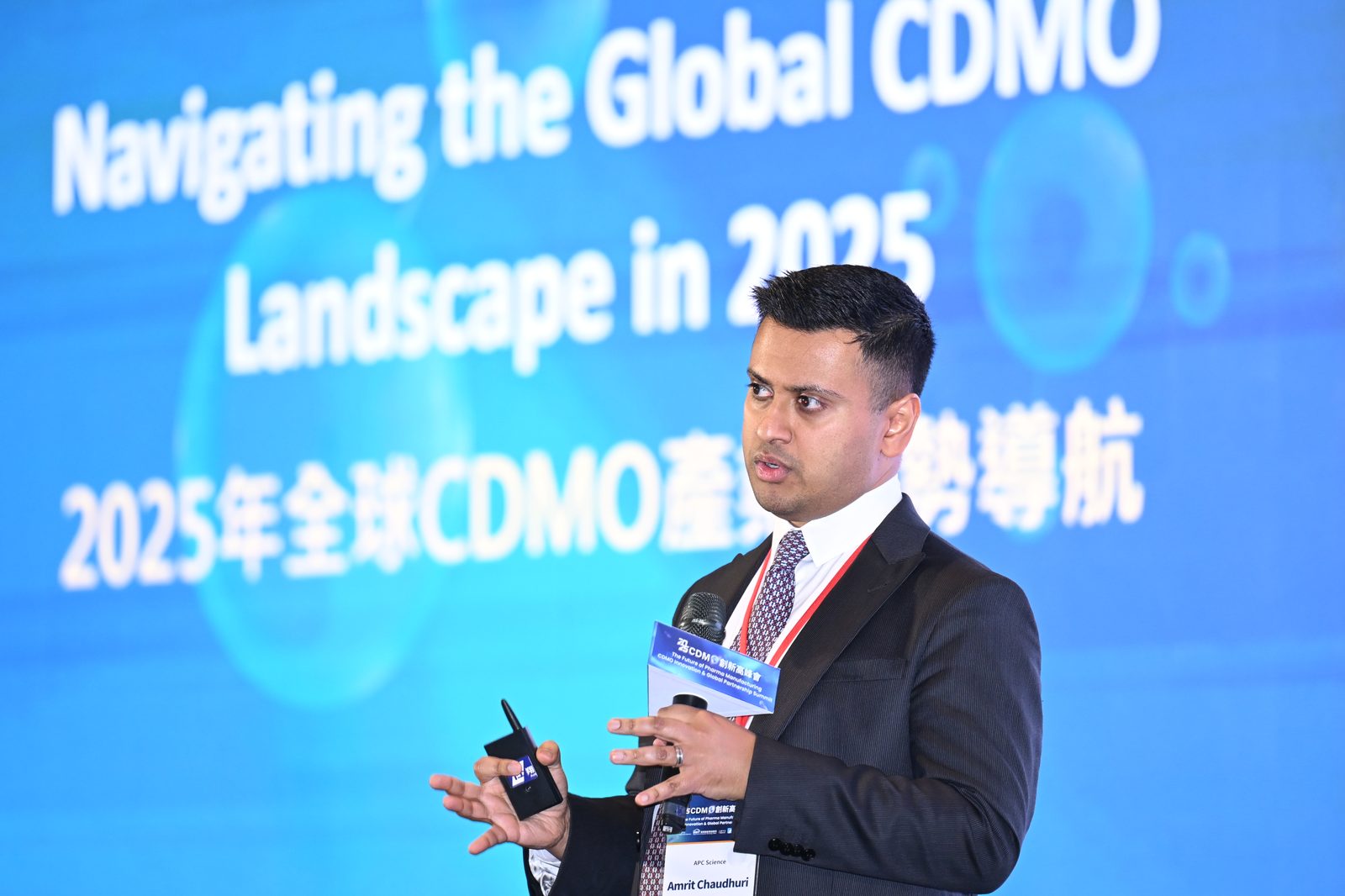
There is room for a less institutional version of him, too. He was once a nationally competitive ballroom dancer and later spent years with salsa and Argentine tango. His coffee order is a mocha latte. Asked about a favorite building, he singled out the huge tuned mass damper inside Taipei 101: an engineer’s choice of sightseeing.
That last detail fits the career rather neatly. A striking building interested him for the system that made it work. He has spent years applying the same attention to laboratories. Behind the room is an arrangement of forces, costs, equipment, and people. Chaudhuri’s recurring question is whether that arrangement can keep up when the work changes its mind.
Through the laboratory door
More from and about Amrit Chaudhuri.