A brewery belongs in Amir Zilberstein’s story. So does a dairy, a soda bottler and a winery. In 2018, while explaining the industrial security company he had co-founded, he singled out the unexpectedly strong demand from food and beverage businesses. Cybersecurity has a habit of arriving dressed for a spy film. Here it was, helping keep the drinks coming.
That detail brings his work into focus. Zilberstein helped build Claroty around the computers behind ordinary physical activity: making things, moving things, keeping power flowing. These machines rarely receive the affectionate attention lavished on a new phone. Their continued operation, however, is a condition of everyone else’s convenience. An ordinary day contains a considerable amount of engineering.
Today, he is a managing partner at Team8, building and investing in cybersecurity and software infrastructure companies, while remaining a Claroty co-founder and director. His recent work concerns AI, vulnerability management and the purpose of infrastructure. Follow the career from factories to AI agents and a persistent question emerges: how do you let a system become more useful without losing control of what it can do?
The computer has a day job
By Claroty’s public launch in September 2016, Zilberstein had already co-founded two cybersecurity businesses. Gita Technologies worked in cyber and intelligence research and development. Waterfall Security Solutions made security gateways for critical infrastructure. His preparation also included leading researchers and developers in an Israeli military cyber unit, and degrees in computer science and mathematics from Bar-Ilan University.
Waterfall gave his career a direct connection to industrial security before Claroty existed. This was a world in which the network served a physical process. Equipment had duties beyond storing or displaying information. Understanding those duties was part of understanding the security problem. A digital connection could carry operational consequences along with its data.
At Claroty’s launch, Zilberstein explained the difficulty in two parts. Industrial networks were becoming more connected to business networks. Meanwhile, the control systems themselves had been designed around reliability and safe operation, with cybersecurity a different consideration. Connecting the two worlds created an opening that the founders believed demanded its own technology.
There is a certain comic injustice here. A piece of equipment can spend years doing exactly what its owner bought it to do, then acquire a new problem because the surrounding world changes. The machine has kept its side of the bargain. The network has developed a social life.
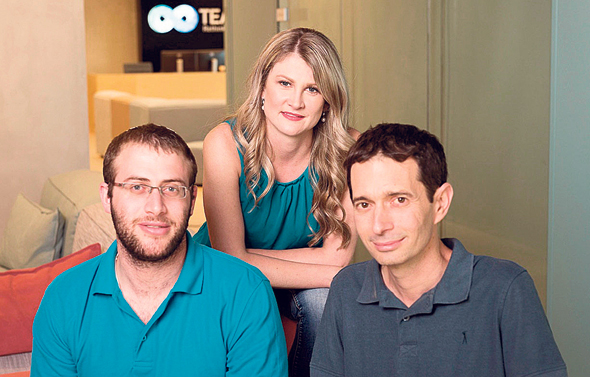
A founding team with industrial connections
Claroty brought Zilberstein together with Galina Antova and Benny Porat. Antova had led industrial security services at Siemens and previously worked at IBM. Porat brought security research experience, including work at NorthBit and leadership of a military research team. The combination put industrial customer knowledge beside technical research and experience building companies.
There was also a human introduction behind that combination. Emanuel Salmona, who later led Claroty’s global partnerships, had worked with Antova at Siemens. He introduced her to the other two founders. When the resulting company asked him to join, Zilberstein helped persuade him. Salmona later credited Zilberstein with giving him opportunities to develop his career.
That recollection supplies a useful scale for the founder’s work. A biography can count companies and patents - Zilberstein holds more than ten - while missing the particular person who needed persuading to take a job. Salmona’s account places him in that smaller, consequential transaction: helping someone decide where to work, then making room for that person to grow.
The company’s origins also explain his continuing connection to Team8. Incubation began there in 2014; Claroty was formed in 2015 and publicly emerged the following year. Team8 supplied a company-building setting and access to industry executives. Years before Zilberstein joined the firm as a partner, he had experienced its model from inside a founding company.
The investors already knew the factory
In June 2018, Claroty announced a $60 million Series B. Its investors included industrial businesses with substantial reasons to care about the problem: Siemens, Rockwell Automation and Schneider Electric. Such names mattered beyond their appearance on a financing announcement. They built the equipment and relationships through which industrial customers encountered new technology.
Zilberstein described those relationships as routes into the market. Even competing industrial suppliers had invested in the same security company. Their customers already relied on them to build networks properly; working together offered Claroty a way to reach the people responsible for those networks. Selling security for a factory required some acquaintance with the factory.
Next47’s involvement offered another example. Zilberstein valued its understanding of industrial markets and its help navigating Siemens and its customer base. The useful investor could help a young company find its way through a large organization. Capital bought time and people; introductions helped those people spend that time productively.
Year-over-year growth in customer base reported for 2017.
Historical company-reported figures. Customer growth is distinct from revenue growth.
The commercial results made the problem harder to dismiss. Claroty reported 327 percent growth in bookings for 2017, alongside a 357 percent increase in its customer base. By February 2018 it described production installations across six continents. Those figures capture a particular early period, when industrial security was moving from a proposition the founders had to explain to something customers were buying.
The unglamorous work of getting bigger
The first product was only part of the assignment. Claroty’s early offering examined industrial network activity; the company subsequently added capabilities including secure remote access and tools for managing information across multiple sites. That expansion reflected a practical complication: seeing a problem creates a demand for ways to do something about it.
Growth produced a second assignment inside the business. Asked in 2018 about his toughest hurdle, Zilberstein identified scaling sales to meet demand. He acknowledged that it was a welcome difficulty, while being clear about the work involved. Board members, investors, former colleagues and industry contacts helped as the company recruited sales and partner staff.
Then came the paperwork. Asked what he wished he had learned a year earlier, he pointed to his belated discovery that DocuSign worked on both his laptop and his phone. It is an excellent puncture in the ceremonial language of entrepreneurship. A chief executive can be responsible for important infrastructure and still experience professional progress as discovering another way to sign a document.
“I could use DocuSign on my laptop AND phone!”
Amir Zilberstein, 2018
There is room in that admission for a more recognizable founder than the standard silhouette at a conference podium. His problem was technical, commercial and administrative at once. Hiring, partnerships, product decisions and signatures belonged to the same job. Even a company devoted to keeping complex systems working needs someone to finish the forms.
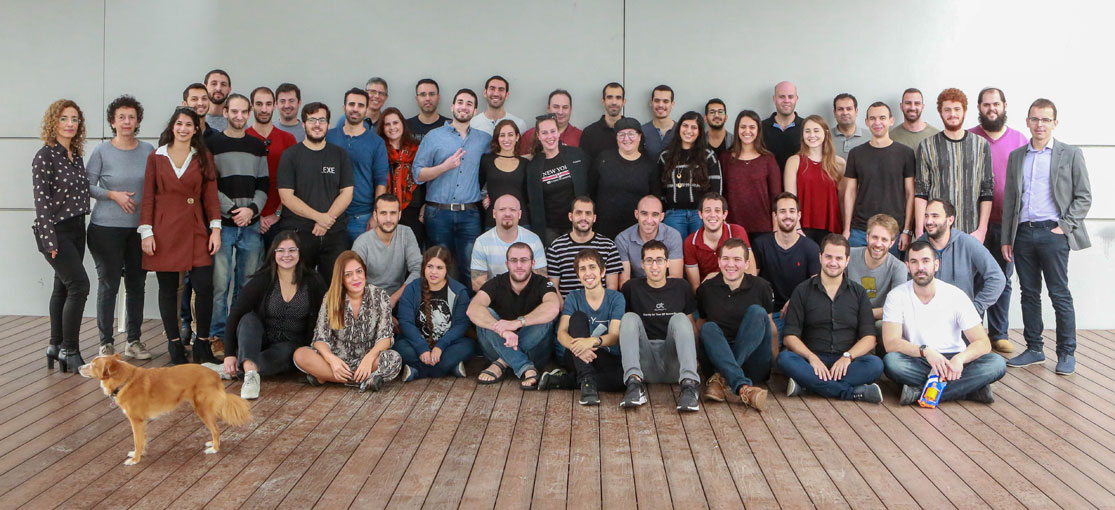
Leaving the CEO’s chair, staying in the room
In October 2019, Claroty appointed Thorsten Freitag as chief executive. Zilberstein became chairman and continued advising the executive team. The announcement described a company preparing to expand its international operation. His own explanation emphasized the demands of that next phase and the experience Freitag would bring to it.
The sequence matters. Zilberstein was Claroty’s founding CEO; he is not its current chief executive. Yaniv Vardi took the role in July 2020, following Freitag. Claroty now lists Zilberstein as director and co-founder, with Dave DeWalt as chairman. A founder’s relationship with a business can continue through several different seats at the table.
Zilberstein joined Team8 in 2020 to lead its Enterprise fund, focused on cybersecurity, data and AI. Building a company had become preparation for helping build others. His public conference work reflects that change of position: in March 2026, his RSAC appearances included discussions of cybersecurity venture investment and corporate partnerships.
- 2016Claroty launches publicly
Co-founder & CEO - 2019Moves to the board chair
Continues advising the team - 2020Joins Team8
Company building & investment - 2026Focus includes AI infrastructure
Context, control & real exposure
The machine needs to know its purpose
The more recent investment work carries recognizable concerns into different technology. In February 2026, Astelia announced $35 million in combined seed and Series A funding led by Index Ventures and Team8, with Holly Ventures participating. Zilberstein’s explanation of the investment emphasized the team’s understanding of how security failures arise in real environments.
Astelia’s stated approach examines which vulnerabilities can actually be reached and exploited in a customer’s surroundings. It is a concrete question about circumstances, rather than a competition to produce a longer list of problems. For someone whose earlier company needed to understand industrial machinery, the emphasis on the environment is a familiar thread.
His writing with Team8 colleague Aviad Harell about Lumia applies a related concern to AI usage. The investment thesis addresses employees and agents acting across applications: what they can access, which permissions they hold and what actions they take. Lumia’s proposed controls are intended to let organizations adopt AI while retaining oversight of its use.
Zilberstein’s own 2026 infrastructure outlook takes the argument further. As AI builds and changes systems at increasing speed, he advocates infrastructure that understands its intended purpose and constrains activity accordingly. This is a proposal for what should come next, with context informing permissions and limiting the consequences of failure.
Read alongside Claroty, the continuity is striking. His work keeps returning to the relationship between a system and the job it is supposed to do. The factory controller had a physical process to serve. The AI agent has a task, data and permissions. Both make the surrounding organization ask how much freedom useful automation should have.
The ordinary day remains the test. The drinks arrive. The production line runs. The software completes the task it was given. Zilberstein has built companies, moved into investment and turned his attention to new kinds of machines. The desired ending is still reassuringly uneventful: everything does its job, and everyone gets on with theirs.
Follow the work
- Amir Zilberstein at Team8
- His LinkedIn profile
- The 2018 conversation with Next47
- His outlook for infrastructure in 2026
- RSAC talks: investment and corporate partnerships
- The Lumia investment thesis
- Astelia’s February 2026 announcement
- Explore the Claroty company profile
RSAC presentation viewing may require a free account.