The bell was a tiny piece of software, and it carried a very human threat: wake up. In late 2013, Amiad Soto, his identical twin brother Koby and one employee were running the service that would become Guesty from a living room. They had about 20 customers. They worked 17- or 18-hour days. At night, an urgent request could arrive every hour or two, so Koby put a bell inside the app to rouse whichever brother had drawn the shift. The feature survived after the customers stopped using it. It had become a fossil from the period when the founders were not building tools for property managers. They were the property managers.
The origin stories of software companies often acquire a showroom polish: a market insight appears, code is written, a category is conquered. Guesty's begins closer to the utility closet. The Sotos rented their own apartments and discovered that a short stay produces a long tail of chores. Someone has to answer questions, coordinate cleaning, pass along keys, watch the calendar and handle the small domestic mysteries that become urgent when the host is in another country.
Amiad once went away for a month and found the turnovers so awkward to manage that he sublet his place at a loss. Koby's clarifying moment arrived on a beach in Barcelona. Guest messages pulled him away to find a Wi-Fi cafe and explain where things were in his apartment. It was a ridiculous interruption and a good product brief. The brothers created SuperHost in 2013 to provide the missing operational layer for Airbnb hosts.
“Our story began with my brother and me holding cleaning supplies.”Amiad Soto
The honest advantage of being bad at cleaning
At first, the twins performed much of the labor themselves, including cleaning homes and, as Amiad later put it with cheerful specificity, toilets. This part of the story matters because it kept them close to the work and made one conclusion unavoidable: they were computer geeks, not an elite housekeeping unit. Humility here was not decorative. It was operational. They could keep adding people to perform repetitive tasks, or they could encode those tasks into software.
Their early service won attention from hosts far beyond Tel Aviv. SuperHost entered Y Combinator's Winter 2014 batch, changed its name to Guesty and raised $1.6 million in seed funding. Yet the decisive move was not the accelerator badge or the new name. It was the shift in customer and medium: from serving individual hosts with human labor to giving professional management companies a system for handling listings, reservations, prices, owners, guests and staff across channels.
That is the useful idea hiding inside the pivot. A pain felt once by a holidaymaker may become a valuable business when an operator feels it 50 times before lunch. Property managers did not merely have more apartments. They had more handoffs, more opportunities for a calendar to drift out of sync and more tools that refused to speak to one another. Guesty began turning the scattered day into one product.
Amiad studied industrial engineering at Tel Aviv University from 2011 to 2013. It is hard to miss the discipline's fingerprint on his public reasoning: identify the process, find the constraint, measure the output. He has described two early pivots as data-driven decisions. Years later, discussing AI, he returned to the same test. Customers do not arrive asking for a fashionable acronym. They arrive with a job that consumes too much of the team's time and ask whether it can be automated.
Two founders, one mirror
Building with an identical twin gave Guesty an unusual founding instrument: brutally accurate feedback. Amiad has said that he and Koby knew each other's strengths and weaknesses and could offer a kind of honesty that is rare in business. The drawback was equally familial. Both are opinionated, so disagreement carried extra voltage. Their shared incentive kept the argument pointed toward the company. Success for either meant success for both.
Koby eventually stepped away from an active role. Amiad continued as CEO, and the company kept changing scale beneath him. That transition prompted a quieter pivot: the founder had to remake his own job. In a 2025 conversation about Guesty's growth, he described leadership as a recurring test of fit. If the company misses its goals, he asks whether the necessary skill set is present, including his own. “I constantly question what I am doing,” he said.
This is less theatrical than the familiar image of a founder with permanent conviction. It is also more demanding. The skills that help three people survive night shifts are not the skills that coordinate 750 employees across 15 offices. The person who once answered every bell must learn to build a company in which the right person hears it, understands it and can fix the underlying cause.
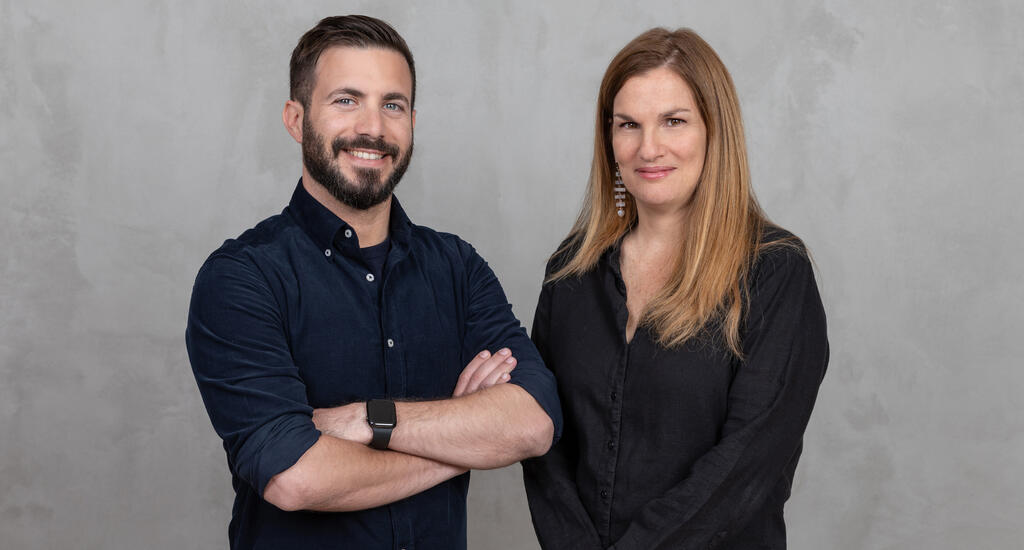
The milestones accumulated. Guesty integrated with Booking.com in 2017, breaking out of an Airbnb-only world. Forbes Israel named the brothers to its 30 Under 30 list in 2018. Acquisitions followed: MyVR and Your Porter in 2021; YieldPlanet, HiRUM and Kigo in 2022; StaySense in 2023; Rentals United in 2024. Each deal filled in another piece of the operating map. By 2023 the company reported more than 750 employees across 15 offices.
From hands to systems · Guesty's operating arc
Forty noes and an instrument panel
Capital supplied another measurement of endurance. Guesty raised $170 million in 2022, then announced a $130 million Series F led by KKR in April 2024. The polished version is two large numbers and a photograph. Amiad's version is better: “In every round I've raised, I would always get 40 no's for every yes.” Even as the company approached profitability, he joked that the ratio remained, only with more yeses arriving beside it.
The money supported expansion, larger enterprise products, entry into medium-term stays and more acquisitions. Guesty ranked No. 234 on the 2024 Deloitte Technology Fast 500 after reporting 508 percent revenue growth over the measured period. These numbers describe reach, but Soto's public habits explain more about the route. He welcomes anonymous questions from employees. During difficult periods he has emphasized transparency. He prefers self-starters and argues that people who feel heard require less ceremonial motivation.
He is also a private pilot, scuba diver and skydiver, biographical details begging for a story about appetite for risk. The pilot certificate offers a subtler reading. Soto says he dislikes predictions. A pilot does not need a five-year theory of every cloud. A pilot needs a destination, trustworthy instruments and the willingness to correct course. Guesty's history reads the same way: purpose held steady, implementation repeatedly revised.
The Soto operating loop
Stand inside the work long enough to feel the actual friction.
Measure the repeated task, not the excitement around a technology.
Change the product, team or founder role when the numbers demand it.
Keep the purpose steady: give operators more time for hospitality.
The software is learning to do the work
In 2018, Soto's thesis was consolidation. A property manager should not need 20 tools to complete one day's work. Guesty would become the place where those tools met. In 2026, the language has moved from one dashboard to an AI agent hub: a connected set of agents that can share context and execute tasks on an operator's behalf. The ambition has changed from helping a person manage the work to completing more of the work itself.
His examples stay pleasingly mundane. Consider bank reconciliation. A property manager receives channel payments that may combine several reservations, with amounts that do not match neatly. Traditional automation could require months of engineered rules. Soto has described modern AI matching most of the rows and leaving the uncertain remainder for a person. The headline is artificial intelligence. The lived result is an afternoon returned.
“They tell us: it's a lot of manual work for my team, can you automate it?”Amiad Soto
That pragmatism protects the idea from becoming a stage trick. Hospitality is full of work that the guest should never notice: a cleaning team dispatched before check-in, a price changed as demand moves, an owner's statement closed to the cent, a promise rescued from a message thread. The guest experiences a door that opens and a room that is ready. The operator experiences the hundred decisions required to make the ordinary feel effortless.
Soto's career has followed those decisions backward, from the visible stay to the invisible system. The twins first tried to become the missing pair of hands. Then Guesty became the screen that organized those hands. Now the company wants its software to take action before the operator has to ask. It is a long route from a digital night bell to a network of agents, yet the emotional promise is identical: you can go back to the beach.
There is a founder lesson here, though it is not the glamorous one. Get close enough to the mess that you can name every part of it. Admit which part you should not perform forever. Build the smallest useful system. Watch what breaks when the customer grows. Then let your own role change as readily as the product. The bell can remain as a souvenir. The founder should not.