The people who started Alliant Credit Union worked for an airline. This turns out to be a useful detail. An airline’s employees are spread across cities, airports and schedules. A financial institution built around them has an early reason to get comfortable with distance. Long before a phone could photograph a check, Alliant’s members needed banking that could follow them.
- Member ownership puts savers and borrowers inside the business.
- Remote service grew out of a workforce already scattered nationwide.
- Lower overhead supports the bargain; dependable digital access makes it usable.
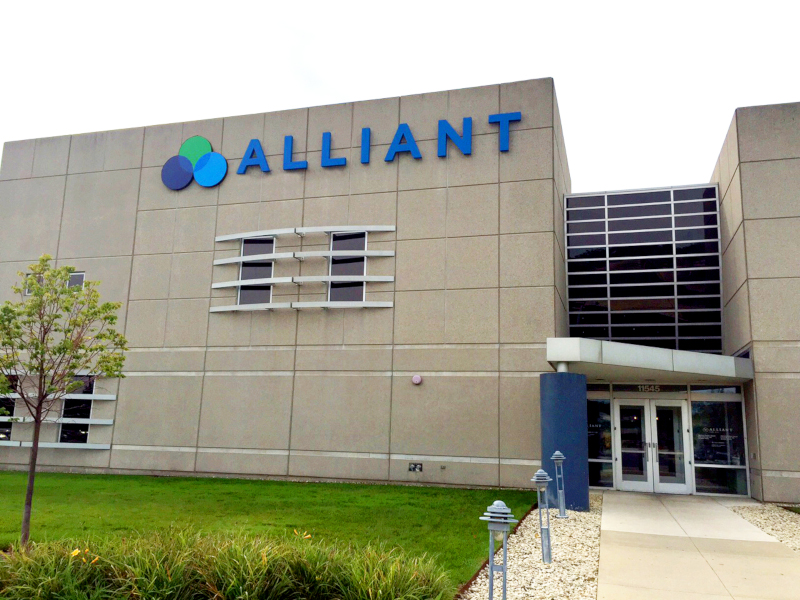
Today, the Chicago cooperative offers the familiar kit: checking, savings, certificates, cards and loans. The unfamiliar part is what it leaves out. There are no public branches. Its office is an operating base, not somewhere to queue with a deposit slip. For a member who rarely visits a teller, that omission can be an appealing feature.
01 The customer was already elsewhere
The institution began on October 26, 1935, as the United Airlines Employees’ Credit Union. Its first headquarters was Hangar #3 at Chicago’s Midway Airport. By year-end, 146 members had accumulated $5,088 in assets. The ambition was practical: somewhere safe to save, and somewhere to borrow at fair rates.
That arrangement also created a concentration problem. In a 2020 interview, former chief executive David Mooney recalled that United’s bankruptcy after September 11 made the board reconsider dependence on one employer and one industry. Alliant diversified its sponsors and membership in 2003. The airline connection had helped it grow; relying exclusively on that connection had become uncomfortable.
Distance remained part of the design. Alliant launched online banking in 2000 under the splendidly literal name SkyBranch. By 2018, fewer than 4% of transactions occurred inside branches. Ten of its twelve locations closed that year. The final two closed in 2020, their timetable accelerated by pandemic shutdowns. The buildings had become less central to how members actually banked.
02 Follow the money past the front door
A credit union’s members are its owners. Alliant takes deposits, makes loans, invests funds and earns financial-service income. It pays operating costs, absorbs credit losses and retains capital. Deposit dividends return earnings to savers. The model requires financial discipline: being not-for-profit does not make salaries, software or bad loans disappear.
The 2025 figures make the arrangement tangible. Alliant reported $543.7 million in dividends paid to members and $111.4 million in net income. Its operating-expense-to-average-assets ratio was 1.27%, equivalent to roughly $1.27 in annual operating expense per $100 of average assets. That ratio describes its cost structure; it does not isolate the savings from closing branches.
Notice that dividends fell between 2024 and 2025. A cooperative cannot promise ever-rising returns. Rates and the balance sheet still matter. Alliant competes for people who compare what they earn, what they pay and how much effort an account takes. Its digital operation supports that proposition, alongside the ownership structure.
03 The first deposit is the hard one
A 2016 ideas42 case study found mobile-deposit uptake below expectations. Interviews pointed to habit and perceived hassle. Alliant and the researchers sent clear instructions and a $5 practice check to 3,000 randomly selected members. Adoption doubled; mobile check volume rose 40%. The checks’ total face value was $15,000, before mailing and program costs. The useful lesson: give people a real first task they can finish immediately. That approach depends on a usable service and customers able to access it; an incentive cannot fix a broken experience.
“We innovate, deliver and celebrate as a team.”Alliant’s published “Build Together” value
The current app handles check deposits, transfers, bill payments, card management and ATM searches. Those are ordinary tasks, which is precisely why their execution matters. Removing branches moves more of the relationship onto a screen. A confusing transfer or stalled deposit becomes part of the institution’s reputation.
Alliant reported resolving 78% of member questions in one interaction during 2025, while cutting average resolution time by 43 seconds. Those measures are less glamorous than a product launch. They are also closer to the experience of someone trying to get an answer before work. Speed means little if the member has to start again with another representative.
The people behind that service remain part of the expense equation. Alliant advertises hybrid work opportunities, tuition reimbursement, parental leave and paid volunteer time. Its published values pair developing employees with serving members. A branchless institution still needs people who understand the products and can explain them. The practical test is whether members can reach that expertise when an automated process stops being enough.
04 A savings habit can become a house
Alliant serves U.S. consumers, including families, vehicle borrowers and prospective homeowners. You do not need an airline job: applicants can qualify through several routes, including its foundation, with Alliant covering the one-time membership fee. Its savings product lets members create up to 19 supplemental accounts, giving separate goals their own compartments.
The product range reaches beyond everyday deposits. There are auto and RV loans, mortgages, home-equity lines and personal loans, plus commercial real estate lending. Retirement and investment guidance is available through its LPL Financial program. That investment relationship is separate from insured deposit accounts, a distinction worth keeping clear.
In September 2026, Alliant and Neighborhood Intelligence launched Journey Home, developed with the Bed Bath & Beyond brand. The program links saving, home search, financing and moving support. A qualifying savings reward matches earned interest up to $1,500 when participants meet the program’s requirements and finance through Alliant. It matches interest, not the down payment.
An expanded partnership with Blend supplies mortgage application technology, including verification and digital document management. The idea is understandable: buying a home involves enough handoffs already. Whether those connections feel simpler will be decided in completed applications and closings.
05 The branch you choose to carry
Alliant occupies the space between a local cooperative and an online bank. Alternatives include national credit unions, digital banks and institutions with nearby tellers. Someone who values a familiar counter, regularly handles cash or struggles with online access may prefer a different arrangement. An ATM network helps, but it does not reproduce every branch service.
Its foundation’s support for broadband, equipment and digital literacy belongs in this story: access matters when the service lives online. Alliant’s case is strongest for people whose banking habits already fit the model. The founders wanted fair borrowing and a safe place to save. Ninety years later, the interesting question is how much physical place those purposes still require.