Allan Presland thought he had the office walking competition sewn up. Every morning, he and his dog Hector covered nine kilometres before work. At weekends, they did more. When colleagues proposed ten weeks of counting steps, he expected the results to confirm what he already knew about himself.
Then the screenshots arrived. A colleague called Emma had covered 22 kilometres. Others were doing more than 15. By the end, Presland had finished in the bottom third. Hector had his usual walks; his owner had acquired a rather less comfortable understanding of the competition.
Presland later used the episode to explain business comparisons. A number can feel impressive until somebody supplies another one. For a founder who advises nursery owners on their finances, admitting that he had misread his own performance made a useful opening. He had brought the dog, the confidence and the daily routine. His nine kilometres had supplied a habit, but no benchmark.
A walk feels different with a benchmark.
Examples from his March 2024 account; daily distances, not the final ten-week totals.
The six-week idea
His route into childcare had also required a change of mind. In 1999, Presland was a director at Vaillant, the heating and boiler manufacturer. His sister ran a nursery and kept asking him business questions. Together, they investigated letting parents watch their children at nursery through webcams. About six weeks later, they dropped it: the technology and the customers’ enthusiasm were both wanting.
Nursery websites proved more useful. Fee collection followed, then software development in 2006 and, later, the purchase of Academy Training. The sequence is telling. Each service addressed another practical difficulty for the same kind of customer. Presland’s opening proposal had a short life; the questions his sister raised supplied considerably more work.
There is a particular sort of founder story in which the first idea receives retrospective protection. Every false start becomes part of a plan. Presland’s account allows a less flattering possibility: you can be wrong, discover it fairly quickly and still build something worth keeping.
- 1999Nursery websites follow the webcam experiment
- 2006Nursery software development begins
- 2013Parenta Trust is founded
- 2017 / 2025Two books put the business lessons on paper
A full nursery, an incomplete picture
By the time he wrote Improving the Business of Childcare, published in 2017, Presland had visited more than a thousand settings across several countries. He kept encountering an awkward combination: capable childcare professionals, committed to their vocation, running businesses whose finances gave them little room to manoeuvre.
His explanation centred on the gap between learning to provide childcare and learning to operate a business. A nursery owner might have considerable expertise in education while having received little preparation in accounting, marketing or management. Opening a setting brings those responsibilities together whether the owner has asked for them or not.
Presland’s argument was that an acceptable profit allows continued investment in staff, premises and the service children receive. That gives the balance sheet a place inside the educational project. The business has to keep functioning for its work to continue. Good intentions make a poor substitute for money available when it is needed.
His later writing makes the problem wonderfully unglamorous. In a discussion of revenue leakage, he described a setting where some childcare had been billed incorrectly and some had not been billed at all. The work had happened. The corresponding invoice had apparently failed to make an appearance.
That is a revealing preoccupation for someone selling business advice. There is no need to manufacture a grand strategic dilemma when an ordinary administrative omission can do the damage. Before expanding the nursery, it might be worth establishing whether the existing nursery is charging for the care it already provides.
Six tours and one reply
Presland also tests the business experience from the other side of the desk. While choosing an international secondary school for his son, he visited six. The facilities were broadly similar. The welcome and follow-up were much less consistent. Only one school contacted the family afterwards, despite promises from the others.
At the school they chose, the family met the head and deputy. Teachers greeted them as they entered classrooms. Presland’s account turns on those small acts of attention. Buildings gave the family relatively little to distinguish; the people supplied the difference.
He carried the lesson back to nursery enrolment: how a family is shown around, how staff engage and whether anyone follows up belong in the business process. His criticism has the advantage of being specific. A promise to send something can be checked. So can whether it was sent.
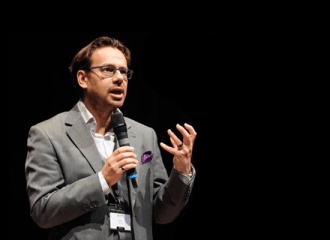
Communication has taken some unusual forms in his working life. At 18, he worked in kitchen telesales, singing to the people he called. Years later, his account of staff profit sharing was equally memorable: asked in 2018 about a proud achievement, he chose the previous year’s payout to colleagues.
Put a nursery owner in the plot
For his second book, Presland gave the management problems a protagonist. Childcare SuperHero: Transforming Your Childcare Business, released in 2025, follows Amanda Hawkins, a fictional nursery owner confronting funding shortfalls, staffing difficulties and leadership choices. The business guide comes with a plot.
Amanda offers somewhere to put the competing demands that a list of recommendations can tidy away. A decision about money sits beside a decision about people; a sensible idea still has to survive the working day. Fiction supplies a way to show those pressures together without turning a particular nursery owner into an exhibit.
Parenta reported that the book reached number one in three Amazon categories on its first day. An accompanying Childcare Business Blueprint course was announced too. Presland wanted readers to see practical change unfolding. Using a character was a choice about teaching: let people recognise the predicament before asking them to consider the prescription.
The choice also fits the way he explains his own work. Hector’s walks, a school visit and an unbilled fee all offer a situation a reader can picture. Each puts a business question within reach of an ordinary experience. You do not need to run a group of companies to understand the irritation of a promised reply that never arrives.
There is a limit to what any of these stories can establish. A lesson drawn from one family’s school search still needs to be tested in another setting. But it gives an owner a concrete place to start looking: the enquiry, the tour, the reply. Presland’s examples make the work small enough to inspect.
A classroom needs more than a building
His education work also extends beyond businesses serving British nurseries. Presland founded the Parenta Trust in 2013 after a visit to Uganda. In Kampala, an encounter with a young girl searching for food in a deprived neighbourhood helped prompt his decision to organise support for pre-school education.
Fundraising has included the Maidstone to Monaco rally, an undertaking whose 2019 programme proposed 2,000 miles through eight countries, mountain roads and camping. It is a fairly elaborate way to pass a collection tin. It also gives supporters something to do together, with the money directed towards schools.
“My vision is for every child to gain a quality pre-school education.”
Allan Presland · Parenta Trust
The Trust works with Fields of Life, bringing school-building and local experience into the undertaking. In Rwanda, the Wisdom Nursery School project also involved the Anglican Church of Rwanda. Those relationships matter: opening a classroom requires people who can continue the work after a fundraising event ends.
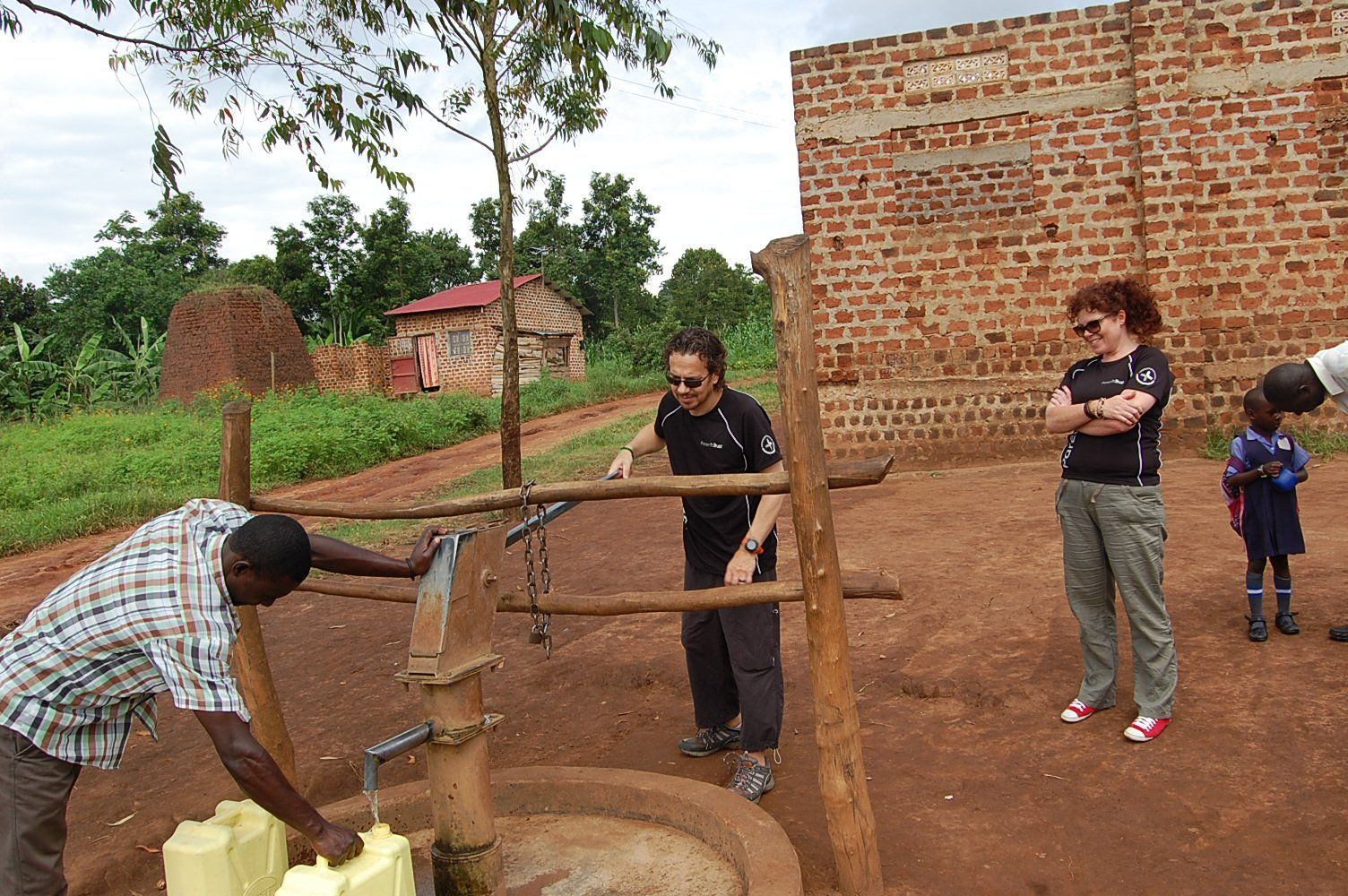
The opening of Wisdom Nursery School, the Trust’s sixth pre-school, was announced in December 2024. Its purpose was to provide early education in a rural community where children faced pressure to work in stone quarries and sugarcane plantations. The school honoured fundraiser Nigel Hutchings, whose support had helped bring it about.
Parenta’s current account of Presland’s work puts the total at seven schools across Uganda and Rwanda. The number describes a collective undertaking involving donors, partners and communities. His part was to establish the charity and keep asking others to help make another school possible.
The people behind the numbers
Presland’s interests have widened through education investment, including Amplify. Amplify Education Group describes a joint venture with Masterclass, focused on acquiring and supporting education and training providers. Its leadership includes Martin Rimmer. The organisational setting is broader than a nursery software company, but the concern with how education businesses operate remains recognisable.
When Parenta Training gained matrix Standard accreditation in 2023, Presland emphasised the guidance learners receive alongside their qualifications. He argued for advice suited to the individual and delivered clearly. It adds another dimension to his interest in measurement: the learner needs to understand the available choices, too. A training programme involves decisions about a career as well as completing the course.
In March 2026, Parenta brought two parts of that concern together at the London Childcare & Education Expo. It launched an Early Years Workforce Stability Framework alongside the Abacus Advantage System. Staff development pathways sat beside software, implementation guidance and ongoing business support.
“If we want to improve outcomes for children, we have to start by stabilising the workforce,” Presland said at the launch. He linked that aim to investing in people and making it easier for settings to develop their own qualified staff. Occupancy and income belong in this conversation because they help determine what a setting can sustain.
The founder who once expected nine kilometres to settle the matter now spends much of his public working life asking people to examine the comparison, the process and the next decision. His own stories make room for an abandoned idea, a forgotten invoice and an unexpectedly modest place in the standings. They give the advice something useful: a person who has had reason to revise his answer.