The $475 million second act
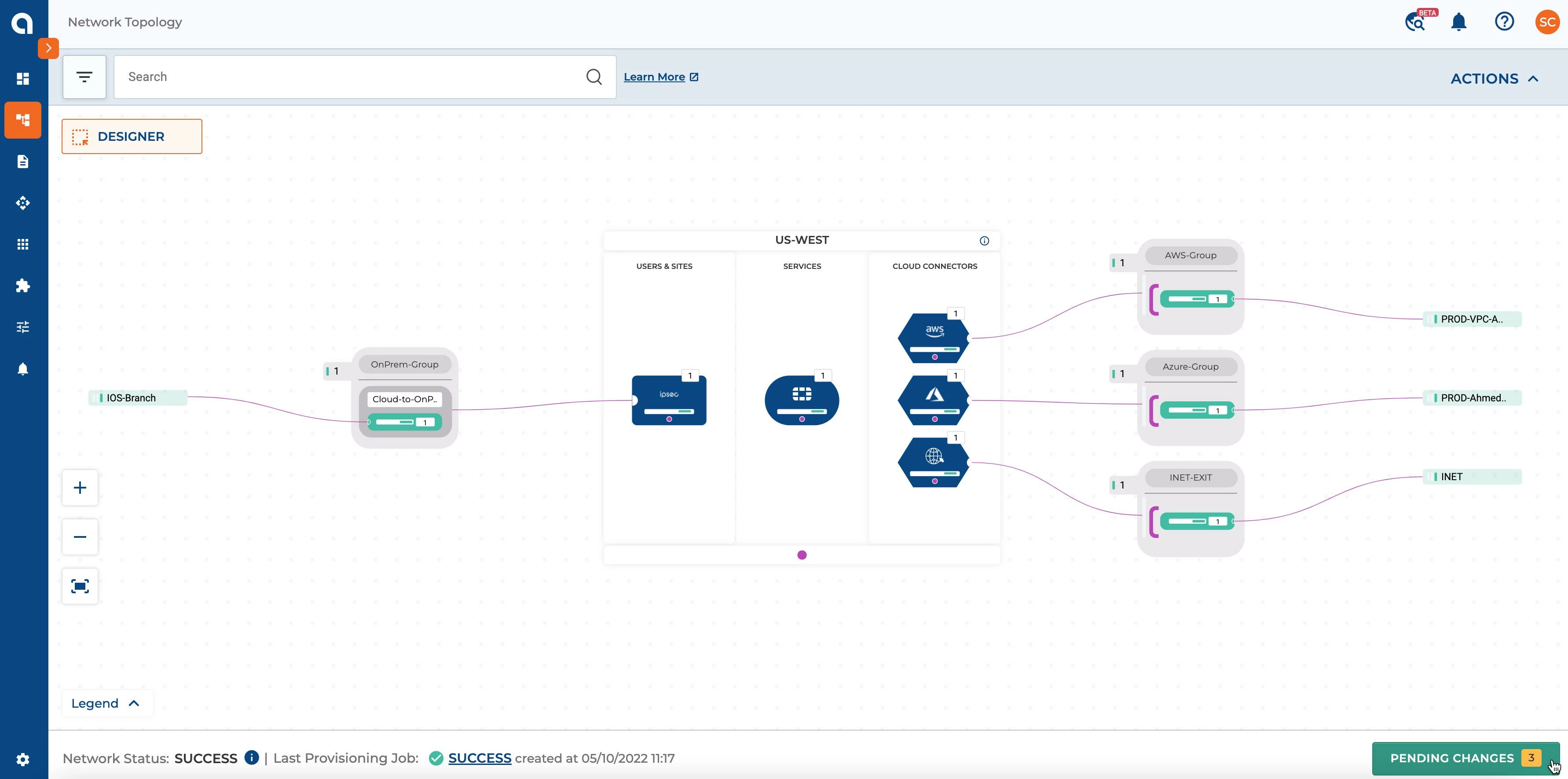
The odd thing about cloud computing is how much of it still behaves like a construction project. A developer can summon a server before the coffee cools. Connecting that server to another cloud, a branch office, a supplier and the company firewall can invite a procession of tickets, appliances, circuits and specialists. Alkira was founded to attack that mismatch. Its product lets an enterprise draw a network, choose the security and routing policy, and deploy the result as a service across clouds and physical locations.
That is the plain-English version. The harder version is that Alkira sits between several enormous systems that do not naturally agree. Amazon Web Services has one networking vocabulary. Microsoft Azure, Google Cloud and Oracle Cloud have their own. A company may also have old MPLS circuits, newer SD-WAN, colocation racks, remote users and a small parliament of firewalls. Alkira translates those pieces into a common operating model and carries traffic through cloud-based exchange points. The customer still controls the routes and policies; Alkira runs the underlying fabric.
01 / OriginThey had seen this movie one layer down
Brothers Amir and Atif Khan started Alkira in 2018, but this was not a first attempt at networking. They had helped found Viptela, the company that turned branch connectivity into centrally managed SD-WAN and was acquired by Cisco in 2017. After that exit, they noticed an uncomfortable sequel. Enterprises were moving applications into multiple clouds, only to rebuild the same tangle of bespoke connectivity above the branch network.
The first thing to fail was the do-it-yourself assumption. Each cloud's native tools worked inside its own border, but an enterprise network does not respect product boundaries. One acquisition, one application that runs better elsewhere or one partner connection can make a supposedly single-cloud company multicloud overnight. Teams responded with separate transit hubs, duplicated firewall pairs and routes through data centers that were never designed to be the center of the cloud.

Their change of mind was subtle but consequential: instead of selling another box or asking customers to operate a clever overlay, they would operate the network infrastructure themselves. Alkira emerged from stealth in April 2020 with Cloud Services Exchange, or CSX. The promise was a global multicloud network deployed in under an hour, complete with routing, service insertion, visibility and governance. No appliance had to arrive at a loading dock.
“I just need one engineer to manage the world. Otherwise, 10 engineers.”Principal network architect, quoted in Alkira customer research
02 / ProductThe canvas is simple. The plumbing is not.
On screen, Alkira looks disarmingly visual. A network engineer chooses Cloud Exchange Points, connects cloud accounts and sites, creates segments, then drops in services such as Palo Alto Networks or Fortinet firewalls. The same work can be performed through APIs or Alkira's public Terraform provider, which matters in large organizations where a pleasant demo must eventually become a repeatable pipeline.
in UI, API or Terraform
cloud-native constructs
segments and security
from one control plane
That translation layer is the real product. AWS Transit Gateway cannot become Azure Virtual WAN simply because a diagram says so. Alkira uses cloud-native mechanisms where they fit and supplies its own routing depth where they do not. It supports BGP policy, segmentation, high availability and the gradual migration of brownfield networks. Existing routes can move one workload at a time. That makes the platform less like a clean-sheet cloud toy and more like a patient adapter for decades of enterprise decisions.
The catalog has expanded around that core: multicloud and hybrid connectivity, a global backbone, Zero Trust Network Access, colocation replacement and Extranet as-a-Service for suppliers and business partners. The last one is especially revealing. Companies often test a new network platform at the edge of trust - a partner connection with limited routes - before allowing it near the main estate. A modest extranet project can become the beachhead for a much larger migration.
03 / ProofThe killer feature is the calendar
Alkira sells to network, cloud, security and platform teams, usually in organizations large enough to feel the multiplication problem. Named customers span Michaels, Koch Industries, Infor, SITA, Warner Hotels, Chart Industries, Organon and others. Michaels used Alkira as part of a modernization touching roughly 1,400 stores across the United States and Canada. Infor said it cut its cloud routing and firewall footprint by more than 60 percent.
LESS CALENDAR TIME TO ADD A CLOUD ENVIRONMENT
Customer research published by Alkira reported a fall from more than one month to less than one day. Results vary by architecture and migration scope.
A 2024 economic-value study commissioned by Alkira found customers spent 84 percent less staff time adding cloud environments and 96 percent less calendar time. The company's wider set of reported outcomes includes 91 percent faster partner onboarding, 93 percent faster data-center connections and 73 percent fewer firewalls. These are customer-study figures, not laws of networking, but they identify the job buyers are hiring Alkira to do: compress elapsed time and reduce the number of moving parts.
04 / MoneyRent the fabric, keep the steering wheel
Alkira's business model follows the cloud systems it connects. Customers can pay according to consumption or make a spending commitment. The bill changes with exchange points, connectors, firewall services, bandwidth and egress. Its AWS Marketplace listing uses metered pricing with no fixed monthly fee, but the nominal meter is not a useful estimate for a real enterprise design. A production quote depends on topology and traffic.
The company raised $54 million in a Koch Disruptive Technologies-led Series B in October 2020, taking disclosed funding to $76 million. Tiger Global led a $100 million Series C in May 2024, bringing the total to $176 million. By late 2025, Alkira said revenue had grown 1,261 percent over three years, good for No. 74 on Deloitte's North American Technology Fast 500.
Then came the strategic buyer. Lumen agreed in May 2026 to pay $475 million in cash and closed the acquisition on July 7. The logic is easy to draw: Lumen has fiber, enterprise customers and programmable transport; Alkira has the cloud-native control plane. Lumen wants one digital surface for its own network, other carriers, cloud on-ramps and cloud-to-cloud traffic. Buying Alkira moved that roadmap forward faster than assembling it feature by feature.
05 / MarketA control plane with elbows
Alkira competes most directly with cloud-networking platforms such as Aviatrix and Prosimo. It also meets Cisco, Cloudflare Magic WAN, Aryaka, carrier-managed services and the cloud providers' native networking products. The dividing line is not merely features. It is who owns the operational burden. Native tools keep the customer closest to each cloud but demand specialists and cross-cloud assembly. A managed carrier network offloads work but may narrow control. Alkira's pitch is the middle: the infrastructure is operated as a service while the enterprise retains familiar routing and security decisions.
Its marketplace integrations reinforce that position. Rather than insist on an Alkira-only stack, the platform inserts products customers already trust: firewalls from Palo Alto Networks, Fortinet, Check Point and Cisco; load balancing from F5; DNS and IP address services from Infoblox; automation through Terraform and Itential. That reduces the political cost of adoption. A chief security officer does not have to replace the firewall standard to modernize the network around it.
06 / LimitsWhere the blue sky gets cloudy
The model is strongest when complexity is real: several clouds, many regions, partner networks, acquisitions, strict segmentation or a shortage of engineers fluent in every provider. A small company in one cloud with a stable footprint may be better served by native routing. Another control plane creates another vendor relationship, another bill and another dependency. Consumption pricing can also surprise teams that do not model traffic paths, firewall licenses and cloud egress together.
Do not copy this blindly
- Run a contained proof of concept with failure, rollback and visibility tests - not only a happy-path connection.
- Compare total cost, including cloud egress, security licenses, staffing and colocation contracts.
- Start where policy boundaries are obvious: a partner extranet, a new region or an acquisition.
- Keep route ownership and migration sequencing explicit. As-a-service removes plumbing, not accountability.
The acquisition adds a second condition. Customers should watch whether Lumen preserves Alkira's vendor-neutral posture, release speed and marketplace economics. Combining a software startup with a telecom can produce a better product, but only if the control plane remains useful beyond the owner's fiber. Alkira's appeal was that it could sit above a mixed estate without demanding a religious conversion.
07 / The lessonFind the layer the revolution skipped
The copyable idea is not “start a networking company,” unless BGP is your idea of a relaxing evening. It is to look for the stubborn layer that did not inherit a platform shift. Cloud changed how companies bought compute and storage. The network kept capacity planning, hardware lead times and manual coordination. The Khan brothers recognized that lag, carried forward what they knew about centralized control, and changed the delivery model.
Alkira does not make networks simple in the absolute. It makes their complexity available through a smaller number of consistent decisions. That distinction explains both the product and the price Lumen paid. The next chapter will determine whether one control plane can genuinely span software and fiber - or whether the most cloud-like networking company becomes another feature inside a carrier catalog.