A sales representative has a prospect to research, a proposal to write and an email to make sound as though it was composed for one particular human being. Before the conversation can begin, there is a small mountain of preparation. Alexander Leonardi and Albert Mao had watched that mountain grow in the consulting business they ran as students. In their founding account for VectorShift, they said their sales representatives spent more than half their time on those three tasks. The sale had acquired a substantial supporting cast.
For Leonardi, the opportunity was in that surrounding work. A process could be understood, divided into steps and connected to the information it needed. Repeat it often enough, and the case for software became tangible. The founders described building the tooling themselves before creating a platform other teams could use. Their explanation of VectorShift’s purpose was disarmingly direct: it is what we wished we had when running our previous business.
That sentence gives his story a useful starting point. The company emerged from a business he had operated, alongside a person he had already worked with. The grand vocabulary of artificial intelligence came later. First came proposals.
Two students, one working relationship
Leonardi met Mao at Harvard in 2018. They were joining the same consulting group. A photograph Mao later shared shows the pair together on the day they met, dressed for an occasion neither could yet describe as the beginning of VectorShift. The photograph’s future significance would take several years to arrive. At the time, there was a consulting group to join and work to learn.

They eventually helped run that group. Mao’s recollection includes late-night hiring deliberations, conversations about closing a large deal and arguments over difficult client problems. He remembers Leonardi as a colleague through those decisions. Such recollections provide a less polished view of a founding partnership than a list of complementary job titles. There were clients and colleagues involved before there were startup investors.
The distinction matters. Friendship provides a reason to spend time together; running a business provides occasions to disagree. Hiring, selling and delivering work require choices with consequences. A partnership that has already encountered those demands brings a working history into its next venture. By 2023, these two founders had one.
Leonardi’s founder biography credits his tenure as CEO of the Harvard College Consulting Group with more than 200 percent year-over-year growth and annual revenue above $1 million. The scale is worth pausing over. Student organizations are sometimes treated as rehearsal spaces for professional life. Here, the revenue figure makes the work concrete. Somebody had to buy what the group was selling.
A teacher before a founder
There was another audience in Leonardi’s Harvard years. In autumn 2021, he was a teaching fellow for CS50, the university’s introductory computer science course. The staff roster lists him as Alex Leonardi ’22, with Statistics beneath his name. Harvard’s teaching-award list also records a Certificate of Distinction in Teaching for his work in COMPSCI 50 that semester.
This is a small but revealing piece of the career. The consulting group involved persuading clients and organizing colleagues. Teaching involved helping students approach technical material. His academic background, described in his founder biography through Harvard’s AB and SM credentials, sits alongside that practical responsibility to another person’s understanding.
There is an appealing editorial connection between teaching computing and building a visual interface for it. A teacher has to make an idea usable by someone who is still learning. A software interface has its own version of that obligation. That connection is a way of reading his career, rather than a claim about what motivated a specific product decision. The documented fact is that he taught, and that his teaching received recognition.
A résumé can compress that semester into a line. The work itself depended on people being able to proceed from a problem to a next step. In an article about software intended to make complicated workflows easier to build, the teaching chapter earns its place.
Blackstone, then the builder
Leonardi’s next professional setting was Blackstone. His founder biography describes a private-equity data science role involving transaction evaluation, AI and machine-learning deployments for portfolio companies, and work on the firm’s perspectives and capabilities around generative AI. He was encountering technology inside an investment organization, where a tool must fit an existing business.
Mao took a different route through McKinsey, working on technology, products and go-to-market questions. Their backgrounds gave the future company two vantage points on adoption: how software could be constructed, and how an organization might actually put it to work. Both had already seen the operational demands of their earlier consulting business.
They founded VectorShift in 2023 and participated in Y Combinator’s Summer 2023 batch. Its early proposition was a no-code builder for language-model workflows. The term sounds airy until the components appear: a file, a model, a database, an action. A user could assemble a sequence rather than create every connection from the beginning.
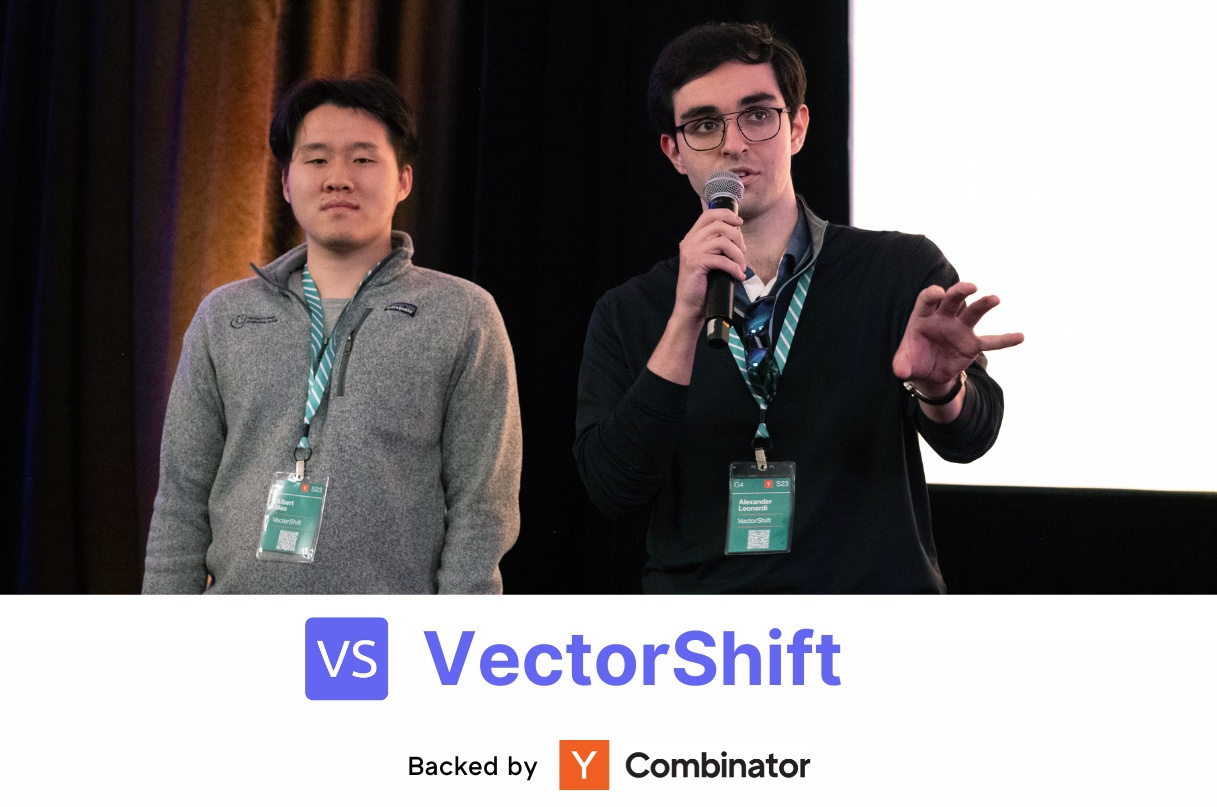
In February 2024, the company announced a $3 million seed round. The financing marked a stage in the company’s development; it also put resources behind a fairly specific product problem. The founders were selling a way to build and operate workflows, with all the connective work that entails.
The Python package adds a technical detail to Leonardi’s role. PyPI lists him as an author and verified maintainer of VectorShift’s SDK. An SDK lets a developer interact with a platform through code. Its presence alongside a visual builder broadens the means of making a workflow: different users can approach the same underlying work through different interfaces.
An inbox with an opinion
Leonardi’s own email offered a compact demonstration. In a public post, he described receiving enough AI-generated marketing messages that important emails were getting missed. He built a VectorShift workflow to sort incoming work: customer support messages went to an internal channel, applicant résumés to Google Drive, and new leads into HubSpot deals. He said the workflow took about ten minutes to build.
The example has a pleasing circularity. AI contributes to the clutter; an AI workflow helps sort it. The result he described was a set of destinations and actions, which is why the anecdote is useful. A message could reach a person, become a stored document or produce a sales record. The practical question was what should happen next.
“I built myself a VectorShift workflow to solve this problem in ~10 minutes”
Alex Leonardi, describing his email workflow
It is an everyday test of the company’s premise. The inbox is an entrance to several kinds of work, all wearing the same envelope. Sorting them requires some understanding of what they mean and somewhere sensible to send them. Office software has given correspondence an impressive number of places to go.
The anecdote also keeps the founder visible in the product story. Leonardi is a user with an irritating queue to manage, alongside being the executive responsible for the platform. His account concerns a small operational fix, stated in terms another busy person can recognize.
Back to the deal room
By October 2026, VectorShift’s public positioning had become more specific: an AI operating system for private-market investors. Its stated aim is to capture institutional knowledge across deals, decisions and diligence, then apply it to investment work. The current focus gives Leonardi’s Blackstone experience a fresh relevance. The setting has returned to finance; the role is now that of a founder building for it.
The ambition concerns what a firm remembers. Analysis from a previous transaction may help with a later one, provided it can be located and understood. A conclusion is more useful when its supporting evidence remains accessible. VectorShift describes a system intended to keep those connections available as a team works.
and decisions
firm record
review or report
The product materials describe generated memos, presentations and financial models tied to underlying data, with figures traceable to a document, page and paragraph. They also describe tools operating through the places a team already works, including email and chat. These are company-described capabilities. They show what Leonardi’s organization is trying to make routine.
The published use cases extend from deal teams to investor relations and fund finance. An investment committee memo, a quarterly letter and a reconciliation each have their own requirements, even when they draw on related information. The proposed system carries that information between jobs. Its usefulness depends on the details surviving the journey.
That makes a coherent next chapter for Leonardi. His first business supplied the repeated tasks. His teaching work placed technical understanding in front of an audience. His finance role put AI inside an established organization. VectorShift brings those strands into a product whose purpose is to help people finish work with the information they already possess.
There is still a person behind the workflow diagram: the student who joined a consulting group, the colleague who kept working with Mao, the founder who wanted his inbox sorted. The story began with preparation taking up too much of the day. Its present ambition is to let a firm carry yesterday’s work into tomorrow’s decision. The proposal finally gets some help with its supporting cast.