The earliest version of Creator Buddy was a spreadsheet. Alex Finn put his X posts into it, night after night, trying to see which ideas travelled and which expired quietly on the timeline. This is a familiar kind of private diligence: the sort of ritual a person develops when a platform supplies abundant numbers and very little explanation. Finn eventually made a business out of that irritation. The spreadsheet became software. The audience he had gathered while explaining X became its first market.
His public story can be told as a remarkably quick software launch. Finn says he built Creator Buddy largely through AI coding tools and that it reached roughly $300,000 in annual recurring revenue soon after release. The more revealing clock runs longer. It starts years before anyone could buy the app, when he began publishing and listening closely to what other creators wanted to know.
01 / The audience before the appA feed, deciphered
Finn says he started posting on X around 2021, initially because he was interested in crypto. He had worked in technology and later led a team of technical consultants at MongoDB, but his online reputation came from a more specific talent: taking the strange, opaque workings of a social feed and explaining them in ordinary language. When X released the code behind its recommendation system in 2023, he read through it and published an account of what he thought it meant for creators. The thread spread widely. He has said Elon Musk reposted it and Mark Cuban engaged with it.
Finn studied at Wentworth Institute of Technology from 2008 to 2012. His working life moved through technical and customer-facing roles before the independent project took over. That background complicates the charming shorthand that he built a company without knowing code. He has said AI wrote the app's code, while also describing a long career around technology. There is a difference between writing every function and knowing what a piece of software must do. His advantage lay partly in that judgment, and partly in the audience he was already learning to serve.
The timing mattered. Every creator wants a better answer to “Why did this post work?” Finn had a plausible way to investigate, plus the patience to translate code into advice. A thread about ranking signals is hardly an obvious route to becoming a founder. Yet it gave him something many new products have to buy: an interested audience that already recognized the problem.
That attention did not arrive in a single magical afternoon and then maintain itself. Finn kept writing about X and about the work of making content. His account of the period emphasizes repeated posting and a growing set of systems. Behind the public explanations sat those private spreadsheets. They kept records of posts, responses, and patterns. They were useful, but the routine demanded time every evening. For someone publicly explaining how to work more intelligently, the manual labor had become its own punchline.
02 / The product inside the habitThe spreadsheet gets a job
In August 2024, Finn discovered Cursor, an editor that could turn natural-language instructions into code. He began making tools out of his own creator workflow. The idea was practical: pull in a person's X history, find what had worked, propose new ideas, and offer feedback before a post went live. Creator Buddy grew from those pieces. Its site now presents a content coach, an algorithm analyzer, a composer, a post-history view, account research, and tools for saving ideas and replying.
Finn has described himself as building the app alone with AI assistance. That description is useful if it is read carefully. The coding tools could generate and revise software; Finn still had to decide which problem to solve, how the product should behave, who might pay for it, and which feedback was worth acting on. His experience with X supplied those decisions. A machine could make the interface. It could not have spent the previous three years learning what his audience complained about.
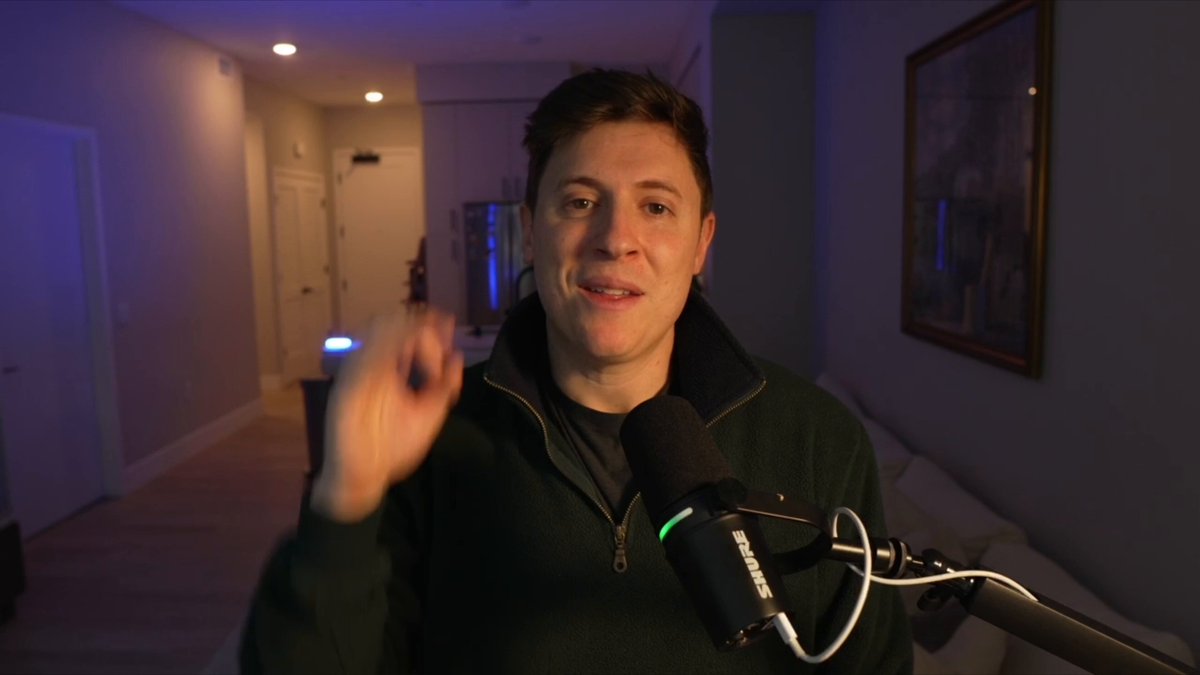
Before the public launch, he invited people to test Creator Buddy. In an interview, Finn put the number at about 150 and said he met with each tester to see how the app was actually used. That is a strikingly human detail in a story often compressed into “AI built an app.” Watching a person fail to find a feature or stumble over an explanation can be more informative than adding another clever prompt. The beta period gave Finn a chance to change the product before a far larger group arrived.
“I built a product that solved my own challenges.”Alex Finn, in an interview about Creator Buddy
When launch day came in early 2025, the audience was waiting. Finn says the app crossed a six-figure annual run rate almost immediately and reached roughly $300,000 in annual recurring revenue within weeks. Those are his reported figures, based on subscription revenue at that moment; they describe a run rate rather than money collected over a full year. He also told a less polished launch story. He went for a 45-minute walk and came back to a flood of messages about things that were broken. The walk had the length of a lunch break and the consequences of a product review.
The speed of the reported revenue drew headlines. It is tempting to see the result as a demonstration that software creation had become effortless. Finn's own chronology suggests a more demanding account. He brought a known problem, an audience earned over years, a product shaped with users, and a willingness to repair failures in public. AI shortened the distance between idea and working software. It did not erase the work of earning trust.
03 / Making the method publicFrom builder to teacher
Once Creator Buddy had customers, Finn began explaining how he made it. His videos and newsletter often address people who have never built software. In one beginner guide, he suggests starting with a simple app and adding one feature a day, even if the daily session lasts five minutes. The instruction is modest, almost suspiciously so, beside the grand language that surrounds AI. It treats building as a repeatable habit rather than a weekend transformation.
He calls his broader approach “Creator Builder”: develop an audience around a subject, understand its problems, and make a product that answers one of them. Vibe Coding Academy turns that idea into lessons and live support about planning, building, launching, and using agents. Ship/It Weekly carries shorter notes on the tools and workflows he is trying. The educational operation is an extension of the same public behavior that grew his X audience. He explains the thing he is doing while it is still being done.
That openness has a commercial logic, but it also gives his work a recognizable personality. Finn speaks with the excited impatience of a person who has opened a new tool and wants everyone else to click around. His videos show live workflows rather than a polished case study alone. In his writing, he sometimes sounds extravagantly certain about what AI will make possible. The certainty is part of his appeal. It is also a reason to read his predictions as predictions, while taking the detailed accounts of what he built on their own terms.

04 / The next experimentAfter the creator tool
By 2026, Finn's public profile also listed Henry Intelligent Machines, where he identifies himself as founder and CEO. Its brief public site describes “autonomous swarms powering the new economy” and invites access requests. The language is ambitious; the available detail is limited. His interviews and posts offer a more concrete glimpse of his interest: agents that can keep working on recurring tasks, connected to the tools and context a person uses every day.
Finn has shown a home setup for running AI models locally, using computers that can handle continuing work without a separate charge for every request. In a discussion of that system, he put the appeal as a question: “We own everything except for the intelligence. Why can't we own the intelligence?” The line carries a founder's appetite for control, but it also echoes the spreadsheet years. Again he is looking at a repetitive process and asking whether he can build a system to carry more of it.
There is a tidy story in which the algorithm thread inevitably led to a software company and then to an agent startup. Real life rarely files its evidence so neatly. What can be seen is a consistent working method. Finn studies a tool closely, explains it publicly, notices the labor around it, and tries to turn that labor into software. Sometimes the result is a tutorial. Sometimes it is a subscription product. Sometimes it is a company whose ambitions are still largely ahead of it.
The useful part of the Alex Finn story is therefore less the speed of a launch than the long apprenticeship that preceded it. He knew the platform, knew the people trying to use it, and knew the tedium of his own nightly routine. Creator Buddy began when those three things met a coding tool capable of helping him build. A spreadsheet can tell you many things. Finn's told him what to make next.