Alessandro Sordi has an awkward suggestion for Florence: give the next generation something to build. In a city where an inherited apartment can look like a complete business plan, he has questioned the comfort of living from the past. His own career offers a rather more demanding arrangement. Study architecture. Help start an internet company. Take it to the stock market. Leave. Begin again with friends who remember the first attempt.
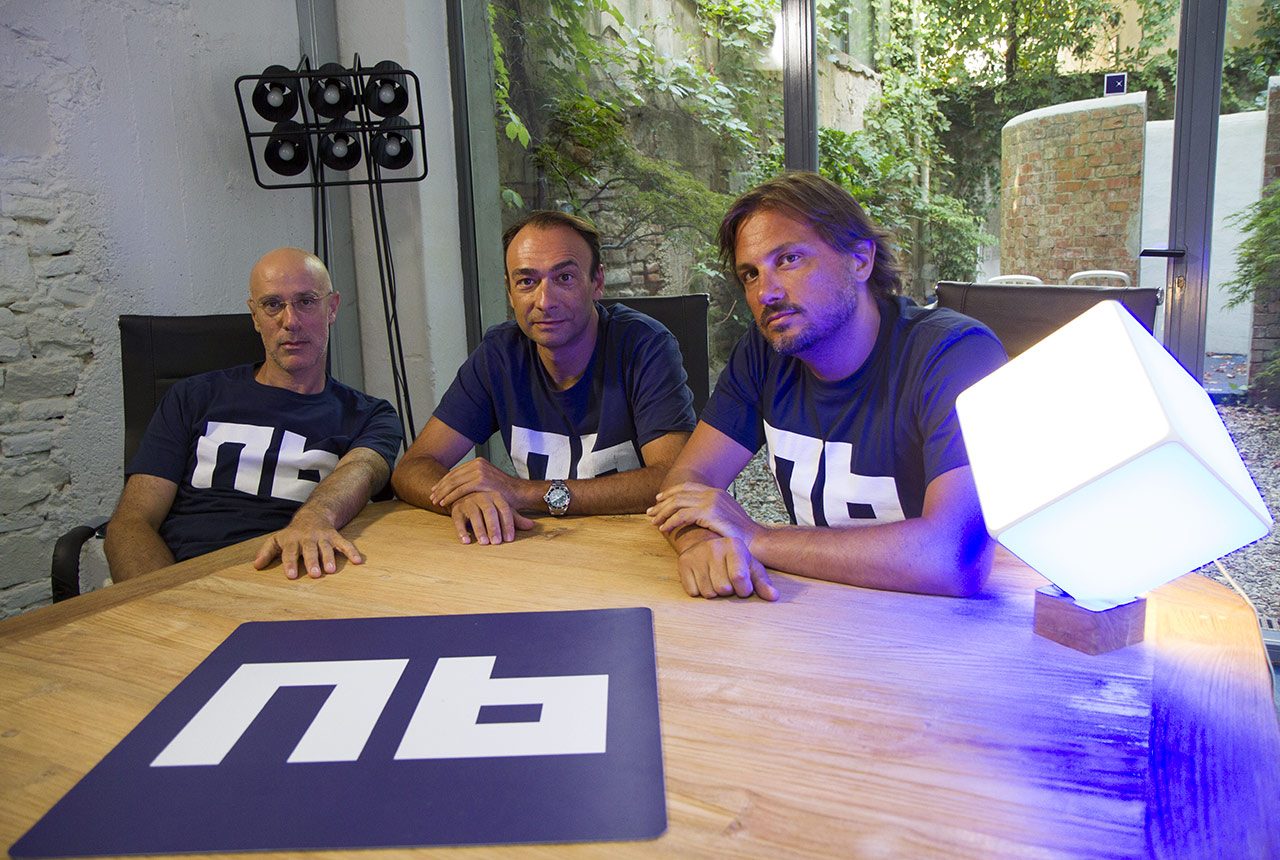
The friends matter. Paolo Barberis and Jacopo Marello appear beside Sordi in the history of Dada and beside him again at Nana Bianca, the Florence startup studio they founded in 2012. A photograph of the three around a table catches something a corporate biography struggles to convey: this is a continuing working relationship. The technologies have changed considerably. The people across the table are familiar.
Sordi is Nana Bianca’s co-founder and CEO. But the job title gives only the current address of a longer preoccupation: how to make room for a new business, and how to help it survive contact with customers. His story runs through architecture, online advertising, public markets and startup investment. Florence keeps turning up in the background, refusing to remain merely a background.
A degree with an unexpected floor plan
Born in Florence in 1967, Sordi studied architecture in his home city and at the Technische Universität in Darmstadt, Germany. He graduated with honours in 1992. The obvious next chapter would have involved buildings. Instead, his circle of architecture friends began exploring digital environments, then the commercial internet.
Dada’s name preserved the connection: Design Architettura Digitale Analogico. The company’s internet business began in January 1995. Alongside Sordi, its founders included Barberis, Marello and Angelo Falchetti. They were bringing an architect’s vocabulary into a medium whose commercial possibilities were still being worked out. A virtual place, after all, also needed people to arrive, find their way around and have a reason to return.
There is a useful caution here against reading the ending back into the beginning. A degree in architecture did not come with a guaranteed internet company attached. The founders had to turn their experiments into something people would buy. That required decisions about customers and revenue which no attractive drawing could settle.
Two businesses on the same connection
Dada developed along two tracks. One faced consumers, with online communities, search and advertising. The other sold practical services to businesses: domain registration, dedicated servers and websites. Sordi later described the balance between those activities as a feature of the company’s original model. The internet could be a place to gather and a place to get work done; Dada sought customers in both.
The distinction helps explain the breadth of his career there. His responsibilities included senior leadership at Dada and the presidency of Register.it, the domain and hosting business. He worked on the less glamorous requirements of being online as well as the products that attracted attention. Even the most sociable corner of the web requires somebody to handle its address.
In 2000, Dada listed on the Italian stock exchange. The capital supported marketing and acquisitions, allowing the business to expand beyond Italy. Sordi’s later account of that period emphasised investment and consolidation. A listing changed the company’s available means; it still needed a plan for spending them. The discipline sounds almost prosaic beside the excitement that tends to gather around an IPO.
The second act kept the company
Sordi left Dada in 2011. The following year brought Nana Bianca and a reunion with Barberis and Marello. They carried practical experience of creating companies into a business organised to help create more of them. Their next venture would work with other founders, rather than require every new idea to live inside one expanding corporate structure.
The name means white dwarf. Nana Bianca’s early explanation used the gravitational attraction of a star as a metaphor for bringing young businesses together. Its projects were called Asteroids. Startup naming can be a crowded competition in which every available noun appears to have been claimed. At least this team secured a reasonably coherent patch of the universe.
The underlying arrangement was concrete. The founders wanted people with different skills close enough to build together: developers, engineers, designers and business operators. A studio could help define a product, find its market and attend to customer acquisition. Investment was part of the work; so was the daily business of helping a company function.
The city gets a seat at the table
For Sordi, the choice of Florence is part of the business argument. In 2021 he challenged the city’s dependence on tourism and property income, arguing that its universities, design schools and creative resources could sustain a broader working economy. His criticism had the intimacy of a resident’s complaint: a place he valued was making too little use of its abilities.
He wanted other activities to grow alongside tourism, giving graduates more reasons to stay. Engineers, physicists and designers needed employers able to use their training. Beauty, in his account, had economic relevance too: an environment people wanted to inhabit could help attract creative workers. The case joined the practical and the aesthetic, as one might expect from somebody who began in architecture.
Nana Bianca’s move into the restored Granaio dell’Abbondanza gave that argument a physical setting. The former granary became a place for digital work. Developed with Fondazione CR Firenze, the headquarters brought coworking, meeting spaces and events into a historic building. In a 2021 description, Sordi stressed its openness to the surrounding city. The imagined encounter was refreshingly ordinary: someone coming in for coffee could meet an AI engineer.
“My computer is my office; not a locked room.”
Alessandro Sordi, 2021
That small remark makes a useful companion to the grand building. An office could support encounters without becoming a boundary around somebody’s work. The setting was valuable because of what people could do there. A restored granary full of laptops might look like a pleasing architectural conversion; Sordi’s ambition gave it a continuing economic purpose.
A telescope, with homework
Hubble gave the company-building approach a programme. Launched in 2017 through the collaboration of Nana Bianca, Fondazione CR Firenze and the university-linked Fondazione per la Ricerca e l’Innovazione, it combined support for early businesses with access to people who could help develop them. The astronomy theme survived. So did the requirement to do something useful once the telescope had found you.
The programme’s own description makes selection about the team as well as the proposal, financial measures and traction. Its support includes mentoring and work on turning a product into a business. A founder entering such a programme brings an idea into a setting where other people can question its assumptions. That can be a more consequential form of help than applause.
By the announcement of its tenth edition, Hubble had supported 57 startups which had created more than 200 stable jobs, according to the organisers’ figures. These are programme totals, accumulated across participating companies. They put a scale on the work without turning every outcome into a personal achievement for Sordi. Rifò, Easypol and Roomless were among the businesses named in the programme’s record.
Programme-wide figures reported by the organisers for the tenth edition.
Put the intelligence where the work is
By 2026, the discussion had shifted towards deep technology and AI. Sordi’s argument was specific: Italy should apply existing models to the knowledge and data within its industries. He pointed to manufacturing, mechanics, fashion, leather and wine. The accumulated understanding inside those businesses could give founders something substantial to work with.
His advice was to use the available technological power well, rather than attempt to reproduce the enormous investments behind the leading models. This is an investment judgement, with a choice of where to compete built into it. It also fits the longer pattern of his career: examine what a technology makes possible, then work out the business around its use.
The tenth Hubble intake, announced in June 2026, supplied examples. Pluma develops local AI for manufacturers. E:DEN works on a configurable electric agricultural vehicle. RankWit AI tracks how brands appear in AI search systems. Their problems sit in different markets, but each asks what technology can change in an existing activity. An agricultural machine makes a useful antidote to a conversation conducted entirely in abstractions.
Even the founder has to make room
There is one final complication in Sordi’s account of building businesses. Growth can mean surrendering some control. Looking back on Dada’s listing in 2023, he argued that founders should be prepared for governance to change as their organisations develop. The original founder can remain a reference point for the vision while other people take on responsibilities.
He also wanted public markets to become a more accessible possibility for startups and smaller companies. His emphasis was on building value over time, then finding capital that could support further development. An IPO, in that telling, belongs inside a company’s working life. It does not supply an ending tidy enough to close the book.
Sordi’s own second act has a similar refusal to conclude. He left one company and returned to the work with people he already knew. Florence supplied both an attachment and an unfinished assignment. The architect’s career has become an extended exercise in arranging space for others: space to experiment, to become employers, and eventually to outgrow the arrangements that helped them begin.
Keep the conversation going
Explore Nana Bianca’s work, follow Sordi’s professional updates, or watch him discuss the next chapter of digital business.
Nana Bianca ↗Sordi on LinkedIn ↗Watch: SIOS23 Florence interview ↗Watch: the story of Nana Bianca ↗Read: Sordi on AI and Italian industry ↗Read: founders and the stock market ↗Explore Hubble ↗