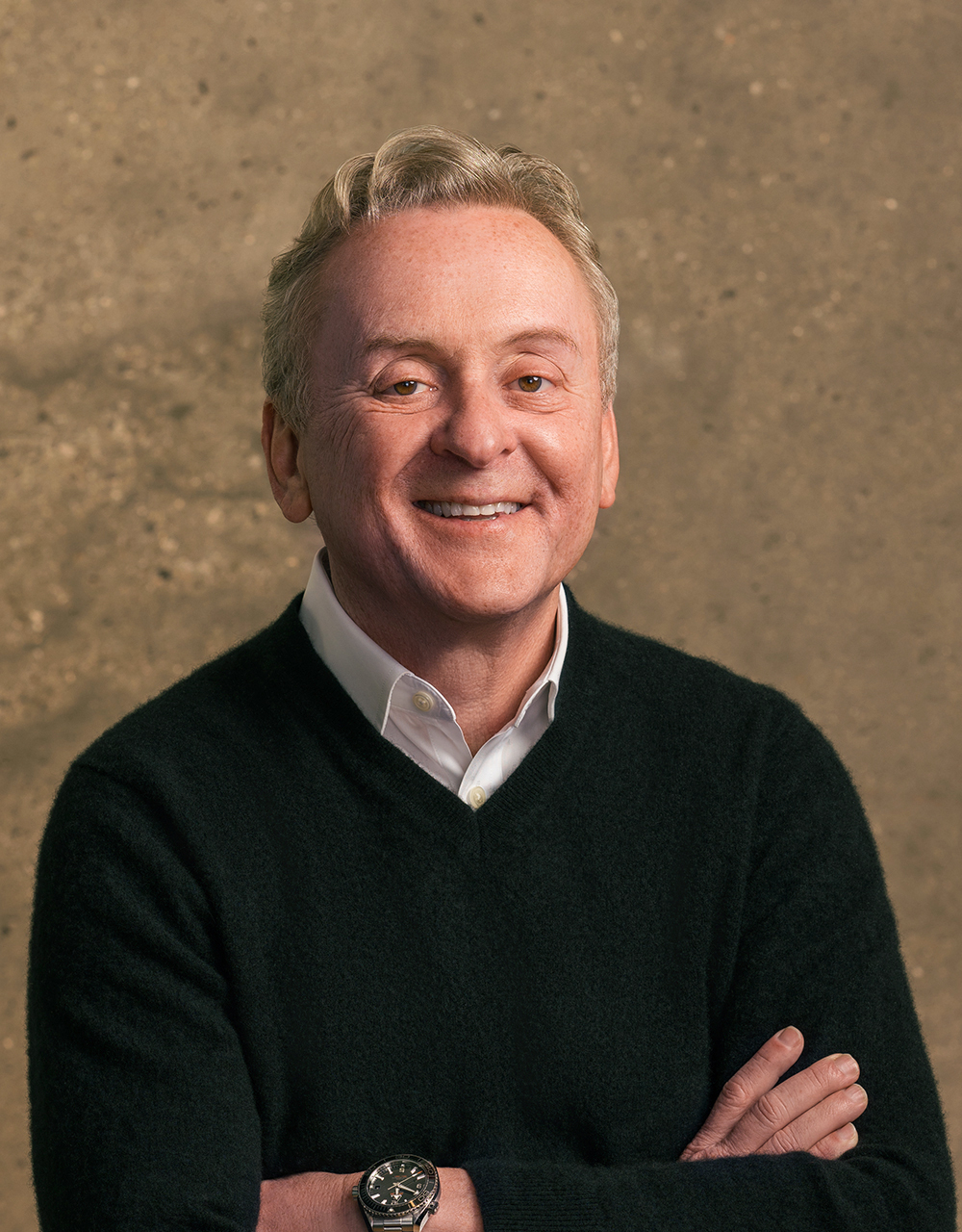
At DCVC, Cohen sits inside a portfolio that reads like a list of things science fiction promised and forgot to deliver: nitrogen-fixing microbes for row crops, antibody discovery platforms run by language models, satellites that find leaks before regulators do, robots that walk into warehouses and don't fall down. He is the operator the founders call when they have a product and need a market, or a market and need a CFO who'll survive due diligence.
His title is General Partner. His job description is closer to translator. The firm's investment thesis, in the slide-deck version, is "science and industry meets AI." In the operator's version - the one Cohen tends to deliver in person, leaning forward, talking with his hands - it is a bet that the parts of GDP nobody has digitized yet are about to get digitized, and that the people doing it deserve money, attention, and somebody who has shipped product before.
The numbers behind that bet matter. DCVC closed roughly $700 million in 2024 across a new core fund and an Opportunity fund, sized to keep investing through the long tails that deep tech requires. The firm's portfolio companies have moved past prototype: Pivot Bio sells microbial fertilizer to farmers, Planet beams satellite imagery to governments, Pakistan-to-Pomona logistics startups dispatch trucks with computer vision. Cohen's personal scorecard inside that machine includes the wins everyone in the building points to - Element AI's sale to ServiceNow, Evolv Technology's listing on NASDAQ, Caption Health's exit to GE HealthCare.
The road-to-Damascus moment
If you ask Cohen why he stopped selling enterprise software, he tells the same story he told on Infinite Frontiers: his father died of glioblastoma. Sitting with that loss made the day job feel small. He had been very good, for a very long time, at teaching salespeople to log notes in CRM fields. He decided he was done.
"I lost my father to glioblastoma, which was the road to Damascus moment for me. Why the hell am I wasting my time teaching salespeople how to enter notes about a meeting into a little cell when there's diseases that don't have cures yet?"
That is the lever DCVC pulled on when they hired him in 2019. Cohen had spent the previous five years as Chief Commercial Officer at Illumio, a DCVC portfolio company, so the firm already knew his operating tempo. What it didn't have, until he arrived full-time, was someone who could sit on a board, give a portfolio CEO the unvarnished version of where their go-to-market was failing, and also write a coherent thesis essay before noon.
You're not a real TechMed company unless you have a data river.- Alan Cohen, DCVC
What "TechMed" means when he says it
TechMed is Cohen's coinage at DCVC, modeled on TechBio. The argument is that healthcare, like biotech before it, is being remade by people whose first instinct is computational. A radiology startup is not a radiology startup; it is a data company that happens to detect tumors. A surgical robot is not a tool; it is a learning system that improves with every cut.
The data river is the metaphor he keeps returning to. Static data lakes are a moment in time. Rivers move. Every procedure, every device read, every patient encounter is a tributary that feeds an algorithm that, in turn, makes the next encounter slightly better than the last. Build a company without a data river and you are building, in his view, a feature.
He sees the timing the way Apple's analysts once saw the timing on the iPhone. The phone existed. The internet existed. Capacitive touchscreens existed. Somebody had to put them in one box. Healthcare, he argues, is in that pre-iPhone moment, and most of the components - foundation models, cloud compute, cheap genomic sequencing, ambient sensors - are already on the shelf. Somebody is about to put them in a box. DCVC would like to fund them.
The four degrees
Cohen earned a BA in English from SUNY Buffalo, an MA in English from the University of Vermont, an MA in international affairs and economics from American University, and finally an MBA from NYU Stern. That is an unusual transcript for a Silicon Valley partner. He defends it the way you'd expect from a man who once taught composition: most of operating is writing, and most of writing is reading carefully. He has authored over 200 articles and given more than 100 keynotes. He has done, by his own count, more than 1,000 press interviews. The English degree, it turns out, was vocational.
From IBM badge to acquisition target
The career arc tracks the last quarter-century of enterprise infrastructure. IBM in the 1990s. General Growth Properties. Airespace, the wireless LAN startup Cisco bought for $460 million in 2005, where Cohen was an early employee running marketing and product. Then Cisco itself, where he ran marketing for the $25 billion enterprise business, managed more than 400 people, and oversaw 25 product lines. Then Nicira, the SDN pioneer, sold to VMware in 2012 for $1.26 billion. Then Illumio, the segmentation company, as CCO from the early days through the unicorn rounds.
Three of those exits cleared a billion dollars. He has watched the same play work in four different markets - wireless, networking, security, and, now, applied AI. The lesson he carries from each iteration is simpler than most theses: find the early adopters who actually want what you're selling and stop pitching the people who don't.
Don't try to capture 97% of potential buyers on day one. Find the 3% who really get it and have put their own time and resources behind it.- Alan Cohen, on go-to-market
What he's not
He is not a quiet investor. He keeps a Twitter account from before Twitter handles got long, writes for SecurityWeek, shows up on podcasts with names like "Heavy Hitters" and "10x Isn't Enough." He mentors at NYU's Endless Frontier Lab and advises Black Women on Boards. He sits on the advisory committee of the Secure Community Network.
He is also, somewhat charmingly for a Sand Hill operator, a public defender of the FDA. In a culture that often performs frustration with regulators, Cohen prefers the line that regulators are doing a job he is grateful for, and that founders who treat the agency as an enemy instead of a customer are giving up easy points. That position is consistent with the rest of his investing posture: respect the boring part of the system, because the boring part of the system is usually where the real moats are.
If there is a Cohen worldview, it is this: technology gets cheap, distribution gets hard, regulation gets serious, and the operators who learned all three at the same time win.
What he's working on now
The current DCVC fund is wide. Cohen's slice of it tilts toward AI-applied health (Caption Health was a preview), security (Illumio's segmentation playbook informs his read on every cyber pitch), and industrial software where computer vision and language models start displacing the spreadsheet. He talks frequently about what he calls "the other $80 trillion in GDP" - the portions of the economy that have, until now, been resistant to software. Climate. Manufacturing. Heavy industry. Food. Healthcare delivery.
None of those markets are easy. None of them are quick. None of them work without an operator at the board level translating between the founder and the next round. DCVC's bet is that having Cohen in the room shortens the distance between the science and the customer. The track record so far suggests they're right.
The closing argument
The English major walks onto Sand Hill, the joke goes, and writes the thesis essay nobody else bothered to draft. The rest of the room learns to call it TechMed. Founders find a phone number that picks up. Limited partners get a return profile that doesn't depend on the next SaaS multiple. And somewhere, in a Palo Alto office on University Avenue, a man who lost his father to glioblastoma keeps reading the next pitch deck looking for the one that finally moves the curve.