A voice call is a remarkably unforgiving customer. Give a web page a little extra time and it may eventually appear. Give a conversation an awkward delay and two people begin saying hello at once. Before Al Burgio founded the business that became Console Connect, he co-founded a voice-over-internet provider called TalkWorks. That was in 2006. The irritation of getting traffic from one network to another would become the beginning of a much larger undertaking.
His answer, developed into IIX in 2011, was to make direct connections between networks easier to arrange. The proposition had an appealingly domestic quality: businesses should be able to reach one another without sending their important traffic on an unnecessarily complicated journey. Behind that simple ambition sat exchanges, routing decisions, software and the rather stubborn fact that a global network must exist somewhere in the physical world.
Burgio’s career has repeatedly returned to the distance between a technical possibility and something a customer can actually use. It has taken him from Ontario to Silicon Valley, from internet infrastructure to blockchain, and eventually into the conspicuous world of football sponsorship. The results have included a platform bought by a global telecommunications business and a later partnership that ended over unpaid bills. A straight line would do this story a disservice.
A detour through the accounts
The route into networking was circuitous. Burgio grew up on an Ontario farm, studied accounting and worked at an accounting firm. As the internet businesses of the 1990s appeared around him, he offered fledgling companies advice, then began starting and selling businesses himself. After the dot-com collapse, his working life included a period in food processing. The internet did eventually get him back. He has credited his parents with teaching him discipline and an appreciation of hard work.
That background makes a useful introduction to his choice of problem. Interconnection has an economic side as well as a technical one: customers care where their traffic travels, how reliably it arrives and what the journey costs. His early pitch likened IIX to LinkedIn for enterprise networks. It was a sociable analogy for an activity conducted largely by machines.
By 2014, the company’s customers included GoDaddy, LinkedIn and TripAdvisor. Equinix co-founder Bill Norton was its chief technology officer, and former Equinix executive Philip Koen joined its board. Burgio was putting experienced infrastructure people around an idea that required businesses to trust a new intermediary with important traffic.
Niagara supplies the first believers
Before the Silicon Valley funding came the smaller, earlier commitments in Ontario. IIX was among the first clients of Innovate Niagara and an early tenant of the Generator at one incubator. In 2012, it received a $450,000 investment through Niagara Angel Network, with participation from Golden Triangle Angel Network members. That helped it pursue additional support through a federal business innovation program.
A $1.25 million round from New York’s Dot Capital followed in February 2013. That spring, IIX opened a Silicon Valley office. Burgio moved from Ontario to establish its new headquarters, and the company hired software engineers before a quiet launch that autumn. Geography changed; the early support network remained part of how the business got there.
In July 2014, New Enterprise Associates led a $10.4 million Series A. A $26 million Series B, led by Formation 8, followed in November 2015. The rounds supplied capital for a business that needed to build software and extend its reach at the same time. Neither undertaking becomes inexpensive simply because the customer sees a tidy interface.
NEA led the first round shown; Formation 8 led the second. These are separate rounds, not company valuations.
A button needs somewhere to go
In October 2014, IIX bought Manchester-based Allegro Networks. The acquisition brought 34 UK points of presence and an automation platform called Snap. Customers could purchase and provision connections through a portal in minutes. The appeal was easy to grasp for anyone accustomed to waiting weeks while people coordinated the same job by hand.
Allegro also brought engineers. Its chief technology officer, Andy Davidson, became IIX’s vice president of network engineering for Europe. The following April, IIX acquired IX Reach, whose founder Stephen Wilcox joined as president of EMEA and chief of global networks. Building the organization involved recruiting through acquisitions as well as adding locations to a map.
IX Reach’s footprint was particularly useful. Burgio described an overlap of only ten points of presence between the two companies. Buying the business gave IIX geographic reach that would otherwise have taken years to establish. This was the less photogenic half of the click-to-connect promise: someone still had to arrange the places a connection could go.
“Businesses don’t have time for complications.”
Al Burgio, discussing IIX’s expansion in 2015
By the time of the NANOG 66 conference, his company biography described more than 100 employees, five offices in four countries and over 150 global points of presence. The scale was international, but the explanation remained deliberately small. A customer wanted to connect to another business. The company was trying to remove the configuration work standing in between.
The Console platform announced for general availability in June 2016 made that ambition explicit. It handled the underlying network configuration so enterprises could establish private connections to cloud services, suppliers and customers. Burgio explained it as letting two companies behave as though they were in the same room with a wire between them. An international relationship, reduced to a rather short piece of imaginary cable.
One company, two destinations
There was also a change at the top. In September 2016, Jef Graham became chairman and chief executive, succeeding Burgio, who moved into the chief strategy officer role. The founder’s name remained part of the company’s history, while the job of running it passed to another executive.
Then, in November 2017, came a transaction with two distinct destinations. HKT and PCCW Global acquired the Console Connect brand, software platform, proprietary technology and the technology team led by chief technology officer Paul Gampe. Separately, Wilcox acquired certain network assets and customer contracts, which would operate independently under the IX Reach name.
The distinction matters. The company Burgio had assembled was being divided, with its software moving onto PCCW Global’s infrastructure and parts of its network returning to the founder of a business it had previously bought. The sale carried the work forward through different organizations. A single acquisition headline cannot quite accommodate that shape.
Brand, platform, proprietary technology and technology team
Certain network assets and customer contracts
From moving data to moving value
Burgio’s next public chapter concerned blockchain. In a 2018 conversation with John Furrier, he appeared as founder and CEO of Fusechain, the company supporting the DigitalBits project. The discussion focused on loyalty programs, transaction speed and making the technology usable by businesses. The old interest in reducing friction had acquired a financial vocabulary.
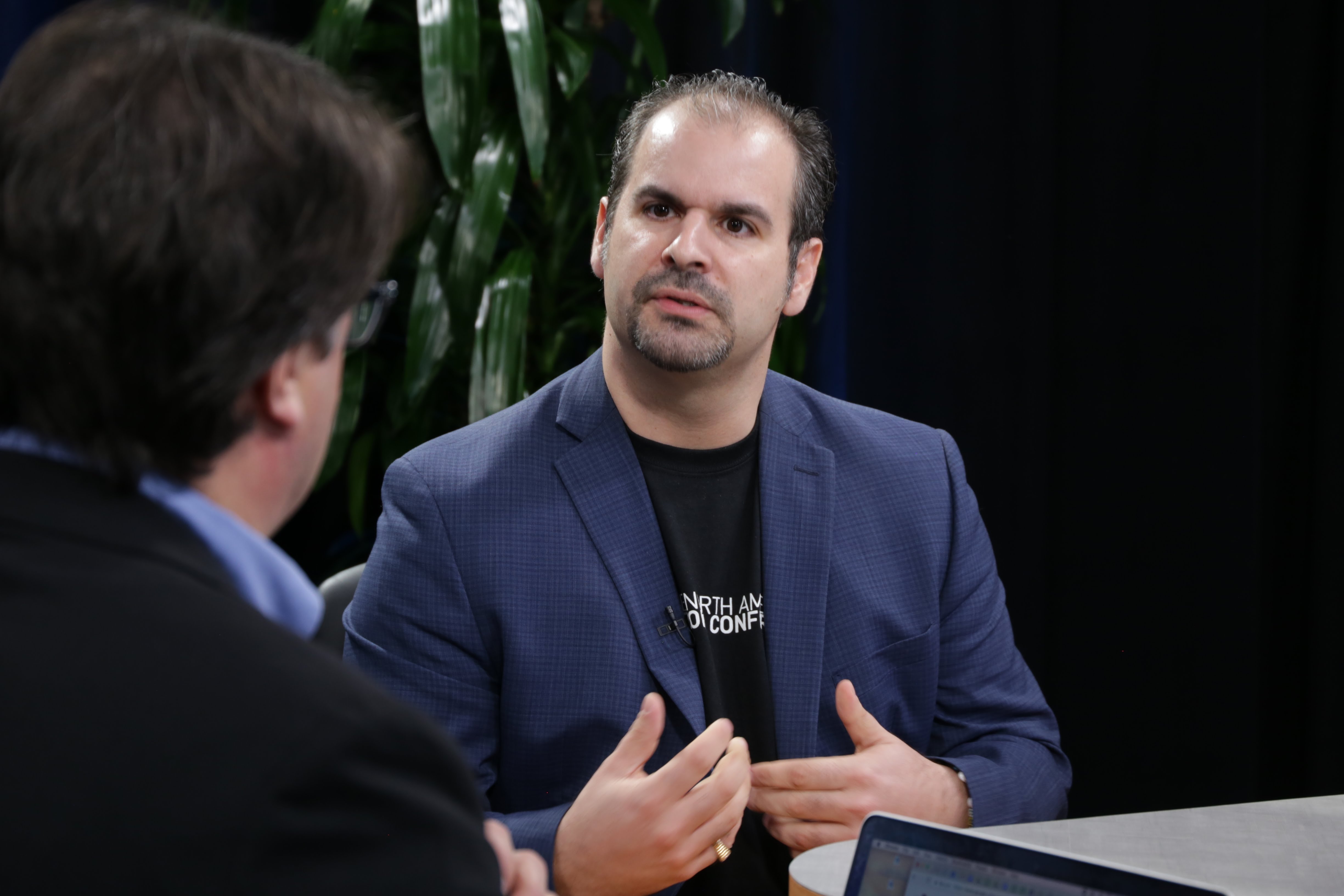
The initial proposition involved helping merchants and consumers move value through loyalty systems with less expense and complication. DigitalBits would be open for other products to support, including wallets. Fusechain planned to build applications around it. The distinction between a protocol and the services built on top was central to how Burgio explained the business.
His son helped introduce him to the gaming world. Zytara, founded in 2019, brought that audience into view. In December 2020, the company announced plans for banking and payments aimed at Millennial and Gen Z gamers and esports enthusiasts. Proposed features included branded debit cards, player-to-player transfers, tournament payments and parental controls, with banking products supplied through partners. The announcement described a planned service, with a launch intended for the following year.
In his subsequent writing about gaming payments, Burgio argued that a generation comfortable with online worlds needed financial services designed around those habits. The pitch was specific: winnings, purchases and transfers belonged inside the experience people already understood. Whether money moved through a game or data moved between businesses, he wanted the machinery to require less attention from its user.
When the shirts came off
In July 2021, AS Roma announced a three-year, €36 million partnership with Zytara Labs involving the DigitalBits Foundation. Two days after the announcement, the club offered 11 matchworn shirts and 25 rings, accepting XDB as the sole payment method. All 36 items sold within hours. For once, the proposed connection between blockchain and supporters could be counted in actual objects.
Inter followed with an announced €85 million partnership in September. Its plans included DigitalBits branding on sleeves, digital banking features through the club’s app and the integration of XDB payments. Football supplied an audience far beyond the specialist circles of network engineers and blockchain developers. It also supplied deadlines and contractual obligations.
The relationship subsequently broke down. Inter reported that payments stopped after the 2021-22 sporting season. In April 2023, it suspended the sponsorship’s remaining visibility and sought payment of outstanding sums. On May 26, it terminated the Zytara Labs agreement for non-performance. The club later reported obtaining an injunction from a Milan court. These were obligations of the sponsor company; the episode should not be confused with a personal judgment against Burgio.
DigitalBits Foundation leadership also clarified in April 2023 that Burgio was no longer involved in its management or operations, and that the football sponsorship contracts had been concluded with Zytara Labs. Founder, foundation and sponsor were different roles. The distinction became consequential when the partnership ceased to function.
The customer still gets a vote
There is a revealingly plain piece of advice in Burgio’s account of entrepreneurship: “Writing great code isn’t enough.” His own history gives the sentence several settings. A network customer needs a connection that works. A gamer needs a payment that arrives. A football club needs its commercial partner to meet the agreed terms.
Across those settings, Burgio has pursued the possibility of making complicated systems easier to use. Console’s technology found a continuing home in a telecommunications group. The later sports agreements encountered a much harsher reckoning. His career contains both outcomes, alongside the Ontario investors, network specialists and business partners who helped shape each stage. The impatient voice call at the beginning remains a useful test: sooner or later, somebody at the other end must hear you.
Read & watch
- Public profile · Al Burgio on LinkedIn
- Company website · Zytara
- The Ontario beginnings · Computing Canada, October 2014
- The first institutional round · BetaKit
- Allegro’s automation platform · acquisition announcement
- IX Reach and the cost of complexity · Data Center Knowledge
- Series B and international expansion · funding announcement
- The network community · NANOG speaker biography
- The 2016 platform announcement · Console
- CEO succession · Light Reading
- The connection in practice · TechTarget interview
- The two-part 2017 transaction · Bank Street
- DigitalBits and loyalty · SiliconANGLE
- Gaming payments · The Fintech Times
- The banking plans · Zytara announcement
- Roma’s partnership · club announcement
- The 36-item sale · AS Roma
- Inter’s 2021 deal · ANSA
- Inter’s subsequent account · February 2024 financial results
- Foundation and sponsor · April 2023 clarification
- The founder’s reflections · 2021 interview
- Watch · Burgio and John Furrier on theCUBE