The insurance industry has an impressive talent for making a simple question sound administrative. Can you insure a plumber in Texas? Before an independent agent can give an answer, there may be a carrier appointment to secure, an appetite guide to read, a portal to enter, a quote to compare and a commission arrangement to understand. Agentero built a business around making that journey shorter. Then it discovered that the paperwork behind its own agent network was a business, too.
- Agentero gives independent US agencies access to carriers and software for quoting, binding and commissions.
- Its internal producer onboarding tool became Producerflow after carrier partners asked for it.
- Agencies can join without a membership fee or production minimum, according to the company; commission splits depend on the carrier.
Founder Luis Pino had seen the problem up close. Before starting Agentero in 2017, he was on the founding team at CoverWallet. In an interview, he recalled visiting agencies where people filled out forms by hand, submitted requests to separate carrier portals, scanned PDFs and phoned customers to confirm routine details. Even a proof of coverage could become a small expedition. His conclusion was practical: the agent was valuable, but too much of the agent's day went to moving information from one place to another.

The small agency's large problem
Independent agencies sell choice, yet their choice depends on access. A carrier must be willing to appoint an agency or let it write through another arrangement. A young agency may lack the production history a carrier wants. A mature one may be well supplied in auto insurance and oddly short of places to send a coastal property, a contractor or a small commercial risk. Each extra market can help, but each also brings rules, logins and statements.
Agentero's answer is a digital network. Agencies use its portal to request carrier appointments, view available markets and quote personal and commercial insurance. Its raters compare options; branded digital proposals replace some of the familiar PDF choreography; commission reporting gathers transactions into a single view. The company lists carriers across home, auto, flood, life and business lines. Availability still varies by state, product and appointment eligibility, so the useful question is whether its shelf has the particular carrier an agency needs.
The customer is the independent agency, from a newly independent producer to an established shop expanding its markets. Carriers are the other side of the system: they get a channel to agencies that can place suitable business. In 2021, Agentero said it worked with more than 800 agencies. At the November 2025 launch of its AI Appetite Checker, it said the tool was available to more than 3,000 agencies in the network. Those are company reported counts at two moments, not a public series of audited active users.
What it costs to open the door
Agentero makes a pointed comparison with old-style agency networks and aggregators. It says agencies pay no membership fee, monthly dues or production minimum, and do not have to sign a long-term contract. Its own explanation says commission splits are published at the carrier level. In plain English, joining may cost nothing upfront; writing a policy has economics that depend on the carrier agreement. An agency still needs to read the split for the markets it will actually use. A beautiful roster is not a substitute for a useful appointment.
Can I reach a market without committing my whole book to a network?
Use carrier access and quoting tools, with no membership fee or production minimum, subject to carrier eligibility.
This is where Agentero sits in the market. A direct carrier appointment can be best for an agency with enough volume and a strong relationship. A traditional network may offer mentorship, pooled benefits and training that a software platform cannot replace. Agentero's narrower proposition is access plus workflow: an agency can add markets without buying the whole institutional package. First Connect and similar platforms pursue overlapping carrier-access business. The meaningful comparison is not a logo count; it is the carriers, states, products, support and net commission an agency can actually use.
A product hiding in the back office
Growth brought a second problem into view. Agentero itself had to onboard producers: collect details, verify licenses, obtain contracts and manage appointments. Those steps were manual and prone to mistakes. The company says it looked for a suitable tool, failed to find one and built an internal system. Carrier partners noticed the smoother process and asked whether they could use it. That request changed the scope of the project.
“When we looked for an existing tool to solve the issue, we came up empty-handed.”
Agentero on the origins of Producerflow
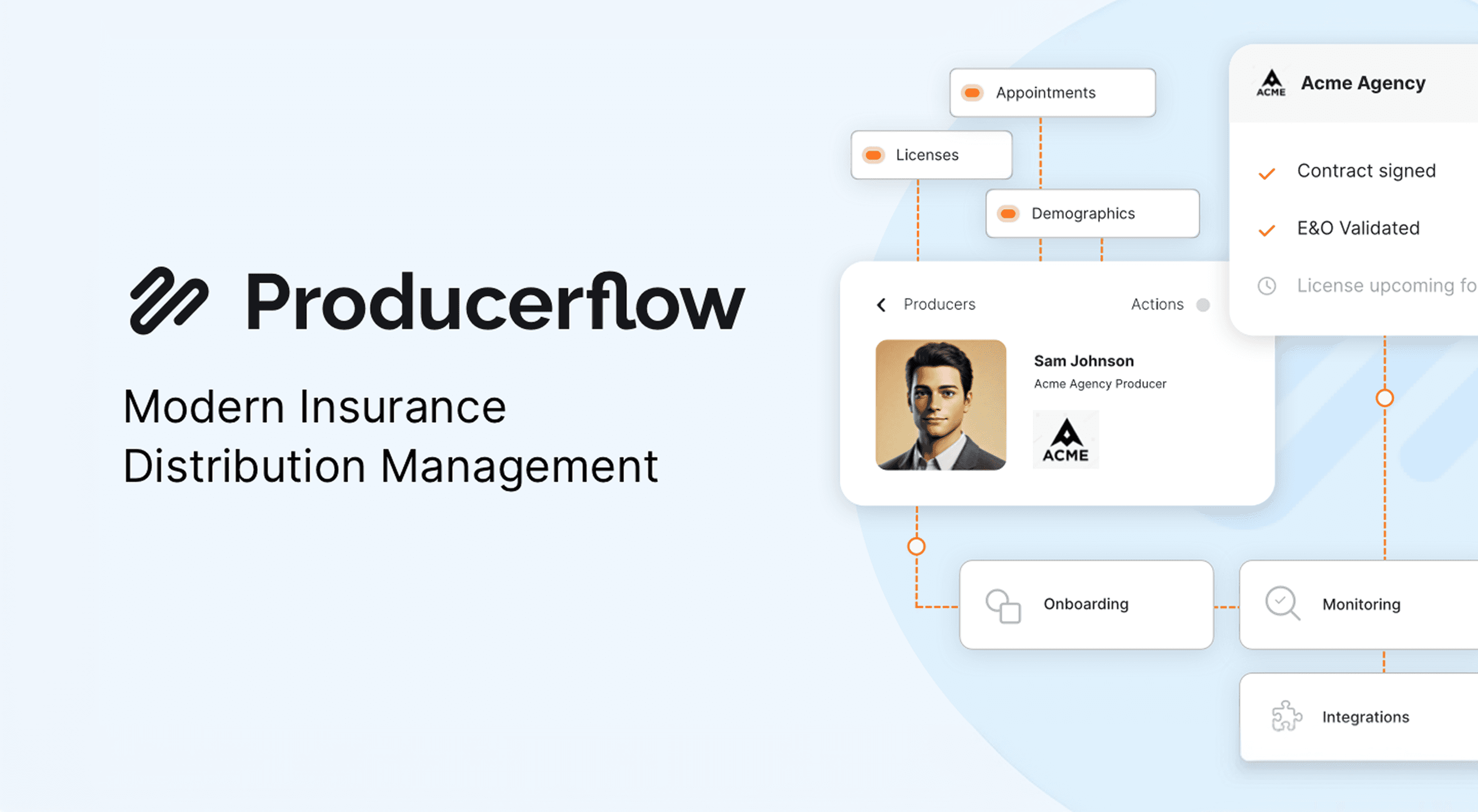
Producerflow launched as a separate platform in 2025. It handles producer onboarding, license checks and renewals, contracting and appointment workflows for carriers, managing general agents and agencies. Agentero says it signed clients before launch and initially narrowed the market it served as interest grew. It has not publicly disclosed product revenue or a price list. The verified lesson is more useful than a neat growth myth: if a workflow repeatedly costs your company time, fix it for yourself, then watch whether partners ask for the fix. Their request is a stronger signal than a brainstorming session.
The search before the quote
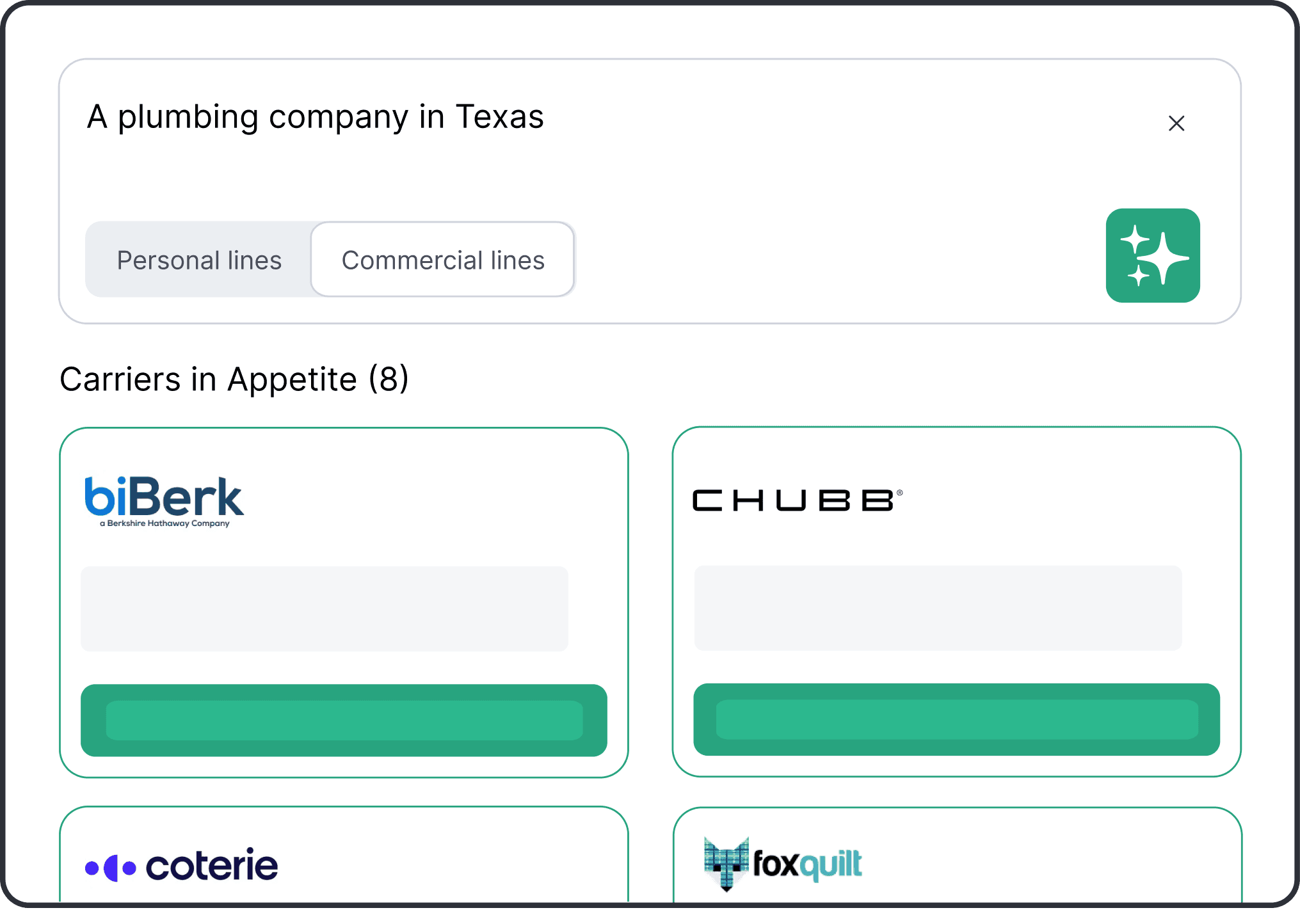
The newer AI Appetite Checker addresses an earlier step: which carrier might accept a risk at all? An agent can describe the business in ordinary language, add the state and line, and receive suggested carriers with eligibility details. Agentero says it uses carrier appetite guides, past quotes and bound-policy data. Its own example begins with a plumbing company in Texas. That is a refreshingly small job for AI: answer a placement question before anyone spends twenty minutes filling out the wrong application.
The company raised a $10 million seed round led by Foundation Capital and Union Square Ventures, then announced a $13.5 million Series A led by Alma Mundi Ventures in July 2021. In that release, it reported average annual agent sales growth of 26%; no method was supplied, so the figure is best read as the company's claim. The funding bought room to build a network where software and carrier relationships reinforce each other. It does not establish that every agency sees the same result.
In 2025 Agentero also announced a Simply Business partnership to expand digital small commercial quoting. In 2026 it published a county-level insurance-to-income index, a reminder that distribution is only one part of the larger insurance story: customers still have to afford the coverage an agent finds. Pino's original agency visits gave the company a specific problem. Producerflow shows what happened when it kept paying attention after the first product was built. The strangest thing about paperwork is that, once you have enough of it, it starts telling you where the next business might be.