A patient with diabetes visits a doctor. The doctor recommends an eye exam. The patient agrees. Then comes the second appointment, the extra journey, the new waiting room, the lost hour at work. This is where a reasonable medical plan becomes a game of chance. The retina has to be checked regularly because diabetic retinopathy can damage sight before it causes obvious symptoms. But a recommendation on a chart does not put a patient in a specialist’s chair.
In a minute
- AEYE Health sells autonomous AI screening for diabetic retinopathy to healthcare providers.
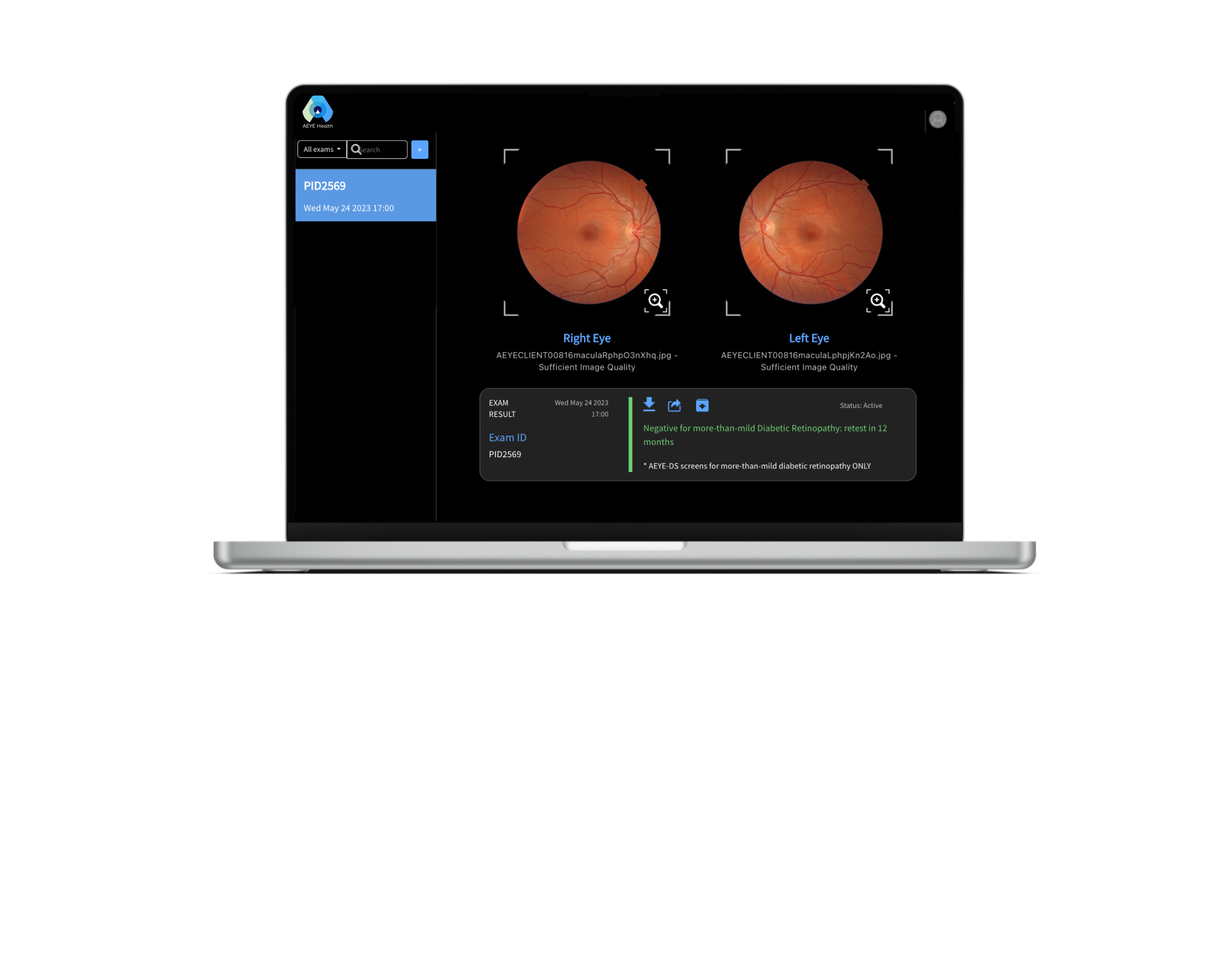
- AEYE-DS reads one retinal image per eye and returns a result during the visit.
- Its cleared setup includes a tabletop Topcon camera and a handheld Optomed camera.
- The larger ambition is broad retinal disease detection; that platform is investigational in the US.
AEYE Health’s answer is almost mischievously practical: keep the patient in the room. Its system pairs a retinal camera with software that analyzes the images and issues a diagnostic report without a specialist reading every scan. A primary care or endocrinology team can take one image of each eye, discuss the result immediately, and arrange specialist care when the screening flags a problem. The entire exam is marketed as taking about a minute.
The appointment after the appointment
The company was founded by Zack Dvey-Aharon, a machine learning researcher who became its CEO, and Danny Margalit, its chief operating officer. Its website dates the founding to 2019 and gives New York and Tel Aviv as its two locations. That mix of AI and clinical work matters because a screening device has two demanding audiences: the regulator who asks whether it detects disease, and the clinic assistant who asks whether it works at 9:17 on a Tuesday.
AEYE-DS was cleared by the US Food and Drug Administration in 2022 for a defined job: automatically detecting more-than-mild diabetic retinopathy in adults with diabetes who have not already been diagnosed with retinopathy. A further clearance in 2024 covered use with the Optomed Aurora handheld camera as well as the Topcon NW400 tabletop camera. That handheld addition changed the geography of the exam. A screening setup no longer had to be anchored to a dedicated imaging room.
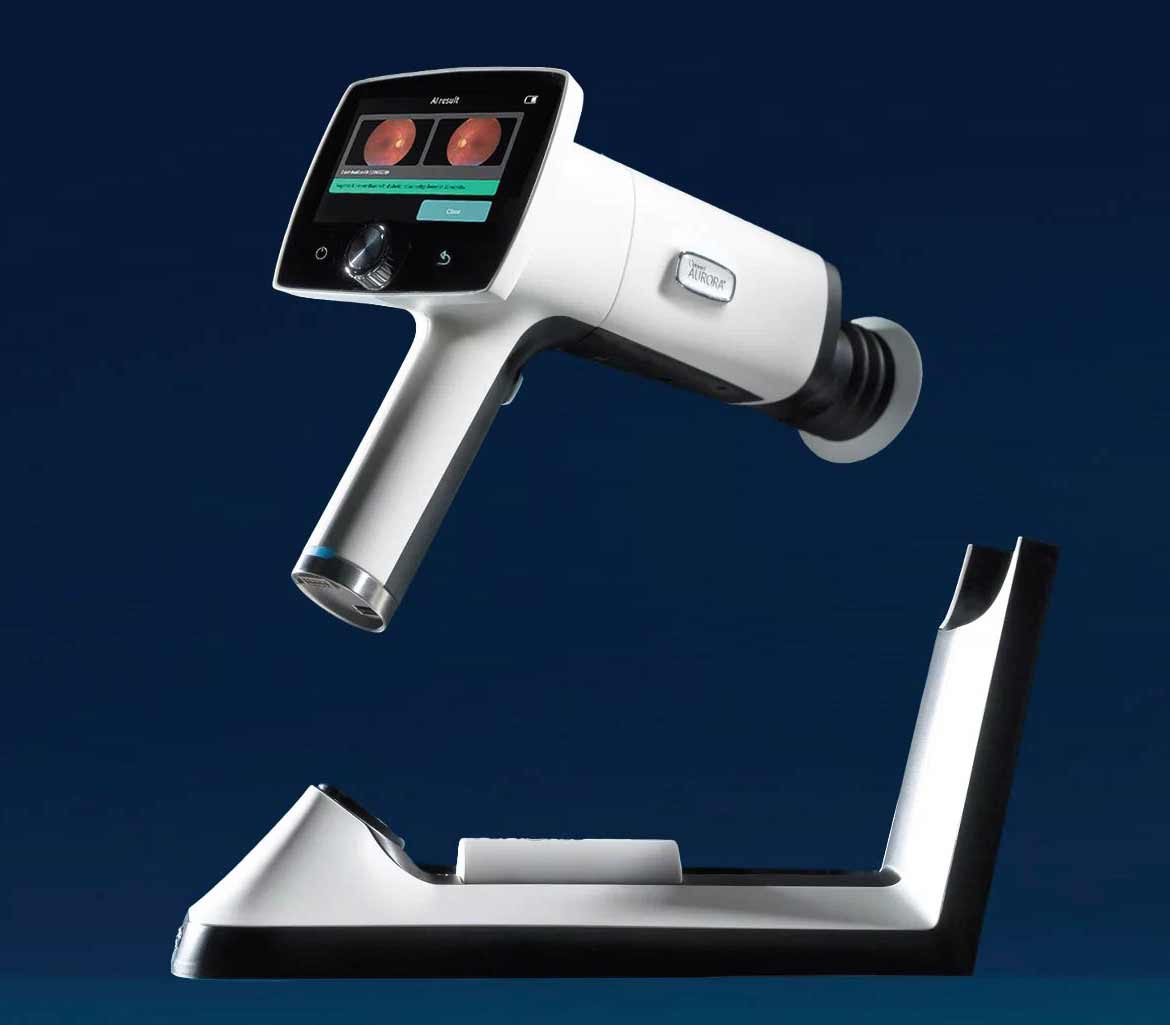
Aurora AEYE, the joint product with Finnish camera maker Optomed, shows retinal images and the immediate result on its own screen. The Topcon option suits a more fixed clinic station. Both fit AEYE Health’s central constraint: a single usable image per eye. In healthcare, shaving a minute from a test can sound trivial until that minute decides whether the test fits between blood pressure and the next patient.
A fast answer must also be an answer
The glamorous number in medical AI is often accuracy. In a clinic, a quieter measure can make or break the day: imageability, the share of patients for whom the system returns a usable result. AEYE Health’s pivotal handheld-camera trial, announced with Optomed in 2022, reported 91.9% sensitivity, 93.6% specificity and imageability above 99%. Those are trial results, with trained protocols. The ordinary clinic asks a harder question.
one per eye
A 2026 study in a busy endocrinology clinic offers a glimpse of that ordinary day. One novice operator, after one hour of training, screened 256 adults with diabetes using AEYE-DS and a Topcon NW500 camera. Without dilating pupils, the team obtained a definitive result for 245 people, or 95.7%. The other 11 did not simply vanish from the story: the study protocol sent ungradable cases to ophthalmology for a dilated exam. Positive cases entered a referral route to retina care. The number is useful because it includes what happens when the first image fails.
It is also a reminder that the camera in a study and the devices named in a cleared indication are separate questions. The company’s published US indication names Topcon NW400 and Optomed Aurora. A practice must follow the current labeling for the exact system it buys.
“We finally have a solution for our retinopathy screening. It is the easiest system that we have worked with.”Dr. Damon Tanton, AdventHealth Metabolic Health Institute, in a customer video
The result has to land somewhere
AEYE Health does not sell an app to curious patients. Its customers are care organizations: primary care practices, endocrinology clinics, health systems, teleretinal screening services and community providers. Bethesda Health Clinic in East Texas has used the technology to offer free screening to uninsured and underinsured patients. UMass Memorial Health put AEYE-DS into its electronic medical record workflow so staff could start an exam and review the result during a visit. In 2026, AEYE Health said its Epic integration was deployed across dozens of hospitals and health systems.
This is where the business model meets the clinical model. The company sells screening technology and integration to providers, with a subscription model described in an earlier company presentation. Its site does not publish a current list price. Clinics may bill eligible exams under CPT 92229, the code for retinal imaging with automated analysis and report, but payment depends on payer rules and care setting. AEYE Health cites roughly $50 as a national average reimbursement; a federally qualified health center or tribal clinic can face a different payment structure. The sensible purchasing question is therefore a local one: how many eligible patients are likely to be screened, how will the exam be billed, and who handles a positive result?
A narrow clearance, a wide ambition
There are other autonomous AI systems for diabetic eye screening. Digital Diagnostics sells LumineticsCore; Eyenuk sells EyeArt. AEYE Health’s pitch is the combination of a one-image-per-eye workflow, instant interpretation, and both handheld and tabletop options within its cleared product line. The competitive question is not which algorithm sounds most futuristic. It is which setup a particular clinic can use consistently, at a cost it can support, with a reliable path for the patients who need an eye specialist.
The company also studies what else retinal images might reveal. Its AEYE-X platform discusses conditions beyond diabetic retinopathy, including glaucoma, age-related macular degeneration and systemic disease signals. Its own product page labels that platform investigational and not sold in the United States. The distinction is important: the product in clinics today has a specific FDA-cleared purpose; the wider retinal health map is still a research and development story.
There is a useful lesson here for anyone building a service around a difficult follow-up. Start with the visit people already attend. Cut the number of steps. Put the result in the record clinicians already use. And design an exit for the cases the tool cannot read. AEYE Health’s achievement is to make those unromantic details feel like the main invention. An eye exam that happens now can do more good than a perfect plan for one that happens later.