When the radio in your car goes dark, or the instrument cluster flickers and dies, or a body control module quietly stops talking to the rest of the vehicle, most people assume there is exactly one fix: rip it out and bolt in a new one. AER Technologies has spent almost eight decades arguing the opposite. Send it to Brea, California, they say, and there is a good chance the engineers there can bring it back.
The company is not a startup, and it does not pretend to be. It was founded in 1947 by Ivan Hoffman in a rented 100-square-foot space in Huntington Park, repairing vacuum-tube radios one at a time. Nearly 80 years later, AER Technologies is the only electronics service center in America that serves all of the "Big Three" domestic automakers - Ford, General Motors, and Stellantis (formerly Fiat Chrysler) - as a Tier One supplier, while also working with the world's top electronics OEMs and thousands of dealerships. The through-line from the radio bench to the modern clean room is a single conviction: replacement should not be the default.
01 / What They Actually DoThe business of bringing electronics back to life
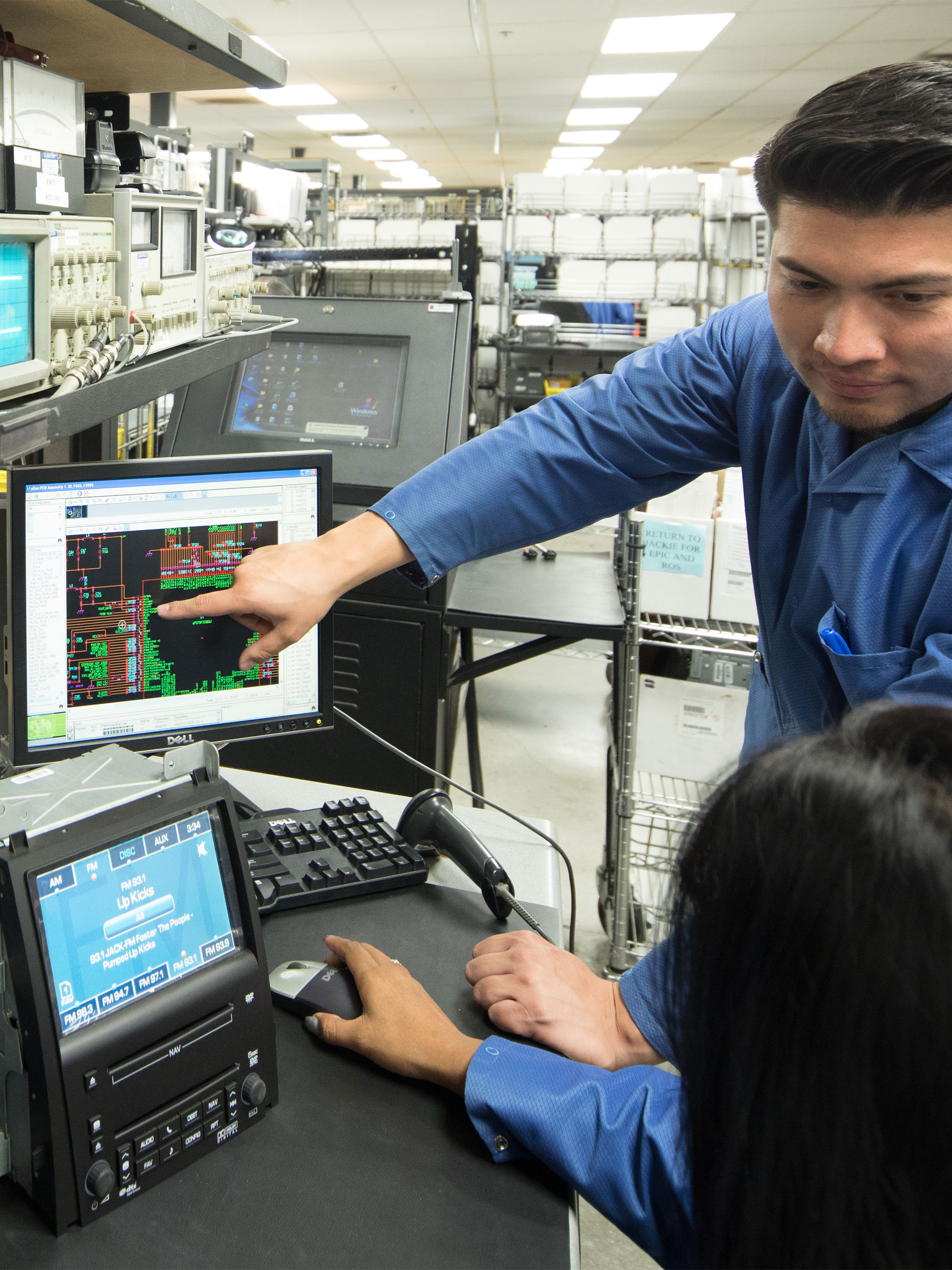
AER calls it "full-cycle electronics remanufacturing." In plain terms, a broken part comes in - a car radio, an instrument cluster, an engine or body control module - and it gets disassembled, diagnosed, repaired at the component level, rebuilt, and tested until it performs to the original manufacturer's specification. The work spans several disciplines that most people never think about: automotive electronics remanufacturing, printed-circuit-board rework, module repair, test engineering, electronics assembly, and lifecycle management that includes the reverse logistics of getting failed cores back from the field.
That last piece matters more than it sounds. A remanufacturer is only as good as its ability to collect broken parts, track them, fix them, and return them - a loop that runs in the opposite direction of a normal supply chain. AER has been refining that loop since car radios were the most complex electronics in a vehicle.
02 / The CustomersWhy Detroit sends its broken brains here
AER's customer list reads like a roll call of the auto industry: Ford, General Motors, and Stellantis, alongside International, John Deere, Aptiv, Mitsubishi, and Clarion. Beyond the OEMs sit thousands of automotive dealerships that rely on remanufactured modules to service vehicles whose original parts are no longer made. Earning a spot on that list is not a matter of a good sales pitch. Automakers audit their suppliers relentlessly, and the certifications required to touch safety-adjacent electronics take years to earn.
AER's relationships run deep enough to have survived the entire modern history of the car. Its work with General Motors and Delphi dates to the 1960s. It has been an authorized Chrysler service center since the 1970s - a partnership that started with car radios and grew to include instrument clusters and body control modules. In 2017, Fiat Chrysler named AER its Center of Excellence for radio remanufacturing.
Figure 1 - Depth of OEM relationships (years of partnership, approx.)
03 / The Problem It SolvesThe throwaway economy has a cost
Every replaced module is a new part manufactured, shipped, and eventually a working part sent to a landfill. Remanufacturing cuts against that on two fronts at once. It is usually cheaper for the automaker and dealer, and it keeps functional hardware - and the rare materials inside it - in circulation instead of in the trash. AER's own framing is blunt: things break, but replacement is not always the answer.
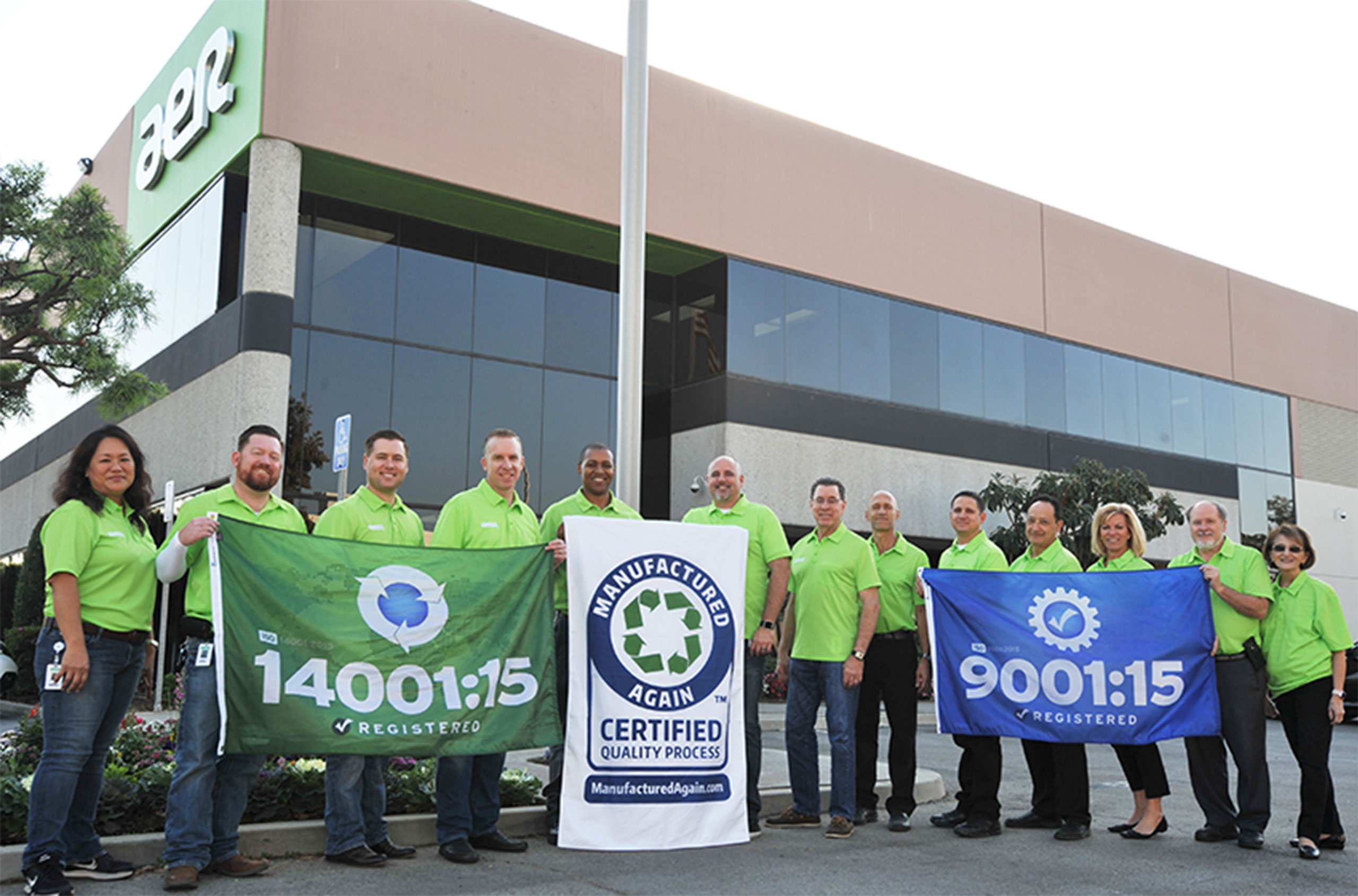
This is the part of the story that has aged surprisingly well. Long before "circular economy" was a phrase anyone put in a deck, AER was running one. The company obtained ISO 14001 environmental certification in 2013 and belongs to MERA, the industry's remanufacturing association. The sustainability angle was not a rebrand; it was the business model all along.
04 / What Makes It DifferentA moat measured in decades and certifications
There are other electronics repair shops. There are dealer core-return programs. There are OEM supply chains built entirely around replace-with-new. What sets AER apart is the combination that is genuinely hard to copy: being trusted, at Tier One level, by three fiercely competitive automakers at the same time, with the certifications to back it. The company holds IATF 16949 (the automotive quality standard that established its Tier One status in 2020), ISO 9001, ISO 14001, and IPC/WHMA-A-620 for cable harness work, plus a Ford Q1 preferred-quality designation earned back in 1992.
You cannot raise a Series A to shortcut that. It is the product of showing up, passing audits, and not dropping the ball for decades - a moat built out of patience.
Certifications & Credentials
- IATF 16949Automotive quality management; Tier One status (2020)
- ISO 9001Quality management systems
- ISO 14001Environmental management (2013)
- IPC/WHMA-A-620Cable and wire harness assembly (2016)
- Ford Q1Preferred quality designation (1992)
05 / The Long RoadFrom vacuum tubes to body control modules
Very few companies get to reinvent themselves alongside the technology they service. AER's story tracks the whole arc of automotive electronics. It grew from a one-person radio shop to a ten-person team in the 1960s, expanded to three Southern California locations by 1975, built a sales division in 1980, and moved into a purpose-built facility in Brea in 2005.
Figure 2 - Milestones, 1947 to today
- 1947 - Ivan Hoffman opens a vacuum-tube radio shop in a 100 sq ft space.
- 1960s - Grows to ten people; secures GM and Delphi relationships.
- 1975 - Expands to Fullerton, Long Beach and Huntington Park.
- 1987 - Kim Quick, a former GM employee, joins to lead quality.
- 1992 - Earns Ford Q1 and ISO 9001 / QS-9000.
- 2005 - Builds its state-of-the-art Brea facility.
- 2017 - Named Fiat Chrysler Center of Excellence for radio remanufacturing.
- 2020 - IATF 16949 certification; achieves Tier One status.
- 2026 - Cameron Quick becomes President; Kim Quick serves as Chairman.
06 / The Business & The FamilyUnsexy, essential, and still privately held
AER makes its money the way industrial service companies do: contracts. It is paid as a Tier One supplier and authorized service center to remanufacture, repair, test, assemble, and manage the reverse logistics of electronics for its OEM customers, plus dealer support work. It employs roughly 81 people and has never taken venture funding - a reminder that not every durable company needs an investor round to exist.
Leadership has stayed close to home. Kim Quick joined in 1987, became sole owner in 1999, and now serves as Chairman. In 2026, Cameron Quick - the company's marketing lead and now President - stepped into the top operating role, continuing a family stewardship that spans generations. The company's motto, "Consider It Done," is the kind of promise a service business either keeps or dies by.
07 / Where It FitsA quiet niche that isn't going away
Cars are becoming more electronic every year, not less. Every added screen, sensor, and module is one more thing that can fail - and one more thing worth remanufacturing rather than scrapping. That trend runs directly in AER's favor. The company sits at the intersection of automotive manufacturing, electronics repair, reverse logistics, and environmental services, in a niche most people never see but every dealership depends on.
If there is a lesson to steal here, it is not a growth hack. It is the opposite: pick something hard and unglamorous, do it better than anyone, get the certifications that make you irreplaceable, and let time compound the trust. Nearly 80 years in, the bet that "we'll fix it" beats "buy a new one" is still paying off.