The Scene
A drawer full of socks nobody wants
Somewhere right now, a person is standing over a trash can holding a bag of old t-shirts, mismatched socks, a frayed bath towel, and a phone charger for a device that no longer exists. The local thrift store won't take most of it. The recycling bin definitely won't. So the bag goes in the trash, because the trash is the only door that's always open.
Trashie built a different door. Buy a bag, fill it with almost anything textile - including the things charities politely decline - mail it back, and get paid in rewards. It is the rare sustainability product that asks for less effort than throwing something away, and somehow hands you money for it. That is the whole company, and that is also the whole trick.
Pictured: the moment a wardrobe becomes someone else's problem. Trashie's pitch is that it doesn't have to be yours.
The trash can is the only recycling program with no rules, no hours, and no judgment. Trashie's job was to out-compete it.
- The central bet
The Problem They Saw
Recycling clothes is technically possible and practically impossible
Americans throw away staggering amounts of textiles every year, and the reason is not that people are villains. The reason is friction. Donation bins reject worn-out items. Municipal recycling doesn't handle fabric. The "responsible" option usually means research, a car trip, and a faint suspicion that the stuff ends up in a landfill anyway. Faced with that, most people choose the bin. Convenience wins every argument it enters.
The team behind Trashie had a front-row seat to this. They spent years inside the fashion supply chain through For Days, the zero-waste apparel brand Kristy Caylor co-founded in 2018. They learned where old clothes actually go, who sorts them, and why almost nothing reaches the consumer as an easy choice. The problem wasn't a lack of recycling technology. It was a lack of an on-ramp.
Everything is sorted and graded to a very high level of specificity.
- Trashie, on what happens after the bag leaves your porch
The Founders' Bet
What if recycling paid better than hoarding?
Kristy Caylor's wager was almost mischievous: flip the economics. Instead of asking people to sacrifice time and money for the planet, charge a small fee and return more value than you took. A Take Back Bag costs $20. Send it back full and you receive $30 in TrashieCash, a rewards currency redeemable at brands people already use. You come out ahead. The closet comes out empty. The landfill comes out short.
It sounds like a coupon scheme wearing an environmental costume, and to be fair, that skepticism is healthy. But the model holds because the rewards are funded by partner brands hungry for new customers - so the discount you spend is someone else's acquisition cost. Recycling becomes the side effect of a transaction everyone already wanted to make.
Five years of supply-chain homework, compressed into one mailer. The unglamorous kind of innovation.
The Product
One bag, one box, one currency
Flagship
Take Back Bag
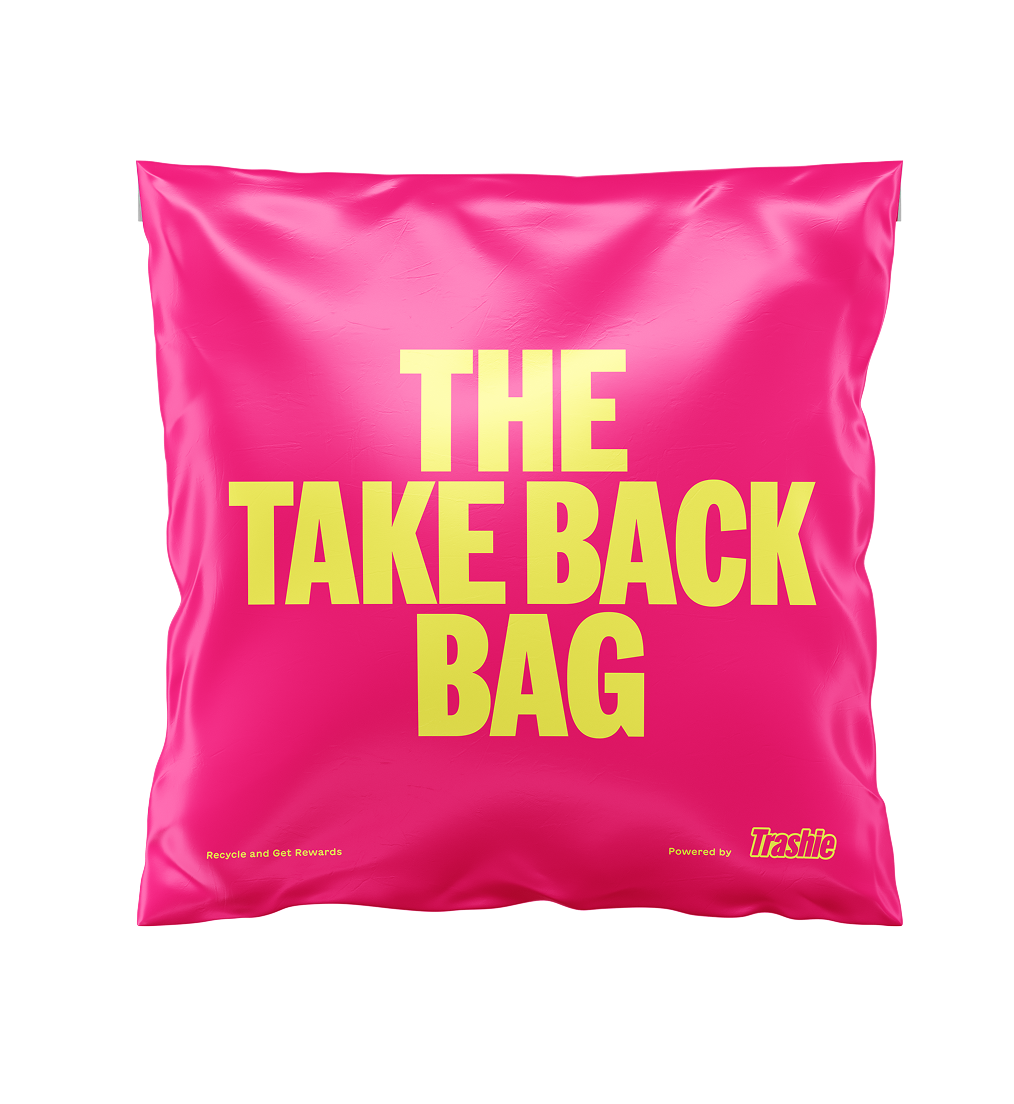
A 24"x24" mailer holding ~15 lbs of clothing, shoes, accessories, and linens in nearly any condition. Over 50 item types accepted. Send it back, earn $30 in TrashieCash.
The Currency
TrashieCash
Digital rewards you earn by recycling, redeemable for deals at hundreds of partners including Nike, Uber Eats, and Grove Collaborative.
E-Waste
Tech Take Back Box
Mail in dead laptops and phones. Includes secure data destruction and e-waste sanitization - the drawer of doom, finally emptied.
The Loop
Reward Marketplace
Where TrashieCash gets spent. Retail, food, and entertainment offers that turn a chore into a checkout.
Four products, one idea: make the right thing the easy thing, then attach a discount to it.