Before Ada Hu had a global agency, she had a translation problem. Around New York, she saw immigrant entrepreneurs building restaurants, shops and services with all the ingredients of a good business except an easy route into the American mainstream. Their products could cross a counter. Their stories were having a harder time crossing a culture.
Hu understood the gap personally. Born in Hangzhou and raised between Chinese and American contexts, she had learned to notice what changes when an idea moves from one audience to another: the reference that suddenly needs explaining, the visual cue that lands differently, the founder whose confidence in one language becomes caution in the next. At Parsons School of Design, where she studied product design, that instinct acquired a working vocabulary of identity, systems and form.
She started working on the business that became NU Media while she was still in college. In 2019, Hu and Eva Jiang launched the New York agency around a practical ambition: give immigrant-owned companies a clearer path to attention without asking them to file away the culture that made them interesting. Hu had met Jiang during college, when Jiang was a marketing director at a credit-card processing company. What impressed Hu was her future partner's ability to navigate both Asian and American markets. They had found the same missing bridge from opposite banks.
The useful chaos of doing every job
Early entrepreneurship came with no respect for job descriptions. Hu sold the work, managed the client, made the content and, when necessary, picked up the camera. During one food shoot, the client's kitchen caught fire. The anecdote is almost too neat, a literal flare-up in a business already running hot, but Hu tells it for the lesson beneath the smoke. You do not control the surprise. You do control the energy you bring after it arrives.
That appetite for adaptation helped NU Media through its broad first phase. The agency worked across industries and learned the ordinary, unphotogenic disciplines of service: meeting a brief, managing a campaign, keeping a client. Yet range eventually became a trap. Hu and Jiang studied larger agencies and noticed that the durable ones tended to be known for something narrower. Trying to market everything made it harder to become expert at anything.
They chose food and hospitality, partly because both founders genuinely loved the category. Restaurants are unusually demanding brand machines. A meal is product, theater, memory, logistics and social currency, often in the same hour. For immigrant founders, food also carries a delicate burden: it must welcome a new audience without being redesigned into a caricature of itself. NU Media's bicultural instincts suddenly had a precise arena.
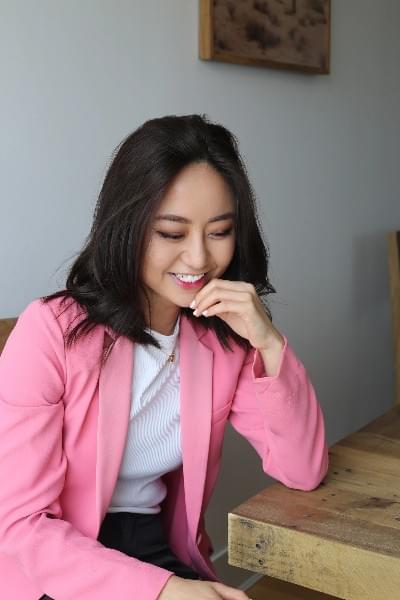
The client list grew to include the ramen chain Kyuramen, Michelin-starred Aquavit, Asian grocer TESO Life and Lee Kum Kee, the heritage sauce maker. For Lee Kum Kee, the agency coordinated more than 120 influencer collaborations and generated over 10 million social impressions. The statistic matters because it describes distribution. The cultural work happened one level earlier, in deciding how a long-established brand should appear in feeds built for the next novelty.
“Our mission has always been clear - to help grow the minority business community and create a space where every story and every brand, no matter its origin, can be seen and celebrated.”Ada Hu, 2025
Specialization made the agency legible
By choosing a category, Hu did not shrink the agency's world. She gave the market a simple way to remember it. NU Media came to serve more than 1,500 brands, about 70 percent of them immigrant-owned businesses in food and hospitality. It expanded to six global offices. The company's Inc. 5000 rankings trace three consecutive years of growth: No. 1,056 in 2023, No. 2,554 in 2024 and No. 3,663 in 2025.
From college project to recognized agency
Forbes named Hu to its 2025 30 Under 30 list in Marketing & Advertising. Such lists invite a familiar portrait of the young founder: singular, kinetic, permanently ahead. Hu's more revealing comments pull the other way. Asked about her largest accomplishment as a business owner, she answered with two nouns: her team and its reputation. Her advice to a twenty-year-old founder is equally plain: “Grit & Consistency. And always treat others with respect and kindness.”
Consistency is an unfashionable virtue because it makes poor theater. It looks like returning to the same problem with better judgment. Hu has said that most people can focus for a day, while few carry a project from beginning to end. The remark explains more about three years on a growth list than any talk of disruption. A campaign is a promise made repeatedly, in public, until an audience begins to remember.
As the team grew, control became less useful
Scale complicated the intimacy of the early company. Hu knew the first five people deeply; no leader can reproduce that relationship indefinitely. The temptation was to bend the organization around every impressive recruit or answer missed deadlines with more checkpoints. Experience made her suspicious of both. Talent without aligned purpose creates friction later. Rules imposed on a human problem often preserve the problem and merely add paperwork.
One delayed campaign became a small conversion story. Hu's first instinct was to tighten the process. Instead, she asked the team what was blocking progress. The answer was not a shortage of discipline but a surplus of ambiguity: miscommunication and unclear expectations. The agency focused on clarity and trust. Accountability, in Hu's formulation, meant alignment rather than surveillance.
The resulting culture is not incidental to the client work. NU Media's team is 90 percent women and majority AAPI. Hu describes meetings where people shaped by Shanghai, Los Angeles and Manila interpret the same brief through different cultural lenses. Living between languages and expectations can produce a useful sensitivity to tone. People who know what it is to be misunderstood tend to listen for what a campaign might accidentally erase.
The agency makes that listening routine. Weekly “creative circles” let anyone bring an idea or challenge to the group. Team meetings may begin with a question as simple as what inspired someone that week. Several of the company's managers started as interns or junior staff. Hu sees those transitions as evidence that a business can be a platform for other people, an idea she credits to an early mentor.
That platform idea also clarifies how Hu thinks about technology. NU Media uses artificial intelligence to speed repetitive work, but she resists treating efficiency as the final goal. Time saved should return to thinking, connecting and making, the tasks that require a human reading of another person. In an industry eager to automate attention, her test is almost domestic: does the tool give colleagues more room to talk to one another? Software can sort the pieces. It cannot decide which cultural detail is precious, which joke requires context or why a founder cares about a recipe carried across an ocean. Those decisions still belong to people with memory and judgment.
“Culture doesn’t just happen; it must be designed intentionally.”Ada Hu, on people-first leadership
Visibility outside, visibility inside
There is a satisfying symmetry in Hu's project. NU Media sells visibility to businesses that have historically struggled to obtain it. Inside the company, she is trying to make young staff feel visible enough to speak, experiment and advance. The external promise and internal practice depend on the same skill: seeing people clearly before deciding how they should appear.
This is where her design education quietly returns. Design is often mistaken for decoration, just as marketing is mistaken for volume. Hu's career suggests a different definition. Both are acts of arrangement. Which story goes first? Which context must travel with it? Which person needs permission to contribute? Which category deserves the agency's full attention? Good systems make answers easier without pretending people are interchangeable.
Hu still speaks with the impatience of a founder in motion. In late 2025, asked about her next project, she offered only, “Yes, let’s wait and see :).” The smiley face is doing respectable work there. It closes the curtain while keeping the room curious.
What is already visible is a progression from translation to specialization to institution-building. A student noticed good companies stranded between cultures. A young operator built an agency by doing every job. A CEO learned that growth asks less for omnipresence than for systems other people can trust. The brands became easier to see. Then the people carrying them did too.