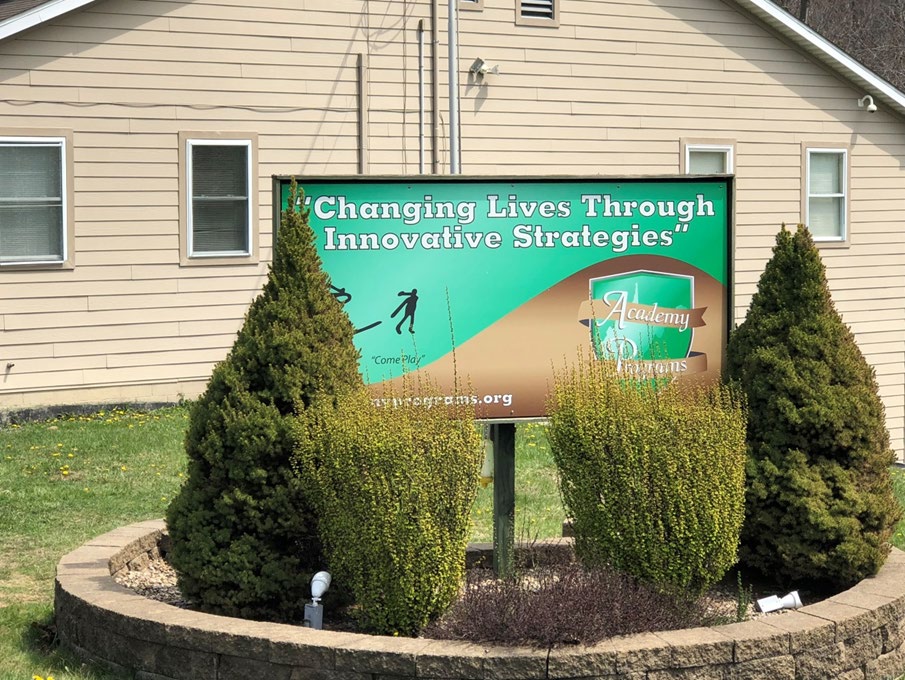
The addresses do some of the explaining. Youth Academy is at 3 Crosswind Drive. The school is at 5. Yore Academy is at 7, and YALE Academy is at 9. On a single road in Fairmont, West Virginia, Academy Programs has arranged several parts of a young person’s life within a small sequence of street numbers. Treatment has an address. So does the next school day.
The arrangement poses an interesting question: how much of helping a child depends on what happens between appointments? Academy Programs’ answer is visible in its services. It operates residential programs for adolescents with behavioral and emotional difficulties, provides support to families in their homes, and has a state-operated school on campus. Its stated ambition is to keep family and community involved while delivering care in the least restrictive setting possible.
That ambition contains a tension. Residential treatment means living away from home. Family-centered treatment means keeping home in the picture. Academy Programs has built its work around holding those two things together.
A dentist, a psychologist, a town
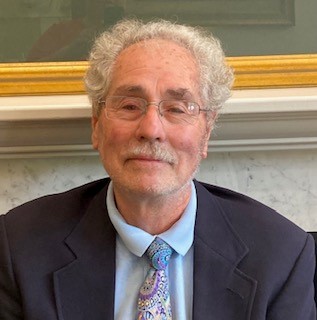
The founders’ biographies begin close to home. David Bonasso is a Fairmont dentist who graduated from West Virginia University’s School of Dentistry in 1976. His public biography lists service on the boards of a local bank and a Catholic school. Ronald Pearse is a psychologist with a long connection to Fairmont State University, where he taught and chaired the School of Social Sciences.
The pairing is an unexpected detail in a company concerned with adolescent treatment. Their shared thread is a long professional life in the community where the programs operate. Pearse’s background brings the direct connection to psychology: private practice, university teaching and work with organizations serving children and families.
Fairmont State’s account dates Youth Academy to 1999, Yore Academy to 2008 and YALE Academy to 2014. Those dates describe a gradual addition of programs. In 2023, the university honored Pearse with its Lifetime Achievement Award. The company’s roots are easier to understand through these local careers than through the usual vocabulary of startup launches.
Three programs, different assignments
Youth Academy is described as a Level II therapeutic residential program for young people whose behavioral or emotional difficulties prevent them from remaining at home. Its listed capacity is 22. Yore and YALE each list 24 places and focus on co-occurring issues, including behavioral difficulties and substance use. YALE, incidentally, stands for Youth Accelerated Learning Environment. The capital letters have a local explanation.
All three programs describe their age range as 12 to 17, with provision for transitioning adults up to 21. Yore and YALE describe cognitive-behavioral work intended to help residents recognize patterns around substance use and develop coping skills. These are descriptions of the services offered; they are not a promise about any particular young person’s outcome.
The useful distinction for someone considering the organization is the combination of setting and need. A residential place, an in-home service and a school seat do different jobs. Academy Programs occupies the part of the youth-services market where those jobs meet. The relevant alternative depends on the child’s assessed needs and the level of support required.
The next school day still counts
At number five, the school is funded and operated by West Virginia Schools of Diversion and Transition. It has its own principal, guidance counselor, certified teachers and support staff. That division of responsibility matters: education has an institutional home within the campus, with the state education system running the school.
The published offer includes a full curriculum, a regular school year from August to June, and two summer sessions in which students can earn graduation credits. The education page also describes opportunities to pursue an equivalency credential or college study with staff guidance. The practical proposition is straightforward. A period in treatment can include continued academic work.
This is one of the details worth borrowing at the level of service design. When an organization takes responsibility for one urgent problem, it should consider which ordinary commitments still need attention. Here, school remains one of those commitments. The calendar keeps moving while a young person is receiving care.
“Every child matters”Academy Programs’ published values
Family support has a practical vocabulary
Community Family Intensive Treatment, or CFIT, extends the organization’s work into family services. Its menu includes supervised visitation, parenting support, transportation, family assessments, case management and in-home therapy and counseling. The program describes an assessment-led approach that combines social-necessity and medical-necessity services.
Read that list slowly and a different picture of treatment emerges. A family may need help with an appointment’s practical arrangements as well as the appointment itself. A supervised visit needs someone to supervise it. Parenting support needs a defined service. CFIT puts names to these tasks and makes them part of the organization’s offer.
For families and referring professionals, the starting point is an inquiry about fit. Academy Programs’ contact page directs residential and CFIT referrals to admissions coordinator Holly Nealis. The existence of several services allows that conversation to begin with the person’s needs rather than an assumption that every inquiry belongs in the same program.
The relationships have a payroll
The staffing vocabulary is revealing. Academy Programs recruits Teacher/Counselors to help develop, implement and monitor treatment plans and work with young people on shifts. The slash in the title joins two responsibilities that its model places close together: learning and care.
Its careers page lists starting wages of $19 an hour for Teacher/Counselor I and $20 for Teacher/Counselor II, with different degree requirements. It also advertises bonuses of $1,500 after six months and $2,500 after eighteen months. These are posted recruitment terms, not the price of a placement. They show some of the ongoing labor costs behind the service.
Leadership biographies describe people moving through those roles. Christin Black joined as a Teacher-Counselor in 2007, became a team leader in 2008 and senior program director in 2015. Rodney King began as a Teacher Counselor Assistant in 2009 before progressing through counseling and team leadership. Institutional experience can accumulate through daily work.
Keeping that experience is difficult. The 2024 report records 45% direct-care turnover. Staff surveys identified gaps in feeling supported by supervisors and upper management; the stated response was more management interaction and follow-up. This is a concrete management lesson: ask about support, then change the frequency of contact.
The same report identifies state funding and Medicaid as revenue sources. It records 144 young people served from 26 counties. Public agencies and families occupy different positions in this arrangement: agencies refer and fund; young people and families receive services.
The address that comes afterward
The 2024 report says 64 of 84 discharges went to home or less restrictive settings. That measure describes where young people went, rather than proving lasting recovery. It also acknowledges that some needs require more intensive care. Those boundaries matter when judging what this particular setting can do.
Academy Programs’ published values place education, trust, community and family alongside safety. The interesting part is watching those broad words acquire practical forms: a school on campus, someone handling referrals, a teacher-counselor on shift, a supervised visit. Each is a piece of work someone has to carry out.
The street numbers make the campus easy to describe. The organization’s harder assignment is helping the things learned there remain useful at the next address.
Take a closer look
Visit Academy Programs · Explore residential programs · Explore CFIT · Make a referral inquiry · Facebook · LinkedIn