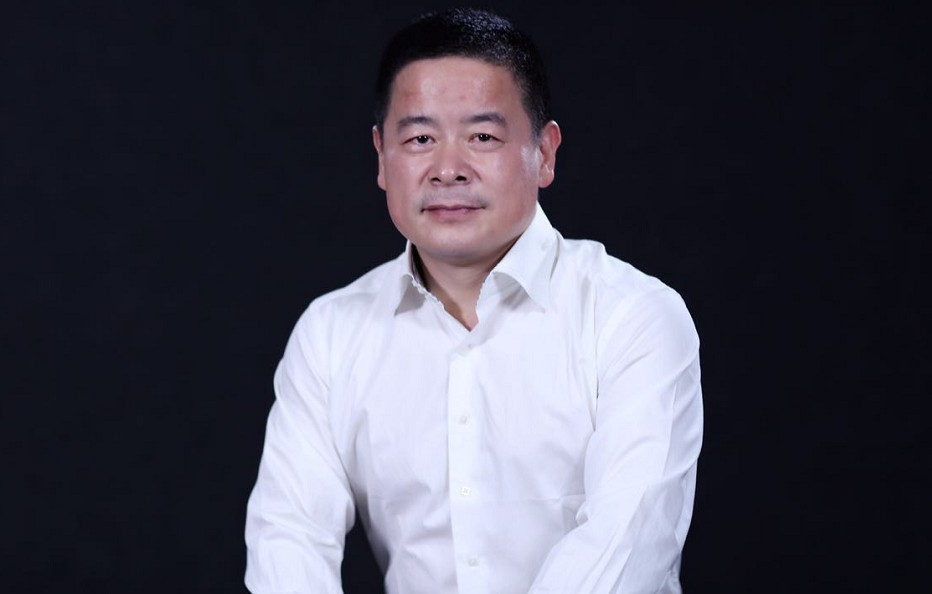
There was a peculiar problem with selling online school software to schools: the software was often the least difficult part of running an online school. A training center might get its branded website, upload a video lesson, and take payment. It still had to find someone who wanted the lesson. Ablesky, a Beijing education technology company founded by Lou Yingming, learned to sell the machinery first. In 2016 it proposed something more ambitious. It would give the machinery away and try to make its customers useful to one another.
The short version
- Ablesky gives institutions tools to run online schools and gives learners a place to find courses.
- Its 2016 plan made the school platform free and sought commission from course sales between schools.
- The wager only works when schools share lessons, customers and trust, while Ablesky pays for the underlying service.
The first customer bought a school, not a marketplace
Lou had worked in Silicon Valley before returning to China in 2007. He wanted knowledge to move more freely between people. The first version of Ablesky went online in 2008, at a moment when many training institutions still needed persuading that teaching on the internet was worthwhile. So the company sold something they could understand: a school of their own, minus the cost of building one from scratch.
That meant a branded domain, an app, recorded and live classes, student records, payments, and tools for answering questions and setting exercises. The company's site still describes a path from planning a lesson to recording it and promoting the finished school. Ablesky even offered recording rooms and help with filming, editing, design and uploading. This was not simply a shelf for videos. It was a way for a small institution to behave, online, like a larger one.
The customers were mostly training providers, along with schools, universities, companies and government bodies. A teacher could publish exam preparation; a language school could stream a class; a professional trainer could package a course. Learners could search across subjects from civil service exams and software development to calligraphy and yoga. The learner app offered a route from previewing a class to enrolling, studying, practicing and asking questions.
The remarkable size of a collection of small schools
By its 2016 financing announcement, Ablesky said more than 10,000 online schools had opened on its platform. It reported about 10 million registered learners and nearly 500,000 courses. Those are company figures from that period, not a present-day count. They matter because they turn the next idea from a slogan into a plausible business: if even a fraction of those separate schools could recommend one another's courses, Ablesky would own a distribution network as well as a software product.
Company-reported figures at the 2016 announcement.
The apparent abundance concealed a familiar shortage. A school might have an excellent course but no economical way to produce more of them or reach new learners. Lou said Ablesky's tools had already cut the cost of maintaining a platform for 10,000 people from around RMB 5 million to RMB 300,000-500,000. For some institutions, even that smaller sum remained too dear. Course production and student acquisition added two more bills. A virtual classroom can lower the cost of a building. It cannot guarantee an audience.
“Some institutions still think that is expensive.”Lou Yingming, discussing a RMB 300,000-500,000 platform cost in 2016
Free was the price of asking schools to cooperate
In September 2016 Ablesky announced a Series C round reported at RMB 100 million. With it came a reversal. The company said it would stop charging technical service fees for its online school platform. Recording rooms in cities including Beijing and Xi'an would be available to institutions. Schools could distribute one another's courses and refer learners across the network. A school whose learner bought another school's class would get a referral reward; Ablesky planned to take a commission from the cross-school sale.
The intended cross-school transaction, as described when the free platform was announced.
It was a different answer to the same customer's problem. Charging for the software helped a school get online. Removing that charge was meant to bring more schools into the network. Shared distribution might then make an individual course easier to sell. Ablesky's original dream of a knowledge market came back through the side door, carried by the schools it had spent years serving.
There was a price. Lou expected the free platform to add several million yuan a month in bandwidth and development costs. The financing made the bet possible; it did not prove the commission model would cover it. Ablesky needed institutions willing to send learners to a neighbor and courses good enough that a neighbor would recommend them. The economics would be especially awkward where a school guarded its student relationship or had little complementary content to exchange.
The app is the shop window; the schools are the stockroom
The consumer app makes the range of the enterprise system visible. It lists courses in certifications, IT, languages, K-12 subjects, career skills and hobbies. A learner can find a class, pay, watch it online or offline, and use practice or question tools. The App Store lists paid courses and in-app purchases. Its version history shows work on live classes, course bundles and student experience through November 2022. That is the latest dated app update visible in the listing, rather than evidence of a new strategic turn.
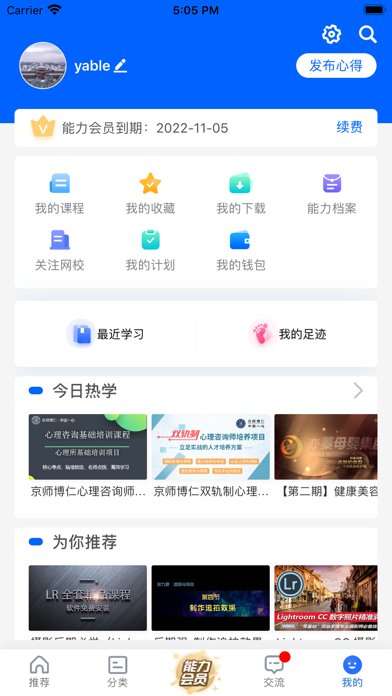
The company sits between two kinds of rivals. A school can build or commission its own platform and keep control of every customer relationship. It can also list courses on a large marketplace, gaining distribution while giving up some identity. Ablesky tried to offer both a branded campus and a wider market. That is its distinctive appeal: the institution keeps a recognizable school, while the network offers routes to learners beyond its own mailing list.
The site's customer testimonials name users including Wuhan University, Haitian Education and Jincheng Education. They describe online enrollment, remote training and stronger course delivery. Those examples show the practical work beneath the grander ecosystem language. A university needs students to reach a lesson regardless of time and place. A training firm needs to assess people scattered around a country. A small instructor needs a place to sell knowledge without commissioning an engineering team.
A useful lesson from a risky switch
Ablesky's story is easy to misread as a tale about making software free. Free was only the invitation. The company had spent years accumulating schools, lessons and learners before asking them to trade with one another. A new entrant with empty shelves could copy the price and inherit only the costs. The transferable move is narrower: find the adjacent bill your customer still struggles to pay. For Ablesky's schools, that bill was the labor of making a course and the expense of finding a student.
Whether the 2016 plan ultimately delivered the hoped-for economics is not established by the public figures. The interesting fact is the decision itself. Ablesky had a paying software business, a large reported network and a founder whose first idea was a market for knowledge. When the schools' biggest problem shifted from getting online to getting noticed, he put the old revenue stream at risk. The software could build thousands of classrooms. The wager was that opening the doors between them would be worth more.