The Dispatch
A plant company that retired the word "meat."
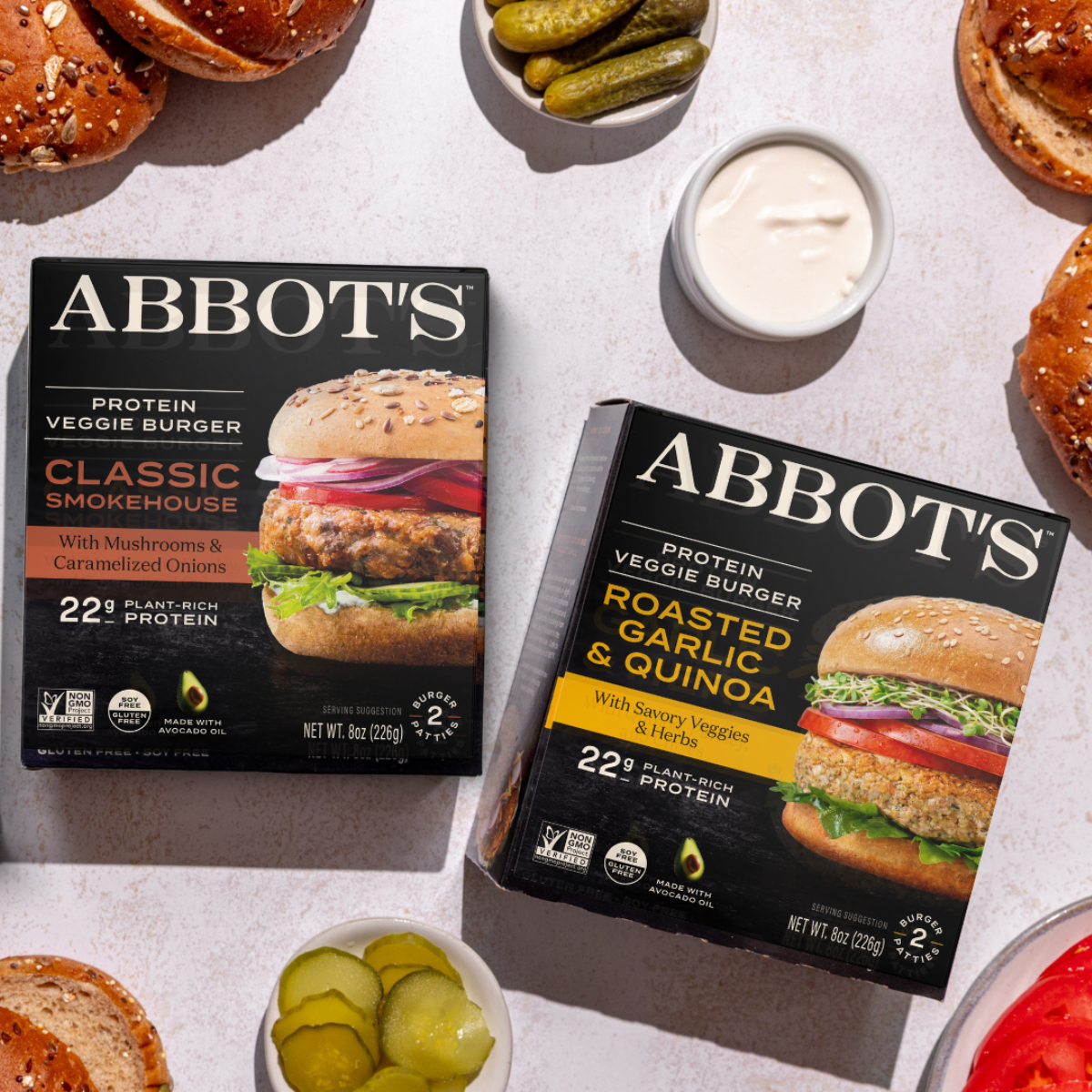
Walk the refrigerated aisle at a Sprouts in Phoenix, a Publix in Tampa, or a Whole Foods anywhere, and you will eventually find a tidy box that says ABBOT'S in a confident serif. Pick it up. Flip it over. The ingredient list reads like a recipe your grandmother could follow - pea protein, vegetables, herbs, spices, extra virgin olive oil, vinegar. That is the whole trick. There is no trick.
Abbot's makes plant-rich proteins: chorizo, ground "beef," chopped chick'n, Italian "sausage," and a growing shelf of veggie burgers. What it does not make is the long, unreadable label that has come to define most of the category. No soy. No canola. No gums. No synthetic chemicals. No natural-and-artificial-flavor hedge. For a product engineered in a food lab, it is suspiciously legible.
"Food can be both healing and delicious."
- Kerry Song, Founder & CEOThe company is small - roughly nineteen people running out of Costa Mesa - and it sells in thousands of stores. It is the kind of size mismatch that usually signals either a very good product or a very good story. In Abbot's case it is both, and the two are hard to separate.
Filed from the cold case, somewhere between the tofu and the oat milk.
The Problem They Saw
Plant-based had a trust problem, and it was self-inflicted.
By the late 2010s, "plant-based meat" had become a marvel of food engineering - bleeding burgers, methylcellulose, isolated proteins, coconut fat tuned to melt at exactly the right temperature. Impressive. Also, to a growing number of shoppers, faintly suspicious. The pitch was "tastes just like meat." The fine print was a chemistry set.
Meanwhile a quieter shopper had walked into the aisle: not a vegan looking for a substitute, but a person managing their health. Someone with an autoimmune flare, a Whole30 spreadsheet, a soy allergy, a doctor's note about inflammation. For them, "tastes like meat" was beside the point. They wanted to know what was actually in the box - and most boxes were not eager to tell.
The category spent a decade perfecting the imitation. Abbot's bet that people would rather have the real thing made from plants.- The central tension
That gap - between technically brilliant food and food a cautious eater could trust - is the problem Abbot's exists to close. Everything else is downstream of it.
The Founder's Bet
From Wall Street to a cutting board.
Kerry Song did not arrive from the food world. She arrived from finance - Citi, then Morgan Stanley, a Princeton economics degree, the whole résumé. Then an autoimmune diagnosis rearranged her priorities and sent her, like a lot of people, into her own kitchen to figure out what she could actually eat.
What she found was that whole-food, plant-rich cooking made her feel better, and that nothing on the shelf matched what she was making at home. So in 2017 she started a company and gave it a slightly contrarian name: Abbot's Butcher. "Abbot's" nodded to Abbot Kinney, the conservationist who dreamed up Venice, California, where she lived. "Butcher" was a wink - artisanal craft applied to plants. It was a good joke and a good brand.
"I feel compelled to share our belief in 'food as medicine' loudly and proudly."- Kerry Song
The bet underneath it was unfashionable at the time: that the future of plant-based was not better fakery but cleaner food. That a label you could read was a feature, not a limitation. Investors eventually agreed - the 2021 Series A, led by Melitas Ventures, pulled in Unovis and SOSV alongside an unlikely pair of celebrity believers, Owen Wilson and Woody Harrelson.
A derivatives analyst walks into a test kitchen. The punchline is a 22-gram-protein burger.
The Product
Short ingredient lists, on purpose.
The portfolio is built around the same restraint. Each product is meant to do a job in a real recipe - the chorizo for tacos, the ground "beef" for bolognese, the chick'n for a bowl - while clearing a long list of things it refuses to contain: the top nine allergens, preservatives, seed oils, gums, and the flavor-industry shortcuts that make most of the aisle taste vaguely identical.
Plant "Chorizo"
Smoky, spiced crumble that behaves like the real thing in a skillet. The breakout SKU at Sprouts and Publix.
Ground "Beef"
The workhorse - tacos, chili, bolognese - built from pea protein and vegetables.
Chopped & Fajita Chick'n
Pre-seasoned plant chicken for bowls, salads and weeknight fajitas.
Italian "Sausage"
Herb-forward crumble for pasta night and pizza.
Veggie Burgers
Classic Smokehouse, Garlic Herb, Italian Herb, Roasted Beet & Quinoa - real vegetables, real protein.
The Whole Burger
2024's flagship: 22g protein per patty, free from the top nine allergens and seed oils.
Six ways to skip the chemistry set. Pickles sold separately.
The Proof
The shelf does the arguing.
A clean label is a nice idea until a buyer at a national grocer has to make room for it. Abbot's kept clearing that bar. The footprint went from roughly 800 retail and foodservice doors at the time of the Series A to thousands of locations - Whole Foods, Sprouts, Publix, Target, Natural Grocers, The Fresh Market, Fresh Thyme.
2017Founded
22gProtein / Whole Burger
~370Sprouts stores
1,300+Publix stores
Retail footprint, by the door count
// approximate locations carrying Abbot's, from public announcements
2021 (Series A)~800
Sprouts rollout~370 doors
Publix launch1,300+ doors
Total network1,000s
Bars scaled for illustration. Figures drawn from company press releases (2021-2024).
Whole Foods made Abbot's Whole Burger the first high-protein plant patty it put on the shelf. The credential does the talking.- On the proof
The product also collects the badges that the careful shopper actually checks: Non-GMO Project Verified, Whole30 Approved, Certified Vegan. None are easy. Together they are a shorthand for "you can trust the box," which is the entire point.
Distribution is the least romantic part of any food story and usually the most decisive.
The Mission
Why drop the word that made the brand?
In 2024, Abbot's did something most brands are too sentimental to do: it killed its own pun. "Butcher" went away. The reasoning was straightforward, even if the marketing risk was not. The company had stopped thinking of itself as a maker of meat-shaped plants and started thinking of itself as a wellness company that happens to make food.
The phrase Song keeps using is "food as medicine." It is older than any startup - it goes back to the cliché attributed to Hippocrates - but Abbot's means it operationally. The clean label is not a marketing flourish; it is the thesis. Drop the allergens and the seed oils, keep the protein and the vegetables, and you get something a person managing their health can eat without auditing.
WORTH KNOWING
- The name honors Abbot Kinney, the man who dreamed up Venice, California.
- Founder Kerry Song traded finance (Citi, Morgan Stanley) for the test kitchen after an autoimmune diagnosis.
- Actors Owen Wilson and Woody Harrelson are investors.
- The whole ingredient base is essentially pea protein, vegetables, herbs, olive oil and vinegar.
Retiring a good pun is harder than launching a new SKU. Both happened the same season.
Why It Matters Tomorrow
Back to the aisle.
Return to that refrigerated case. The category around the Abbot's box is in a strange spot - sales of the first-wave plant-meat giants have cooled, and the easy "tastes like beef" story has gotten harder to sell. The shopper who is left is the cautious one: reading labels, counting protein, skeptical by default.
That shopper is exactly who Abbot's was built for. Not the curious convert chasing novelty, but the person who needs to trust the box and has been given few reasons to. A short ingredient list is not a gimmick to them. It is the reason they reach past everything else on the shelf.
A plant company quietly retired the meat metaphor - and bet the future on the back of the package instead of the front.- The closing argument
Whether that bet scales is still an open question; Abbot's is a nineteen-person company in a market full of giants. But the wager is clear, and it is refreshingly old-fashioned: make food from food, tell people exactly what is in it, and trust them to choose. In an aisle built on imitation, that almost counts as a radical act.