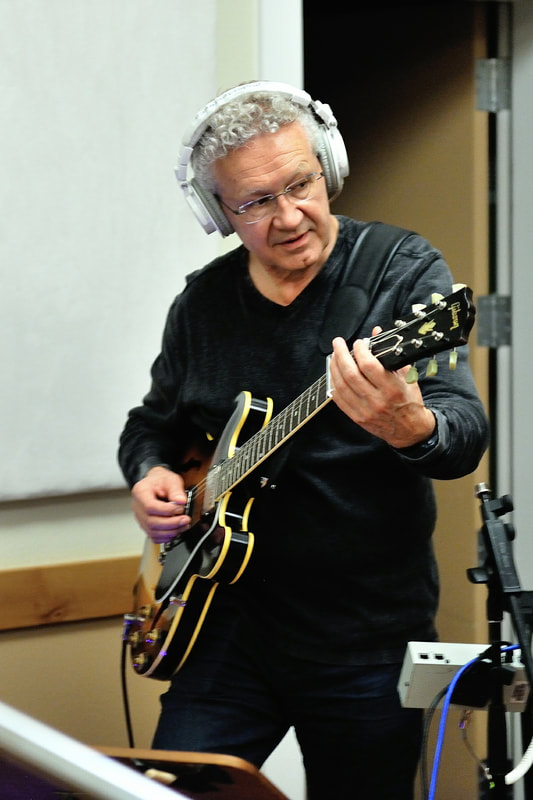
Aart de Geus liked his musicians in a circle. At rehearsals with the Full Disclosure Blues Band, everyone could watch everyone else. The arrangement made practical sense. A song has entrances, pauses and changes of direction. A guitarist who pays attention only to his own fingers can miss the evening.
One rehearsal produced a suggestion that was unusually modest for a lead guitarist: bring the volume sharply down, even during his solo. The group tried it on “Stormy Monday.” His bandmate Gary Smith remembered the effect as thrilling. De Geus had found something worth hearing by making himself less loud.
It is a useful place to begin a life spent making complicated things work together. De Geus co-founded Synopsys, whose software helps engineers design the chips inside electronic devices. His technical achievement involved turning a description of what a circuit should do into the logic that could do it. His account of leadership keeps returning to the people around the circle.
“In a band, the key skill is listening.”
Aart de Geus, 2002
A Swiss education, with amplification
Born in Vlaardingen in the Netherlands, de Geus moved to Switzerland at four. He lived first in its French-speaking region and later in the German-speaking city of Basel. Changing places meant changing languages. By the time he went to America for graduate study, he had already had considerable practice at discovering that other people did things differently.
He also had a guitar. His musician biography identifies March 10, 1972, the date of a T-Bone Walker concert in Basel, as a turning point. The Black Cat Bone Blues Band followed, and in 1978 his group earned a Swiss amateur competition’s distinction for blues. He supplies the necessary footnote himself: there may have been only one other blues band in the competition. Some trophies benefit from a little explanatory text.
The same year, he earned his master’s degree in electrical engineering at EPFL in Lausanne. Music and mathematics were sharing the timetable. He continued his studies at Southern Methodist University in Dallas, where electrical engineering professor Ron Rohrer became his adviser. The relationship mattered beyond the degree. Rohrer gave him room to explore; de Geus followed him into work at General Electric while completing his dissertation.
Let the computer do the drawing
At GE in North Carolina, the problem was wonderfully concrete. Designing circuits required detailed decisions about logic elements and their connections. The work could become laborious, and growing chip complexity made the burden heavier. De Geus became interested in a question with consequences well beyond his desk: how much of that implementation could a program perform?
His group worked on tools that could take a functional description and produce a circuit implementation. An early system was called SOCRATES. It sought designs that used less area while meeting speed requirements. Those two aims can pull against each other; a useful program had to navigate the tradeoffs rather than merely produce something that worked.
The distinction is easy to lose in the terminology. A circuit designer could describe a desired operation at a higher level. Synthesis software would turn that description into connected logic elements, a representation engineers call a netlist. The engineer still had to decide what to build and judge the result. The computer could take on much of the repetitive implementation work.
That division of labor enlarged what a team could attempt. More complexity could be handled without requiring each designer to place every logical detail by hand. De Geus and his colleagues helped make synthesis a commercial practice. Their contribution sits inside a much broader history of semiconductor research, manufacturing and design. A chip has never been a solo performance.
A simplified sequence. Synthesis is one part of the route from an idea to manufactured silicon.
The employer changed its mind. The team stayed interested.
The company that became Synopsys began amid a change in GE’s semiconductor business. De Geus and his colleagues had tools they believed were useful, and a team that understood them. Keeping that work alive would require a business of their own.
He later recalled a fairly sober first step. The technology belonged to GE, so the proposed business had to be put to GE. A plan, an agreement and financing came before the familiar startup name. It is a less cinematic opening than an invention smuggled out under someone’s coat. It also explains how an engineering group could become an enterprise without pretending the surrounding relationships did not exist.
Optimal Solutions was founded in 1986. In 1987, it became Synopsys and moved to Mountain View, California. The new name combined synthesis and optimization. There was a practical reason to change it, too: the founders discovered that other businesses had already taken an interest in being called Optimal Solutions. Originality is easier to promise in a circuit than in a company register.
The task now extended beyond making software work. A customer needed confidence that the tools would suit its designs, that problems would get attention, and that a small supplier would be around for the next project. De Geus had to learn the business surrounding the engineering. His subsequent career would give him ample practice.
The price of a good idea
De Geus became CEO in 1994. His responsibilities eventually spanned a business built through research, development and acquisitions, serving customers whose own designs kept becoming more demanding. The elegant algorithm was only one part of the undertaking.
He developed a word for the intersection he occupied: techonomics. In a 2008 interview, he described technical challenges and economic challenges as inseparable. A solution has to be affordable, and the companies trying to produce it have to decide where they can invest and where they need partners. Infinite resources make a poor business plan.
The word can sound like conference shorthand. The underlying concern is ordinary enough. A customer needs a chip on schedule. A new process adds difficulty. A tool supplier must improve its products while ensuring that the parts of a design workflow still cooperate. Better technology earns its place through the practical work it makes possible.
That outlook helps explain his interest in relationships across the industry. He joined the board of Applied Materials in 2007, adding a vantage point in semiconductor manufacturing equipment. The software and the machinery occupy different parts of the same endeavor. Each depends on progress elsewhere.
Two people at the top
For ten years, even the CEO role was shared. From May 2012 to April 2022, de Geus and Chi-Foon Chan served as co-chief executives. It is a substantial stretch of time for a job so often described in the singular.
Their working relationship had developed earlier. De Geus described ideas maturing through a quick exchange between them. Chan brought his own judgment to the discussion. The arrangement gave institutional form to something the guitarist understood: another capable person has to be allowed a part worth playing.
In January 2024, Sassine Ghazi became president and CEO, and de Geus moved to executive chair. Ghazi had joined Synopsys in 1998 as an applications engineer. The handoff connected the company’s founding generation to an executive who had learned the business over many years inside it.
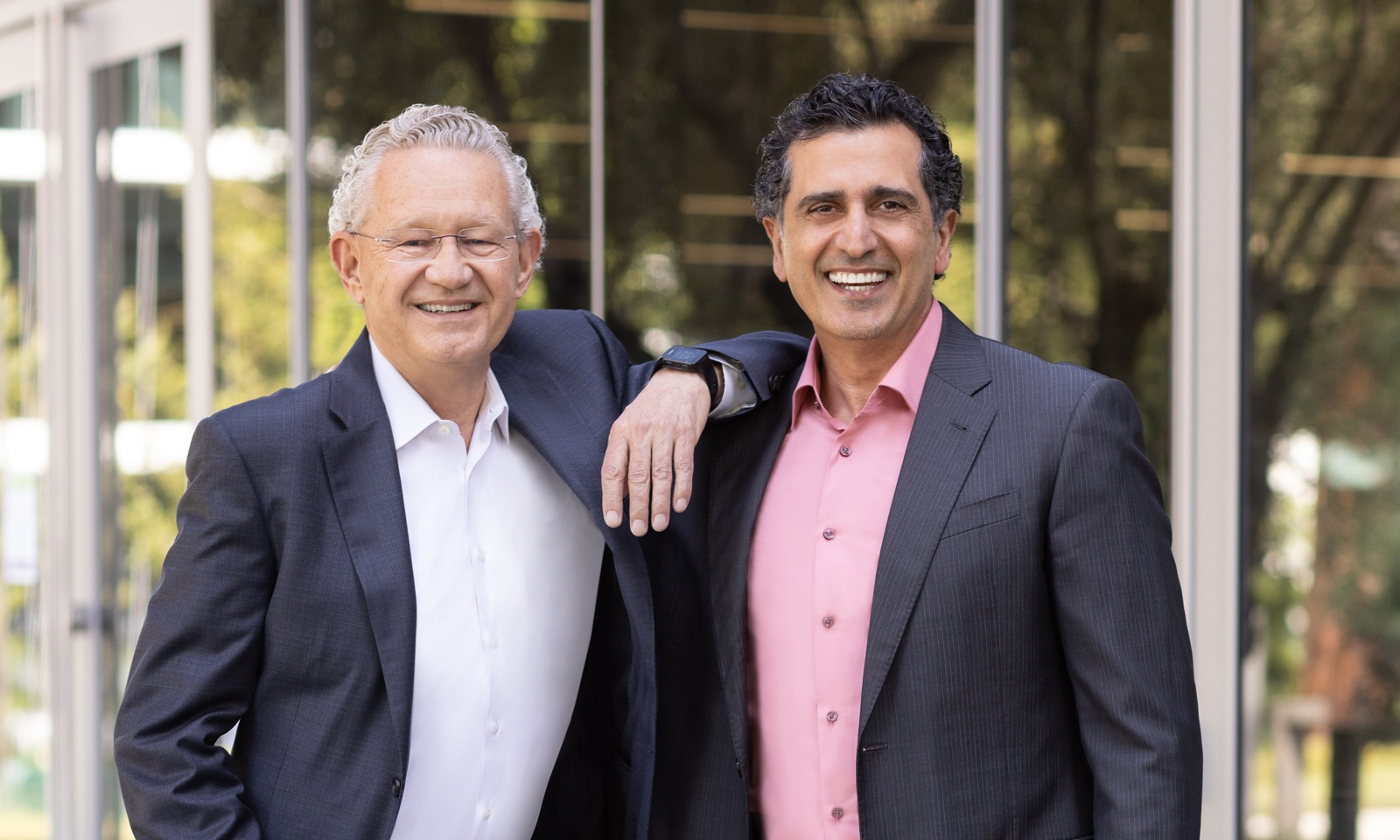
Recognition continued in the transition year. De Geus received the Semiconductor Industry Association’s 2024 Robert N. Noyce Award. Earlier honors included the IEEE medal bearing Noyce’s name and the Phil Kaufman Award. They recognize the technical and organizational work that made the software useful at scale.
A teacher’s influence travels
There is another line running from his student years into his later life. De Geus has spoken about the difference an encouraging teacher can make. In 1999, he established the education outreach foundation associated with Synopsys, supporting science and mathematics through hands-on projects.
Its activities included help for teachers, materials for schools and support for science fairs. These are practical interventions in the long interval before anyone becomes an engineer. A student needs something to try, someone to take the attempt seriously, and the chance to discover an interest before being asked to declare a career.
De Geus’s own story gives that work a particular resonance. His education included languages, music and an adviser willing to let him experiment. The eventual business grew out of a team. The foundation carries forward an interest in the conditions that allow other people to begin.
The chips need somewhere to plug in
His newer public work has widened the frame again. Through OpenMinds, where he serves on the board, de Geus is addressing energy demand and emissions. At CERAWeek in Houston in March 2026, he discussed the challenge of supplying more power while reducing emissions, with AI sharpening the question.
The connection to his earlier career is direct. More computing requires physical infrastructure. A useful chip design exists inside a system of power generation, transmission, investment and deployment. De Geus’s energy presentations examine those relationships through the same technology-and-economics lens he has used for years.
Meanwhile, the guitar has kept its place. After a period away from band membership, he returned to playing with others; Legally Blue came together in 2010. His band biography lists instruments, amplifiers and influences with an enthusiast’s specificity. The search for tone remains open.
In a conversation with Jodi Shelton, he offered a modest test for a meeting: could the other person leave feeling a little taller? After decades of complicated software and consequential decisions, he was still thinking about what happens between people in a room. Put the chairs in a circle. There is more to hear.
Keep listening
Conversations, music and the engineering behind the story.
- Synopsys · leadership biography
- Aart de Geus · LinkedIn
- Legally Blue · the guitarist’s biography
- A Bit Personal · watch the conversation with Jodi Shelton
- OpenMinds · watch the AI and energy talk
- ACQ2 · de Geus and Sassine Ghazi in conversation
- Computer History Museum · his oral history
- SIA · the 2024 Robert N. Noyce Award
- EE Times · techonomics and his next chapter
- Synopsys · writing by Aart de Geus
- EDN · the band, the company and the listening