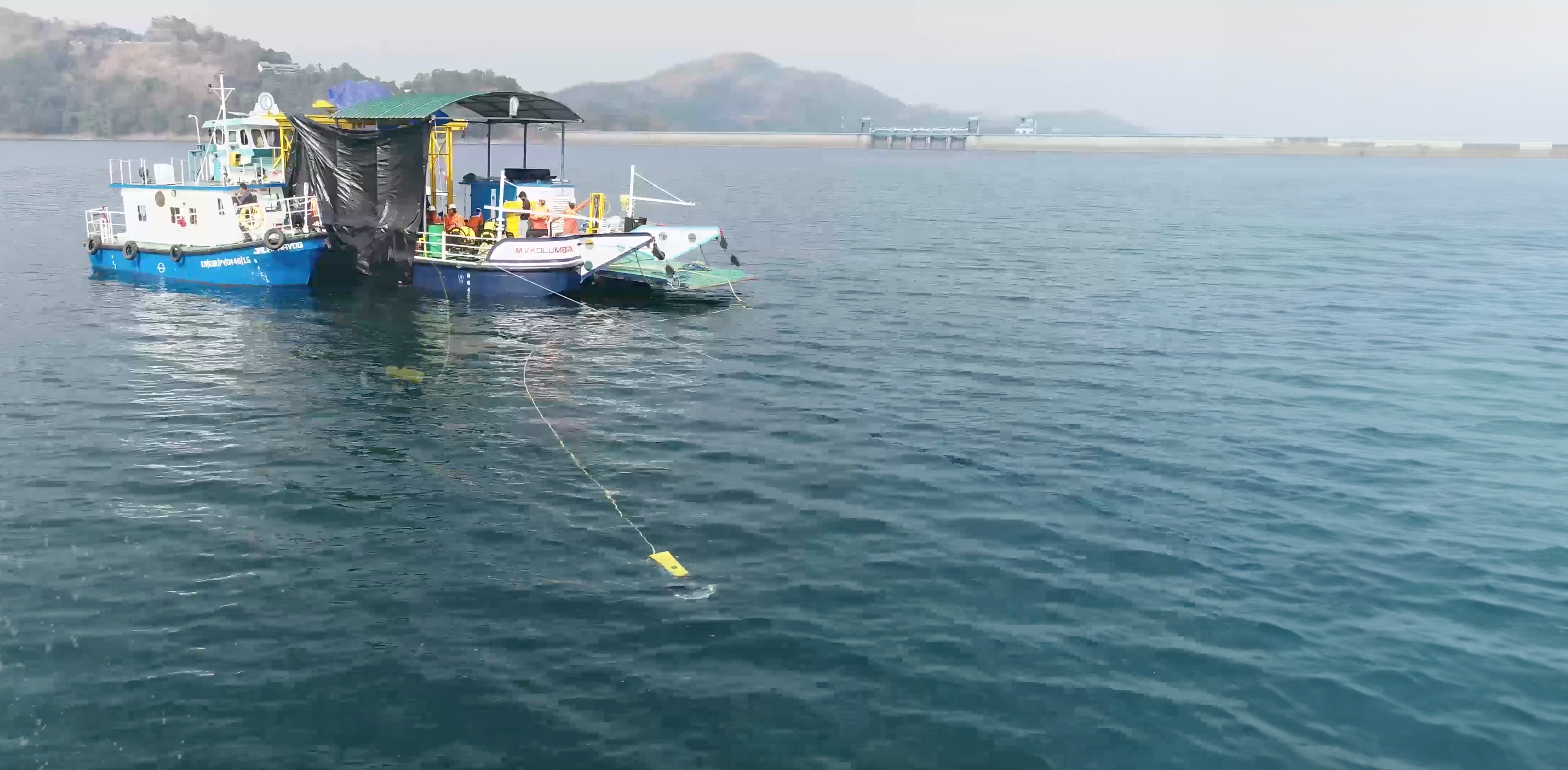
A yellow machine sits low in the water, tethered to a boat. The photograph could pass for a modest day at work. Yet the question behind it is expensive: how do you inspect infrastructure you cannot easily reach? Planys Technologies answers with underwater robots, sensors and software. Its investor, 3i Partners, is interested in what happens when an engineering answer becomes a business.
- Indian deep tech, built with international customers in mind.
- Typical checks: $150,000 to $1 million for a targeted 5%–15% stake.
- Technical guidance, hiring and fundraising help accompany the capital.
Here is the intriguing part. A robot that inspects a submerged structure, a molecular test and a material that keeps food cold scarcely resemble one another. Put them in an investor’s portfolio, though, and a pattern emerges. Each promises to make a difficult, practical task easier. The scientific novelty matters because somebody has a job to finish.
The robot is only half the story
3i’s July 2024 explanation of its Planys investment starts with the shortcomings of conventional underwater inspection: time, expense and risk to divers. Planys combines marine robotics with non-destructive testing and data analysis. Cameras and sensors gather information; software helps customers interpret the condition of their assets. The buyer needs an inspection result. The robot is the means of obtaining it.
The distinction explains much of 3i’s appeal to a technical founder. An inventor may describe a sensor’s capabilities. A customer asks what those capabilities allow a maintenance team to decide. As an editorial reading of the portfolio, that translation looks central to the firm’s proposition: connect the invention to a costly task, then help build the company that can deliver it.
A small check, a long assignment
Founded in 2020 by Indian-origin Silicon Valley technology entrepreneurs, 3i presents itself as a route between Indian technical talent and international markets. Kumar Ganapathy is publicly identified as a founder. Its current general partners also include Ravikrishna Cherukuri, Subodh Toprani and AGK Karunakaran. The firm describes a team drawn from technologists, entrepreneurs and investors across the United States and India.
The money comes with an assignment. Alongside equity investment, 3i offers help with technology development, recruitment, subsequent fundraising and global expansion. Founders receive the capital and support; investors in its funds supply the capital behind those investments. Those are different relationships. A portfolio company selling diagnostics is serving another customer again: the organization or person who needs a test.
Target ownership 5%–15%
Stated ranges, not a quote for any individual deal.The distinction matters when reading its finances, too. A May 19, 2026 SEC filing for 3i Partners Fund II, LLC reported $23.495 million in securities sold to 74 investors. That is a fundraising disclosure. It does not measure investment returns or establish how much money has reached startups. The filing identifies a management fee payable to the fund’s manager.
The diagnostic machine that gets smaller
D-NOME offers another view of the investment logic. The startup describes D-LAMP, its proprietary diagnostic platform, as deviceless and operating at room temperature. In its investment explanation, 3i contrasts that approach with the equipment and operating requirements of conventional RT-PCR. A test’s usefulness depends partly on whether the place that needs it can actually perform it.
There is a cost hypothesis here. In its July 2024 post, 3i suggested the technology could bring a test below ₹200, compared with the ₹500–₹3,000-plus range it cited for RT-PCR. These were the investor’s estimates and a prospective saving. They should be read as the commercial argument for development, rather than a current price list or a clinical performance comparison.
“a good sounding board for us”Rahul Nainani, ReCircle co-founder and CEO, on 3i’s role in strategy
Chemistry, with a delivery address
Tan90 brings the argument down to a shipping container. Its phase-change materials absorb heat as they melt, helping maintain temperature inside insulated packaging. The company sells products for food and pharmaceutical logistics. Here, a scientific property earns its place through a familiar requirement: a shipment must arrive in usable condition. Packaging and delivery conditions become part of the technology’s commercial test.
These examples sit within 3i’s three stated focus areas: Tech Bio, Climate Tech and Frontier Tech. The labels are broad; its preference for distinctive intellectual property and large markets makes them more specific. Indian deep tech investors such as Speciale Invest and Ankur Capital also serve science and engineering ventures. 3i’s particular pitch combines that early-stage focus with its US-India operator network.
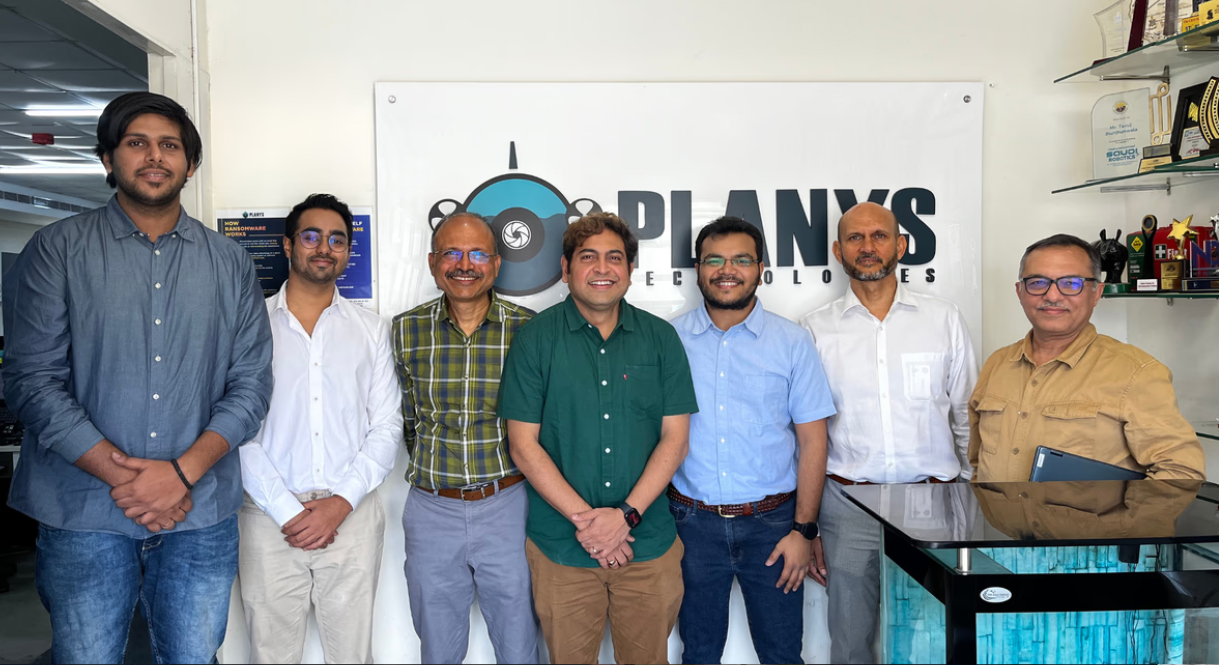
The existing portfolio also resists a tidy definition of deep tech. It includes VitusCare’s dialysis services, CENTA’s teacher development platform and Haqdarshak’s work helping people access government schemes. Those businesses sit beside research-heavy ventures. That mix is useful context for a founder: the current three-sector thesis describes the firm’s emphasis, while the portfolio records a wider set of investments.
The next experiment is commercial
The recent ThinkMetal investment makes the point concrete. On October 13, 2026, IAN Alpha Fund announced a ₹27 crore round with participation from 3i and existing investors. ThinkMetal builds metal additive manufacturing technology. The announced uses of capital included product development, materials research, team expansion and industrial adoption. The round belongs to ThinkMetal; it is not a disclosure of 3i’s individual check.
A founder can copy the questions this approach suggests: which task improves, who pays, and what evidence makes the next buyer comfortable? The conditions matter. A technically interesting invention with a small addressable market would struggle against 3i’s stated criteria. So would a business whose advantage is easy to reproduce. Global ambition requires a credible reason for customers elsewhere to care.
The practical lesson is to make the commercial experiment as explicit as the technical one. For an inspection company, that could mean showing how collected data changes a maintenance decision. For cold-chain materials, it could mean demonstrating performance on the delivery route a buyer actually uses. These are implications of the businesses involved, rather than a published 3i diligence checklist.
Founders can submit a pitch through 3i’s website. The useful preparation is to connect the scientific claim to the customer’s working day. The underwater inspection image captures that relationship neatly. There is a machine, a tether and a boat. Somewhere beyond the frame is a person waiting for information good enough to act on.