The phone rang on a Friday afternoon, while Zoltan Olah was on the ferry from San Francisco to Oakland. He was looking back at the city and looking forward to a beer. Matt Debergalis, one of Meteor’s founders, had a different proposal: how would Olah feel about selling Percolate Studio and joining Meteor?
An acquisition offer makes an excellent interruption. Olah’s first reaction was that they had struck it rich. Negotiations supplied a less cinematic education in what a small services company was worth. Then came the first day at a new desk, with the founder suddenly an employee. He remembered feeling like “a fish out of water.”
The unusual part was the reason for accepting. Percolate’s founders wanted to become product builders. Meteor offered a chance to learn the business they hoped to run. Today, Olah is co-founder and CEO of Chromatic, which helps teams test and review interfaces. That ferry call belongs to its prehistory: a moment when the route forward involved briefly handing someone else the wheel.
Clients, code, and an unfinished education
Olah’s working partnership with Tom Coleman and Dominic Nguyen runs through this story. Before Chromatic, the three built Percolate Studio, a consultancy that brought clients’ software ideas into use. Design, engineering, and operations all belonged to the job. They could deliver an application. Finding a product of their own was a different undertaking.
Percolate adopted Meteor, the JavaScript framework for reactive applications, and contributed to its community. Client work provided experience and revenue, but it also kept demanding attention. There was always another project, another lead, another reason to postpone the experiment that might become their own business.
This is a familiar problem with a particularly polite disguise. Being useful to paying customers can occupy every hour available for discovering what else to build. The consultancy was working. Its success made departure harder to arrange.
An apprenticeship with a regular paycheck
Meteor announced the acquisition in June 2015. Olah would lead customer success, helping developers, startups, and enterprises use the platform. The commercial offering included technical support and design review. Those responsibilities placed him close to a useful meeting point: what the software could do, what its users needed, and what they would pay for.
The team also worked on products. Galaxy, Meteor’s hosting service, offered a commercial companion to the free framework. Olah later described his role as product manager of Meteor itself. He and his collaborators helped launch Apollo GraphQL, another open-source project that would become part of their shared professional history.
There was an education in company-building, too. Olah watched how a venture-backed organization worked with its investors. He described board meetings as occasions for a wider view of the business, and valued the introductions and experience investors could supply. At Meteor, the board also sat down for lunch with the company and answered questions. Strategy, apparently, could survive contact with a sandwich.
The queue nobody wanted to inherit
One of Olah’s concerns at Meteor was how difficult it could be to get a substantial contribution accepted. As a user, he had encountered the waiting. As a product manager, he could examine the machinery behind it. A growing project had more issues and proposed changes than its maintainers could comfortably handle.
His response involved clearer contribution processes and recruiting community members to help triage issues. Answering questions and improving documentation gave people a route into more consequential work. The approach treated participation as something a project could make easier, rather than a supply of goodwill that would somehow replenish itself.
That experience gives his later work with Storybook an additional dimension. Open-source software needs people who will do the ongoing work of answering, reviewing, and deciding. A repository can attract attention quickly. Keeping its doors open to useful contributions requires rather more housekeeping.
Three people, several time zones
The founders left Meteor in December 2016. Coleman introduced Chroma the following January, describing an exploration of developer tools and remote work. They had learned about running products and were ready to try together again. They also knew something about distance: their collaboration had long stretched between Melbourne and the San Francisco Bay Area.
In 2017, Olah was in Oakland, Nguyen in San Francisco, and Coleman in Melbourne. Even the two Bay Area colleagues rarely shared an office; crossing the Bay Bridge was an unappealing way to begin a workday. Olah’s published advice drew on more than eight years of remote collaboration. Its central instruction was pleasingly inexpensive: write things down.
“Write things down.”
Zoltan Olah, on working across the Pacific
A written record let an absent colleague understand a decision later. Clearly defined tasks helped people work without waiting for another timezone to wake up. Olah argued for committing fully to remote processes, so that conversations in an office would not leave everyone else outside the loop. He also described the small chores that can masquerade as productivity when work is poorly defined. Even a clean car can be a form of procrastination.
A room of one’s own, for a button
Storybook supplied a way to develop interface components in isolation. A button, a menu, or a form could have its different states displayed without navigating an entire application to reach them. For a team trying to turn designs into working software, that made the parts easier to inspect and discuss.
In a 2019 conversation with Software Engineering Daily, Olah explored the friction between designers and frontend engineers. Their relationship had parallels with development and operations before better shared workflows emerged. The question was practical: how could people responsible for different stages of an interface see the same thing and work on it together?
Chromatic’s answer included taking pictures. Its 1.0 release in July 2018 automated visual testing around Storybook components. Render the code in a browser, capture its appearance, compare it with the earlier version, and put changes where people can review them. A successful click test cannot tell you everything about a button whose label has slipped out of view.
Same button. A different result.
Illustrative example, not a Chromatic product screenshot. A visual change still needs a decision about intent.
The distinction between a change and a mistake matters here. Software teams deliberately alter interfaces all the time. A new color or a wider control may be exactly what a designer requested. Chromatic puts the comparison into a workflow where someone can decide, comment, and approve. Its current service connects that review with pull requests and continuous integration, so the discussion sits beside the code being changed. Olah’s company sells a way to organize attention around the visible result, with developers and their colleagues looking at the same evidence.
The business beside the commons
Olah discussed Storybook’s community origins in a 2021 interview with Eric Anderson. The project had needed people willing to carry it forward after its original development lost momentum. His team joined a wider group of engineers doing that work. Storybook’s history belongs to that community, rather than to any single company.
In July 2018, Olah announced that maintainers Norbert de Langen and Michael Shilman were joining Chroma. The arrangement gave them more time for Storybook; de Langen would work on it full time. Olah also set out a commitment to keep appropriate features in open source, rather than reserve them for commercial use.
Chromatic’s paid cloud infrastructure supplied the other side of the arrangement. Teams could buy a service around the workflow, and the company could put resources back into shared tools. Making that relationship work required both a useful product and confidence in the way the company treated the project. Trust was part of the operating model.
The CEO still appears in the credits
Olah’s GitHub biography describes a full-stack engineer and product person specializing in web interfaces. His LinkedIn introduction compresses the idea further: “I build software for software people.” The credits on several Storybook projects show that this is more than a convenient line for a founder’s biography.
In 2020, he was named among the developers of Storybook Essentials, a package of common tools intended to simplify getting started. In 2022, he was credited on Storybook Connect for Figma, alongside colleagues including Nguyen. That plugin links designs with working component stories, bringing implementation into a designer’s workspace.
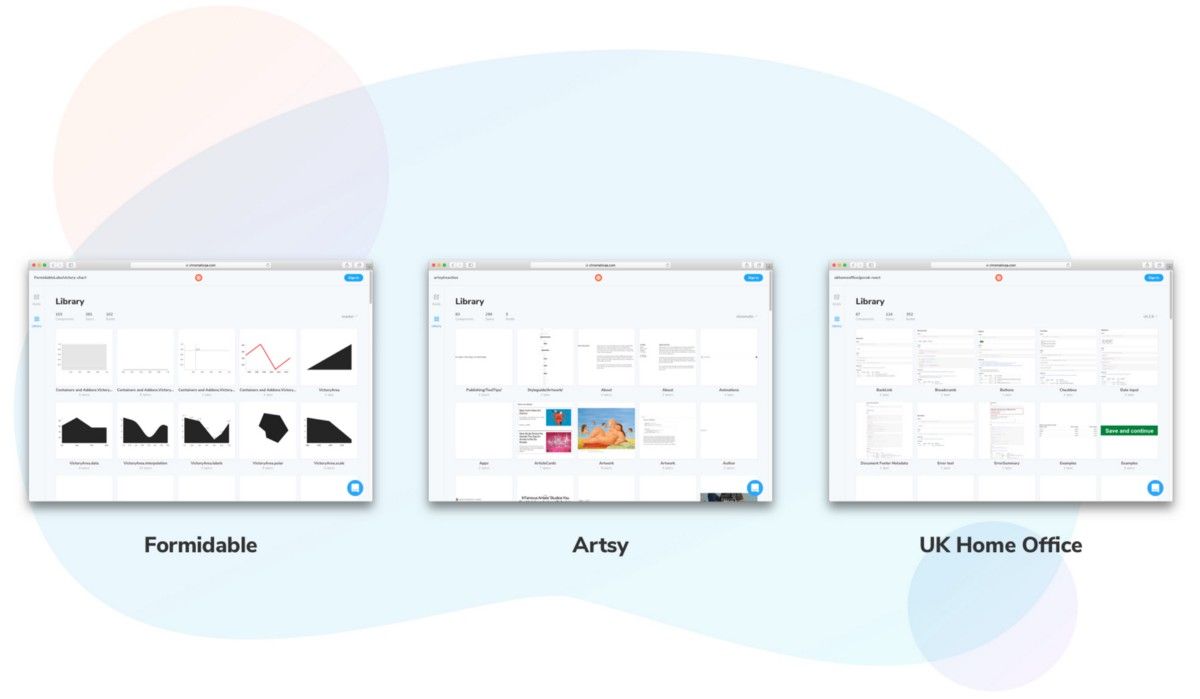
Both efforts fit his continuing interest in the handoff between people and tools. Less setup means more time with the work. Linking a design to its implementation makes comparison less dependent on memory. Small improvements to the route can matter as much as adding another destination.
His appearance on PodRocket in January 2021 returned to frontend testing and component-driven development. The recurring subject is revealing in a limited, professional sense: Olah keeps explaining how to make the pieces of an interface easier to work with. For someone whose customers build software, the explanation is part of the product’s route into use. Developers need to understand where a tool fits before deciding to give it space in their daily routine.
More code, more checking
Chromatic ranked tenth in the Early Stage category of the 2023 Enterprise Tech 30. In a Nasdaq interview that June, Olah discussed Storybook 7 and the implications of AI. He saw potential for machine learning in testing, and another effect from the growing amount of code being produced: more software would increase the value of checking its quality.
By September 2026, the company’s work included visual testing for Vitest Browser Mode, developed by Vitest maintainer Ari Perkkiö. Later that month, Chromatic introduced quarantine for flaky tests, letting teams set aside unreliable differences and track them for repair. These are company releases, with other contributors doing the work, under the business Olah leads.
The founder’s story has kept returning to the same practical concern: making work easier to see, understand, and improve together. It appears in contribution guidelines, written decisions, linked designs, and reviewed screenshots. The ferry offered a view back toward San Francisco. Chromatic offers another kind of second look, before a change reaches everyone else.
Continue the conversation
Olah’s work, writing, and interviews.
- Chromatic ↗ UI testing and review
- GitHub ↗ Olah’s developer profile
- LinkedIn ↗ Professional profile
- Twitter / X ↗ @zqzoltan
- Watch: Nasdaq interview ↗ Enterprise Tech 30, June 2023
- Listen: Storybook with Zoltan Olah ↗ Contributor, March 2021
- Listen: Component-driven development ↗ PodRocket, January 2021
- Read: What we learned from getting acquired ↗ Olah on the Meteor sale
- Read: Making remote work ↗ Lessons across the Pacific
- Read: Getting behind Storybook ↗ The 2018 commitment