The trouble with a secure email often begins after it arrives. At Ohio Living, a senior living and care organization, retrieving encrypted messages had become a chore. The organization needed to exchange protected health information. It also needed people to get on with their work. In a Zix case study, technology executive Matt Cheuvront described the previous system with a wonderfully untechnical word: painful.
- Protect the message. Zix checks outgoing mail against rules for sensitive information.
- Spare the recipient. Delivery adapts to the receiving environment.
- Reach the buyer. AppRiver brought thousands of IT service partners. OpenText later bought the business.
That complaint explains Zix better than a catalogue of security features. The company worked on the space between protecting a message and making it usable. Ohio Living switched for automatic scanning and more convenient delivery. “Zix makes email encryption easy for everyone,” Cheuvront said. This was a customer testimonial published by the vendor, but the problem it describes is concrete: security creates work for somebody. The product question is how much.
01 / The button you shouldn’t have to remember
Zix’s core proposition was policy-based encryption. Instead of asking every employee to identify every sensitive message, administrators could set rules that inspect email and attachments. A matching message could be encrypted or held for review. For a clinic sharing patient information or a financial business sending private records, that shifts a recurring decision from the sender to a configured system.
Today, the technology sits inside OpenText Core Email Encryption. Its delivery engine chooses among methods including S/MIME, transport layer security, known as TLS, and a secure messaging portal. The distinction matters. “Transparent” delivery can feel like ordinary email in compatible environments. A portal introduces registration or sign-in. The recipient’s experience depends on the route; effortless delivery is a conditional promise.
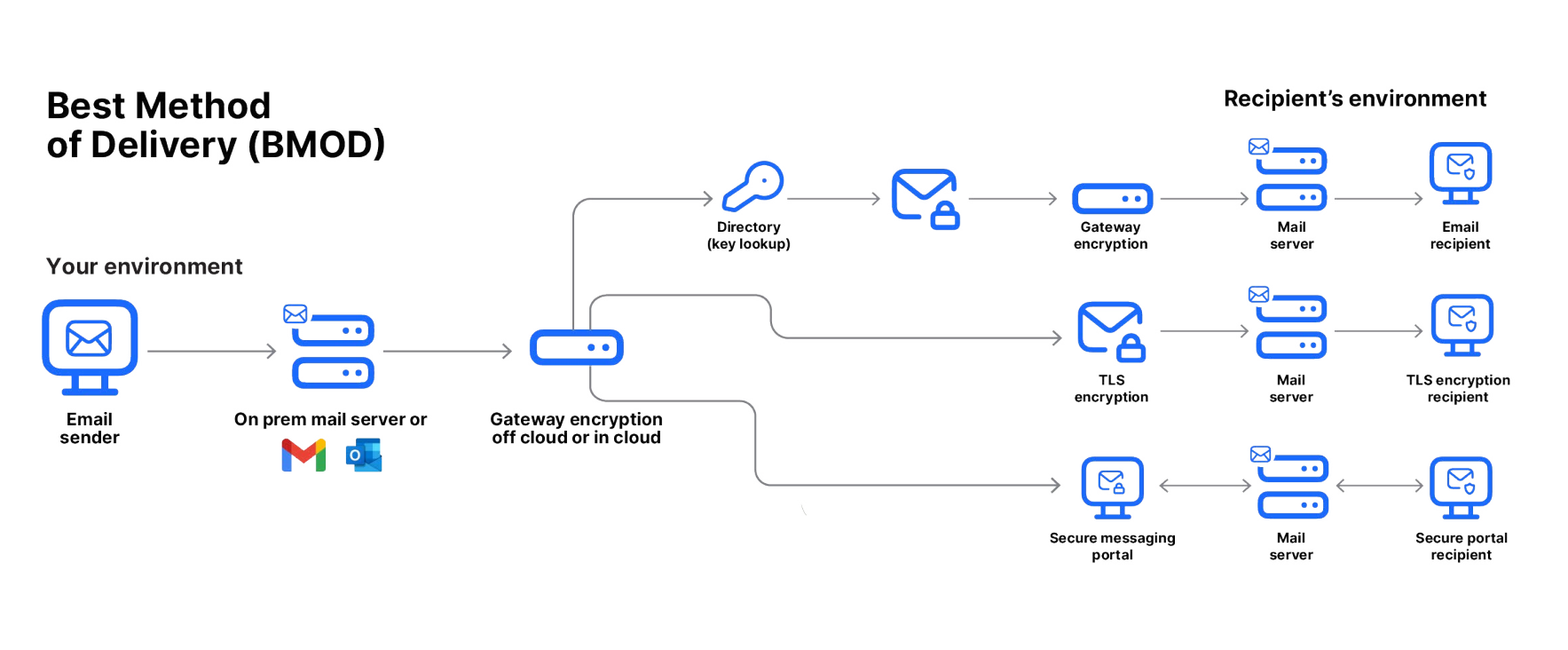
A sensible trial therefore starts outside your own office. Send representative messages to business partners and personal mailboxes. Check what gets encrypted, what gets held, and what the recipient must do. This is a buying lesson drawn from the design: the administrator’s dashboard tells only half the story.
02 / A slow start, then a different route
The origin has an unexpected supporting character. Founder David P. Cook also founded Blockbuster. Zix’s corporate history is less tidy than a startup birthday: its predecessor was incorporated in 1988, sold its operating units in 1998 and entered secure messaging in 1999. Its LinkedIn profile dates Zix to 1998. Paid ZixMail service began in early 2001, as the company focused sales on businesses.
Demand did not instantly follow. Contemporary reporting in November 2001 said ZixMail had sold just 9,500 U.S. seats by September, with no significant revenue and more than $30 million in operating costs during the first nine months. Cook was replaced as CEO. The early commercial problem was adoption in a market developing more slowly than expected. That is a narrower, more useful account than pretending the eventual acquisition was inevitable.
Security creates work for somebody.
The product question is how much.The recipient problem
Years later, the strategic problem became distribution. Zix’s own history says it needed a closer connection to Microsoft’s email and productivity software. In February 2019, it closed the $275 million acquisition of AppRiver. At announcement, AppRiver served more than 60,000 companies worldwide through a community of 4,500 managed service provider partners. These were businesses already helping other businesses run their technology.

The financing made this a substantial bet: a $175 million term loan and $100 million preferred equity investment from True Wind Capital helped fund the purchase. The logic was straightforward. An encryption specialist could enter a customer relationship through the partner provisioning the customer’s cloud workplace. The acquisition bought software, Microsoft experience and access to the people making purchasing decisions.
03 / The inbox becomes a shop window
In April 2020, Zix and AppRiver introduced Secure Cloud, bringing security, compliance and productivity applications into one platform. The portfolio covered incoming threats, outgoing sensitive data and retained business communications. CloudAlly, acquired later that year, added backup and recovery for cloud applications. An email relationship could now support several related subscriptions.
These services answer different questions. Threat protection examines incoming dangers such as phishing and malware. Encryption protects sensitive communication. Archiving preserves searchable records. Backup provides recovery after data is lost. Putting them together simplifies purchasing, but buyers still need to specify each job. A retained message and a recoverable cloud file are different requirements.
The commercial model is recurring payment, with direct sales and partner distribution. Current Core Email Encryption subscriptions are priced per user, with monthly, annual or multi-year terms including support and maintenance. For perspective, standalone Zix reported $218.5 million in revenue for 2020. That number describes a particular year, before OpenText ownership; it should not masquerade as today’s turnover.
A historical result from Zix’s standalone business.
04 / The name changes. The test stays.
OpenText completed its purchase on December 23, 2021, announcing an approximately $860 million price inclusive of Zix’s cash and debt. It specifically highlighted MSP distribution and a deeper Microsoft relationship. Today, its brand directory maps Zix Encrypted Email to Core Email Encryption, while the legacy Zix page points customers toward OpenText and existing account portals.
Zix competes in a market with alternatives from Microsoft, Proofpoint, Mimecast and Barracuda. Its distinctive story combines automatic policy enforcement, recipient-aware delivery and an acquired partner network. That combination suits organizations exchanging sensitive information routinely. It still depends on sensible policies and workable recipient access. Encryption cannot decide whether the person you intended to email should have received the information.
The part another business can copy is the sequence: remove a repeated task, test the experience of the person downstream, then find distribution inside an existing buying relationship. Zix’s expansion required serious capital. Its starting observation was available to anyone willing to watch a customer struggle to open a message.