The first clue is the boat. Yury Izrailevsky once described life inside a large technology company as steering a very big ship. The ship has fuel, crew, instruments and an enviable pantry. It also turns with the languor of a minor planet. After roughly 20 years at Yahoo, Netflix and Google, Izrailevsky found himself missing the smaller craft - the one where a hand on the tiller produces an immediate answer from the water.
So he left Google. Not for a garage and a whiteboard, exactly, but for an open-source database with an unusual history. ClickHouse had been created by Alexey Milovidov and a small team at Yandex to answer analytical questions against immense, constantly changing datasets. It had been open-sourced in 2016. Engineers already admired it. What it did not yet have was an independent company capable of packaging that engine as a cloud service for customers who did not fancy spending Sunday afternoon nursing a database cluster.
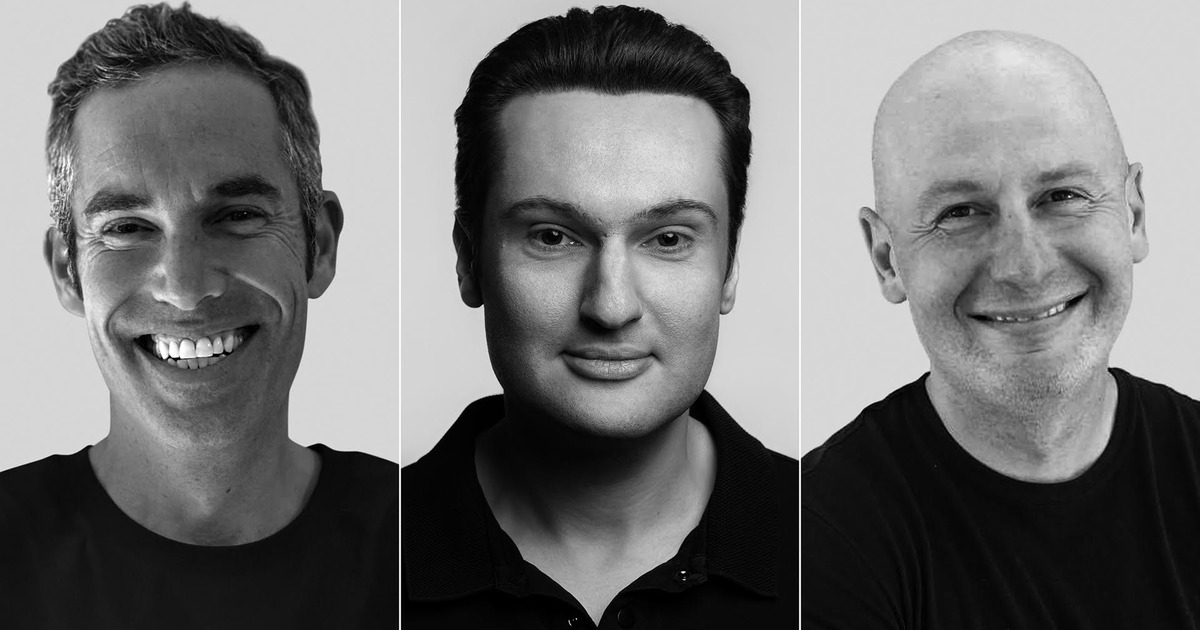
The company that emerged in 2021 had three founders whose résumés barely overlapped. Milovidov carried the product's technical lineage. Aaron Katz, formerly chief revenue officer at Elastic, understood how open-source enthusiasm becomes a commercial organization. Izrailevsky brought product and engineering experience from systems that had already met the terrible, clarifying force of global scale. The arrangement was less a trio of interchangeable visionaries than a neatly composed machine.
Before streaming, there were DVDs that would not leave the building
Netflix's cloud story began in August 2008 with a corrupted database and three days in which the company could not ship DVDs. This was a useful kind of catastrophe: specific enough to be understood, expensive enough to defeat nostalgia. Netflix decided to move away from vertically scaled single points of failure and toward distributed systems in Amazon Web Services.
Izrailevsky joined Netflix in 2010 and eventually became vice president of cloud computing and platform engineering. The migration he helped lead was no office move with servers placed on a truck. Netflix rebuilt virtually all its technology for the cloud. One monolithic application became hundreds of microservices. Hardware provisioning measured in weeks gave way to self-service systems and continuous delivery. Teams gained room to decide independently. By early 2016, the last data-center systems used by the streaming service had been shut down.
During those years, the number of streaming members grew eightfold from its 2008 level, viewing grew by three orders of magnitude, and Netflix expanded into more than 130 additional countries in a single January. Izrailevsky led an engineering organization of about 700 people. His organization kept the site upright while changing the machinery beneath an audience that never stopped arriving.
“From there it's about context-setting and giving people autonomy.”Yury Izrailevsky on engineering leadership
This became a portable philosophy. A platform should let teams act without waiting for permission from a central priesthood. A leader should describe the terrain, the priorities and the dangerous cliffs, then allow capable people to navigate. There is a pleasing symmetry here: the engineer who helped break a monolith into independent services also prefers organizations whose people can operate independently.
A recommendation arrives from the family help desk
Izrailevsky's introduction to ClickHouse did not arrive through a banker or a pitch deck. His brother, then working at Uber, told him about it. Over the next few years the name kept recurring. Peers described a database that was fast, reliable and able to scale. By then Izrailevsky had moved to Google, where he was responsible for developer platforms, serverless products, developer tools and other parts of the cloud portfolio. He was close enough to databases to recognize the signal.
Katz spent about two months persuading him to leave. The timing mattered. Izrailevsky had begun his career in smaller companies before Yahoo, and he had kept the idea of returning to one “in the back of my mind.” ClickHouse offered a rare compromise: startup velocity without the usual uncertainty about whether the underlying product worked. The open-source project had already been tested by demanding users. The gamble concerned the company around it.
His first hire was a security lead. That decision is more revealing than a dozen values posters. ClickHouse could not become an enterprise cloud product through query speed alone. It needed security, reliability, billing, support and an experience coherent enough for a customer to trust. Izrailevsky argued from the beginning for the whole system: technology, product and go-to-market built in parallel, with customer needs serving as the fixed point.
The database company built like a database
ClickHouse Cloud reached general availability in less than a year. Its architecture separated compute from storage, letting customers scale each independently. Izrailevsky has argued that the managed product can cost less than self-hosting the free software, because the cloud service can schedule and optimize infrastructure more efficiently. It is a counterintuitive sales proposition - please pay us to make the free thing cheaper - which is often the pleasant sort of counterintuitive.
The commercial work did not require closing the open-source tap. The same query language and core database continued to run across the open and managed versions. In Izrailevsky's telling, that continuity reduces lock-in and feeds adoption: people can begin with the software on their own terms, then move to the cloud when operating it becomes a distraction. Far more than a supermarket sampler, the community belongs to the product's development and distribution system.
Investors priced ClickHouse at $2 billion only weeks after its 2021 launch, at $6.35 billion in 2025, and at $15 billion after a $400 million financing in January 2026. By May, the company said annualized revenue had tripled year over year to $250 million. Izrailevsky told reporters that a public listing could come within a few years. The valuation is an expectation, not a medal; it requires the small boat to keep its responsiveness even after acquiring several decks and a very respectable dining room.
Five hundred people, one final interviewer
This is where Izrailevsky's operating habits become most interesting. At roughly 500 employees, he said in 2026 that he still interviewed every person joining ClickHouse, usually as the final interviewer. He also kept one-to-one conversations across the technical side of the company, with frequencies that varied from often to once every few months. The calendar cost is obvious. He considers it worth paying.
“The most valuable thing as a leader, as a founder of the company, that you can give to your team is your time.”Izrailevsky, discussing culture and hiring
He says he benefits from those conversations, perhaps more than the other person does. As layers of management accumulate, information plays a telephone game on its way upward. Direct conversations supply ground-level telemetry. This is organizational observability from an infrastructure engineer: do not merely hope the system is healthy; preserve a route to the raw events.
His preferred colleagues take ownership, fix what is broken, revise their position and resist making decisions for personal optics. He speaks of mentorship in similarly reciprocal terms. Having organized programs at Netflix and Google, he wanted mentorship at ClickHouse to be ordinary rather than remedial - useful to experienced employees, and instructive for the mentor as well as the mentee. Here, humility means having the capacity to accept fresh data.
The next hard questions are being asked in public
ClickHouse's current work extends beyond making analytical queries arrive quickly. AI systems generate large volumes of telemetry, demand low-latency retrieval and create workloads that are awkward for architectures designed around periodic reports. In June 2026, Izrailevsky joined engineers from Databricks and Snowflake to discuss what AI changes about the data stack. His answer is still taking shape in products, acquisitions and research.
In August, ClickHouse created ClickHouse Labs under Carnegie Mellon database researcher Andy Pavlo. Izrailevsky framed the lab as a place for difficult systems work to meet real workloads, with findings shared openly so outsiders could test and extend them. It joins two threads that have run through his career: research that survives contact with production, and infrastructure that gives other builders more room to act.
The small boat is no longer especially small. It serves thousands of customers, owns a growing portfolio of products and attracts the scrutiny that attends a $15 billion price tag. Yet Izrailevsky's habits still point toward the same aspiration: quick feedback, independent teams, direct observation and an unwillingness to confuse abundant resources with forward motion. Ships grow. The difficult craft is preserving the turn.