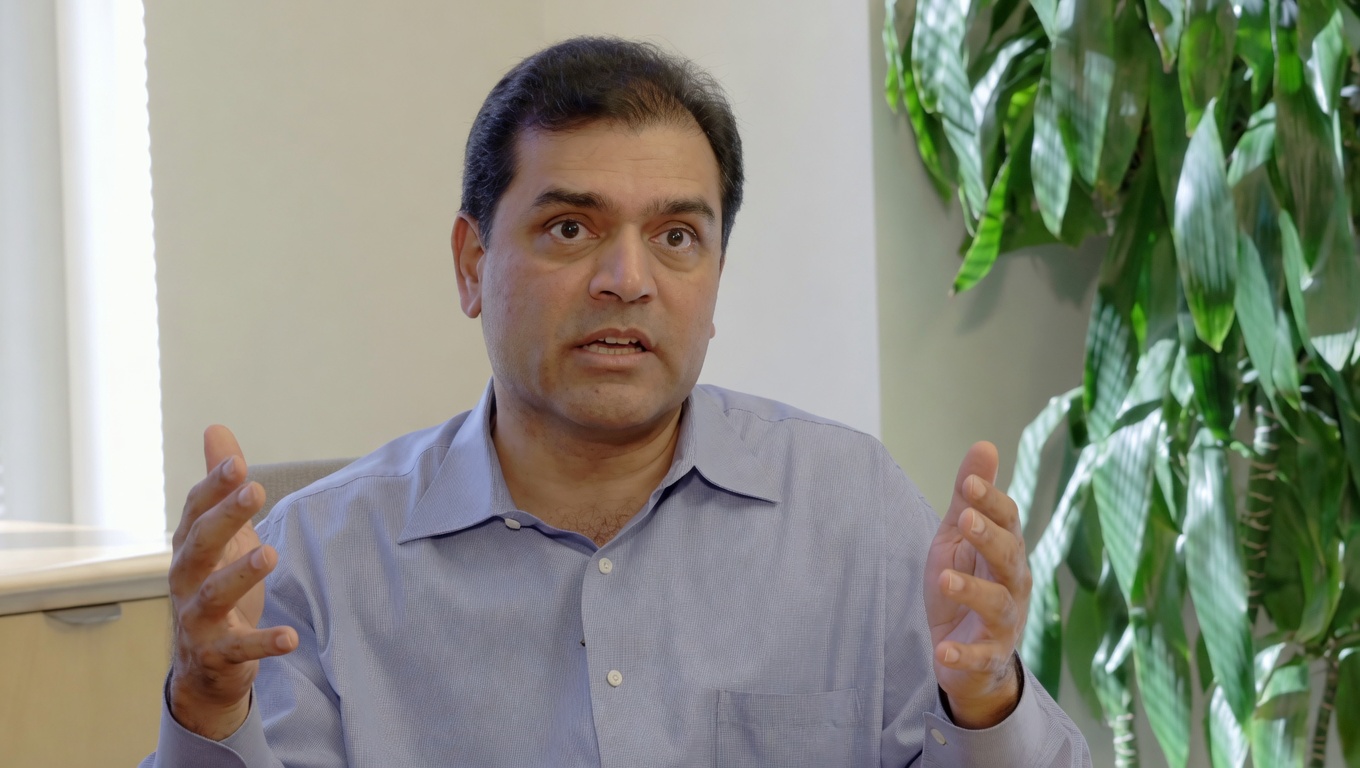
Chips before checks
Most venture capitalists have MBAs. Yatin Mundkur has 14 patents. Before he ever evaluated a startup's cap table, he was deep inside Sun Microsystems designing architectures - the kind of invisible infrastructure work that makes chips think. Before that, Ross Technology. Before that, Cypress Semiconductor. The resume reads like a tour of Silicon Valley's foundational hardware era.
His detour through Conexant as VP and Group Manager deepened his fluency in digital consumer electronics. But Mundkur wasn't satisfied watching from inside large companies. He founded Equator Technologies - a developer of Programmable MediaProcessors - and served as its President. Building something from scratch changes how you read a pitch deck. You stop asking "what does this do?" and start asking "why will this team survive the hard parts?"
The jump to venture came first through TeleSoft Partners, where he led investments in more than 20 early-stage semiconductor and software companies as Managing Director. By 2004, he was a General Partner at Artiman Ventures, a firm he has helped grow into one of Silicon Valley's quietly formidable early-stage funds.
"Those in their late 30s and older are trans-disciplinary, have seen multiple sectors, have made money and are more settled, looking to make an impact, not looking for a quick hit."
- Yatin Mundkur, on founder age and ambition (Slate, 2014)Sector-agnostic, structurally patient
Artiman Ventures was founded in 2001 with offices in Palo Alto and Bangalore. That dual geography is deliberate: it gives the firm a particular edge in identifying technical talent and emerging companies at the intersection of Indian and American innovation ecosystems. Mundkur has been running deals out of the Palo Alto office at 1731 Embarcadero Road since 2004.
The fund is sector-agnostic - which means Mundkur evaluates blood-testing platforms and cloud security companies in the same week. This isn't a bug; it's the design. Deep technical judgment applied across domains produces pattern recognition that purely vertical investors miss. The portfolio shows it: 87+ companies across healthcare diagnostics, cybersecurity, enterprise software, AI, medtech, and education.
The outcomes speak to longevity rather than luck. Companies have been acquired by Sandisk, Roche, Intel, TIBCO, Synaptics, and others. Two unicorns have emerged. The firm has logged 14 IPOs. With over $1 billion under management, Artiman operates quietly - no press-hungry partner dinners, no constant Twitter threads about the future of tech.
The companies that got out
14 patents before a single term sheet
It's unusual for a venture capitalist to hold patents. It implies you were actually inside the machine - writing specs, fighting over clock cycles, arguing about bus architectures. Mundkur's 14 patents span computer architectures, digital consumer electronics, semiconductor design, and software. This isn't decoration on a bio page; it's the reason his technical diligence cuts differently from someone who came up through banking or consulting.
When Mundkur sits down with a founder building an ASIC startup or a novel compute platform, he isn't reading the whitepaper for the first time. He has lived versions of these problems. The patents are the paper trail of that.
14 PATENTS • COMPUTER ARCHITECTURE • DIGITAL CE • SEMICONDUCTOR DESIGN • SOFTWARE
The founder age theory
In a 2014 Slate piece on innovation and longevity, Mundkur articulated a theory about founders that most investors leave unspoken. His taxonomy, built from two decades of watching companies succeed and fail, cuts against the Silicon Valley fetish for twenty-something founders:
Artiman's portfolio composition reflects this. The fund looks for founders who've worked across industries, absorbed failure, and arrived at something worth doing for reasons beyond valuation multiples.
Running a company while running a fund
Mundkur isn't just writing checks at Cellworks Group - he's running the company as CEO. Cellworks is a precision medicine and stratified medicine company, applying computational biology to cancer treatment planning. As an Artiman portfolio company, the CEO appointment represents the fund's hands-on approach to companies that need operational leadership, not just capital.
This dual role - General Partner at a $1B+ VC fund and sitting CEO of a portfolio company - is unusual. It reflects both the depth of Artiman's involvement in its investments and Mundkur's preference for staying close to the technology. For Mundkur, running Cellworks isn't a distraction from venture. It's a direct expression of the same instinct that drove him to file 14 patents: he needs to be inside the work, not just above it.
Cellworks applies machine learning and data analytics to disease diagnostics, cancer blood-testing platforms, and predictive analytics for patient care. Mundkur participated in the 2018 Precision Medicine World Conference as a panelist, a venue where the intersection of data science and clinical medicine was being actively negotiated.
From chip design to capital
Where Artiman looks
The breadth of Artiman's portfolio keywords maps the range of Mundkur's intellectual territory. Cybersecurity sits next to cancer blood-testing platforms. AI-enabled marketplaces for education sit next to enterprise software for Fortune 500s. Predictive analytics meets IoT hardware. This is not a scattershot mandate - it's a deliberate bet that deep technical judgment transfers across domains better than sector expertise transfers across technology eras.