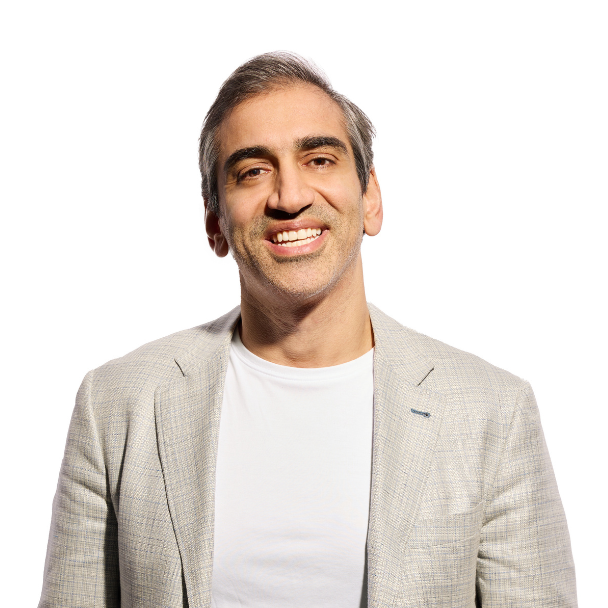
He runs a company named after the man who corrected medicine
In September 2025, Vesalius Therapeutics handed its top job to a former hospital physician who had spent the previous decade on the money side of biotech. Yasir Al-Wakeel became CEO of the Cambridge, Massachusetts company and, at the same time, a CEO-Partner at Flagship Pioneering, the venture-and-foundry operation that built Vesalius in the first place. He stepped into a seat warmed by John Mendlein, who moved up to Executive Chairman.
The name of the company is not an accident, and neither, you suspect, is the fit. Andreas Vesalius was the 16th-century anatomist who got hold of actual bodies, looked closely, and quietly demolished centuries of inherited medical certainty. The modern Vesalius is trying to do the same trick with disease itself - arguing that the labels we hang on common illnesses are blunt, old, and hiding the genetic reality underneath. Al-Wakeel has a one-line version of the pitch: the definitions of many common diseases are centuries old and often mask genetically distinct conditions.
What he is actually working on day to day is a platform Vesalius calls Physio-Logic - a stack that braids together human genetics, genomics, lab-grown cellular models, and machine learning to split a single named disease into the several genetically distinct conditions it really is, and then to find drug targets that match each one. The company has already put that thesis on the line commercially: in November 2024 it signed a multi-target strategic alliance with GSK aimed at Parkinson's disease. Al-Wakeel inherited that momentum and now has to convert it into medicines.
The definitions of many common diseases are centuries old and often mask genetically distinct conditions.
First he treated patients. Then he priced them.
Most biotech CEOs arrive carrying one credential and apologizing for the gap where the other should be. The scientists learn finance late; the financiers learn biology never. Al-Wakeel refused the trade-off. He trained as a doctor at the University of Oxford, earning a BM BCh, and held clinical and academic medical posts in the United Kingdom - real ward work, the kind where the abstraction of "common disease" stops being a slide and becomes a person in a bed who does not respond to the textbook treatment.
Then there is the detail that makes recruiters do a double-take: an MA in theology from the University of Cambridge. A surgeon's training at one ancient university, a degree about meaning and first principles at the other. It is the sort of pairing that sounds like a party-trick line until you watch him talk about diseases as mislabeled categories - at which point the habit of questioning the definition rather than the answer starts to look like a through-line, not a coincidence.
The pivot from medicine to markets came through Credit Suisse, where from roughly 2008 to 2015 he worked first as an equity research analyst covering biotechnology and specialty pharmaceuticals and then as a director in healthcare investment banking. By his own firm's accounting he was involved in more than $30 billion of strategic and financial transactions. That is the part of the resume that explains why a venture creation engine like Flagship would trust him with both a company and a partner title: he can sit on either side of a deal table and know what the other side is thinking.
A decade of hard exits and harder financings
After banking, Al-Wakeel stopped advising operators and became one. From 2015 to 2017 he was CFO and Head of Corporate Development at Merrimack Pharmaceuticals, where he helped engineer a roughly $1 billion asset sale to Ipsen - the kind of transaction that keeps a company's science alive even when the original plan does not survive contact with reality.
He moved to Neon Therapeutics as CFO from 2017, steering its financings through to the company's eventual absorption by BioNTech - a name that would become globally famous a couple of years later for reasons unrelated to Neon's cancer-vaccine work. Then came Kronos Bio, where his fingerprints are all over the company's early balance sheet: a $155 million crossover financing, a $288 million initial public offering, and a discovery deal with Genentech announced in January 2023. Crossover, IPO, big-pharma partnership - that is the full grammar of biotech finance, executed in sequence.
Most recently he was an Entrepreneur in Residence at SR One, the life-sciences venture firm, working across multiple startups, and served as President and CEO of a stealth genetic medicines company - the sort of role that does not announce itself but does season you for the chair he holds now. He has also served on the board of MaxCyte.
Read in sequence, the pattern is hard to miss. A clinician who learned the human cost of an imprecise diagnosis. A banker who learned what investors will and will not fund. A finance chief who learned how to keep a company solvent long enough for its science to either work or be sold to someone who can finish it. Each role added a layer the previous one lacked, and the Vesalius job is the first that demands all of them at once - the medicine, the money, and the nerve to argue that the textbook has the disease wrong.
Yasir brings a rare blend of medical expertise, entrepreneurial experience, and visionary leadership.
The financings, drawn to scale
A look at the headline transactions on his ledger. Bars scaled relative to the $1B Merrimack-Ipsen asset sale.
Across his career, total transactions involved exceed $30B - this chart shows only three named milestones.