Will Chance once gave a surprisingly culinary account of competitive rowing. Discussing Princeton’s second varsity crew in 2016, he imagined a “heaping helping of boat-speed-pie.” There were experienced rowers, returning teammates, and, apparently, the ingredients for something worth serving. The phrase did useful work: it made a serious conversation about performance sound like a conversation among people who enjoyed one another.
He is now Principal & CEO of Atlas at Alpine Investors in San Francisco. His work concerns what follows an acquisition: helping leadership teams, establishing operating infrastructure, and finding ways for businesses to grow. The vocabulary has changed since college. The question of how several people become effective together remains a useful way to read his career.
A rowing result fits on a scoreboard. An operating team’s contribution is harder to compress. There may be a new finance leader, a better system, or a plan that someone else can eventually carry forward. Chance’s story is interesting at precisely that point, where the visible result meets the less visible preparation. It begins well before a private equity title.
A goal written before graduation
At Lufkin High School in Texas, Chance took part in a senior sunrise, a tradition in which students wrote down goals they would receive again at graduation. His target was to collect 5,000 books for Books That Benefit. He was Student Council Vice President, and spoke about the occasion as a chance to “refocus and set new goals.”
Picture the practical demands contained in that number. Five thousand books require people to give them, someone to collect them, and a reason for the books to reach another reader. The target made the project tangible. It also made it possible to look back later and ask how the work had gone. Ambition had been given something to count.
Books That Benefit was a literacy nonprofit he founded to encourage children with fewer resources to enjoy reading. His early biography also records an interest in reading, National Honor Society leadership, and a community service award. These details give the teenage chapter its own subject. He was already organizing something outside his own academic or athletic results.
It would be too tidy to turn the book project into a prediction of his later career. A high school student collecting books is allowed to be a high school student collecting books. Still, it introduces a person whose early record included a concrete effort to help other people have an opportunity. That deserves to survive the arrival of the business résumé.
A late start, then a shared finish line
Chance began rowing in March 2013. When Princeton introduced its incoming recruits in August 2014, it described strong rowing-machine results despite limited racing experience. That summer included six weeks of training in New Zealand. He arrived at college with evidence of capacity and considerably less time spent racing than the familiar story of a lifelong specialist might suggest.
There is a distinction here between producing power on a machine and contributing to a crew. The first can be measured individually. The second asks several people to make their effort compatible. The recruiting description placed those two kinds of experience beside each other. His college years would supply the racing chapter.
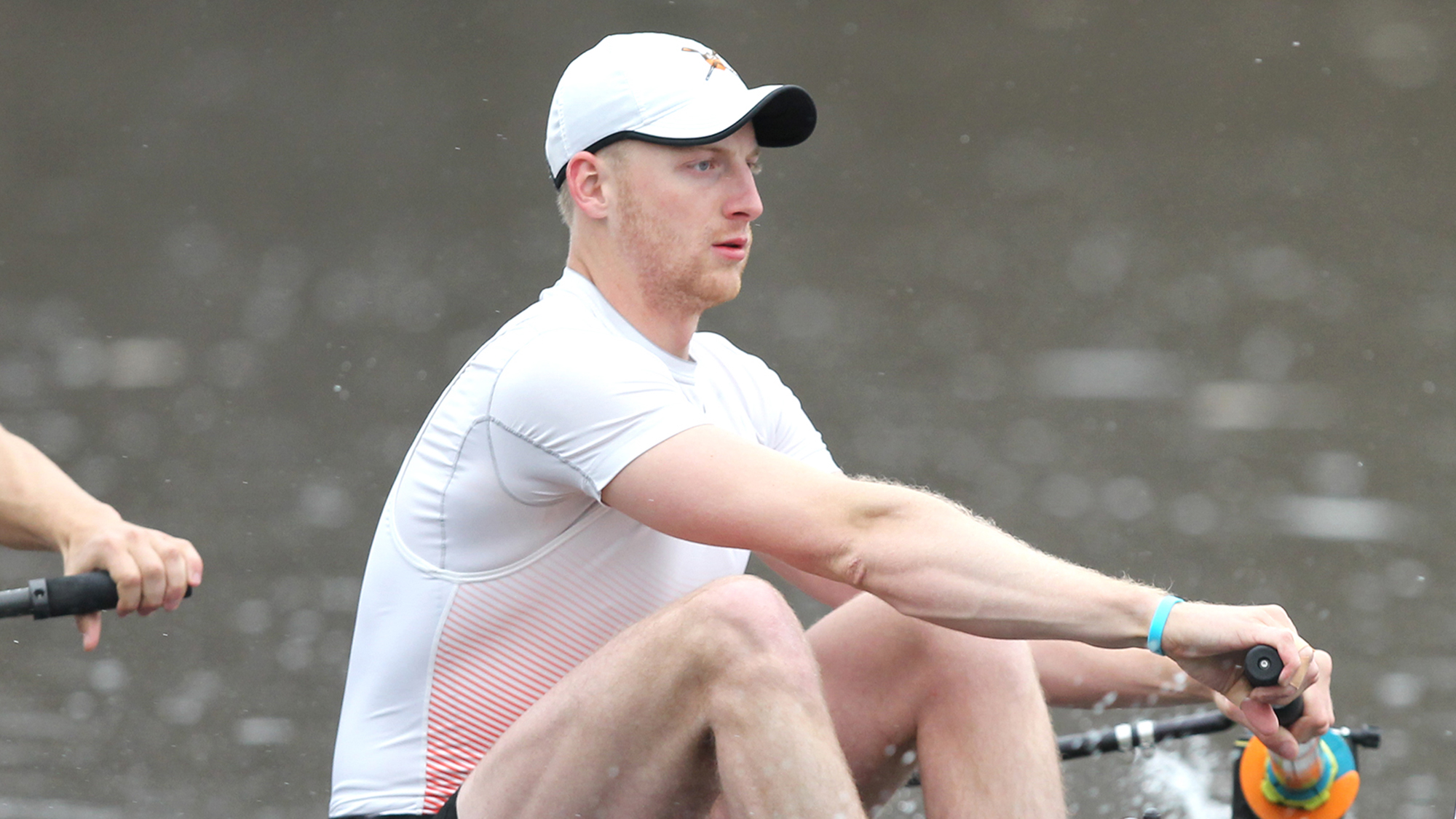
In 2015, Chance’s second varsity crew won Eastern Sprints gold and IRA national championship silver. A year later came silver at both events. In 2017, the second varsity won Sprints gold again, reversing its earlier results against Harvard and Yale. He also raced in the first varsity at that year’s IRA championships. These were crew results, accumulated across changing seasons and assignments.
Academic recognition ran alongside the races. Chance received IRA All-Academic honors in 2016, 2017, and 2018. He graduated with Honors from Princeton, having studied applied mathematics and computer science. The record places the classroom and the boat in the same years, without requiring either to become a decorative detail in the story of the other.
His 2016 training interview offers a more revealing glimpse than a medal list. The crew had extra time after the previous season’s national championships to prepare for Henley. He valued being able to concentrate on fundamental improvements away from the demands of schoolwork and the compressed racing calendar. There were long, hot miles and time to come together.
“Having the extra month of training after IRAs was invaluable.”
Will Chance, speaking about Princeton’s Henley preparation, 2016
Time was the resource he singled out. A race imposes urgency; preparation permits adjustment. The humor about pie sat inside a discussion of experienced teammates and increasing comfort at a demanding level. Read together, the remarks allow the college rower to be competitive, observant, and funny within the same conversation. The spreadsheet of results has room for a human voice.
Two rowers, two directions
Chance joined Alpine’s investing team in 2018. He and Pat Eble initially worked in arrangements that accommodated training toward the 2020 Olympic rowing team. Graham Weaver later described those early investing jobs as essentially part-time. Their entry into the firm involved two ambitions occupying the same stretch of life.
Their subsequent paths separated within Alpine. Chance moved toward helping companies after purchase and helped build Atlas. Eble gravitated toward relationships with bankers and exploring new markets, eventually co-leading thesis development. A common sporting background and a common employer produced different kinds of work.
That divergence gives this career story its hinge. The interesting event is the discovery of an area of work that held Chance’s attention. Investing introduced him to acquired businesses. Working with their executives drew him toward the problems that remained after a transaction. The next chapter was built from that preference.
In January 2024, Alpine announced his promotion to Principal and identified him as Playbook CEO. His responsibilities involved infrastructure for the firm’s investing strategy and organic growth after acquisition. The current Atlas remit continues that practical emphasis. A title marks the change; the work explains why it matters.
Reading the rowing and investing chapters together suggests a recurring interest in the conditions around performance. This is an interpretation of the record, rather than a theory attributed to Chance. His documented movement toward operating support is enough to carry the argument. He found a place to work on the machinery behind another team’s results.
The first year has several jobs
Atlas sits within Alpine Operations Group. Its work connects talent, go-to-market support, and portfolio operations. For a newly acquired business, those areas meet in ordinary decisions: who should lead, how the finances should work, and where the next customer will come from. The categories are neat on a diagram. The work must meet inside a company.
The team’s 2025 activity gives some scale to the task: 40 executives hired into the portfolio by Alpine’s talent team, and five new platform launches supported by portfolio operations across three countries. These are team activity measures. They describe the scope of the organization Chance leads, rather than personal totals.
by the talent team in 2025
by portfolio operations in 2025
platform launches
The sequence has a practical logic. A leader needs colleagues and information to make decisions. A growth plan needs someone to execute it. Financial and technology systems must give the team a usable picture of the business. Each function can be described separately, but the point of bringing them together is to make the operating work connect.

Mosaic Service Partners, a home services platform, offers a concrete example. Atlas helped place CEO Josh Feinberg and Lead Capital Allocator Brian Willis, then worked with them on additional leadership hires. It established financial and legal infrastructure and helped build the marketing and lead-generation playbook around the platform’s first acquisitions.
Atlas’s Mosaic engagement included a 47% increase in leads at one operating company and 18% growth in deals won at another. These are different measures at different businesses. They give a view of specific commercial work, and should be read at that scale. They are neither a portfolio-wide growth rate nor a personal score for Chance.
The engagement ended with a long-term growth leader in place and a playbook prepared for subsequent acquisitions. That handover is an important part of the example. Support has to leave something usable behind: people who can continue the work and a method they can apply again. The conclusion of an engagement can be another team’s beginning.
What survives the handover
A profile of Chance can move from a book collection goal to a rowing crew to an operating group without insisting that the path was inevitable. Each chapter had its own demands. He learned to race, studied quantitative subjects, joined an investment firm, and moved toward the work of helping acquired companies.
The personal details keep that route from becoming a procession of titles. There is a teenager making a measurable promise, a college rower borrowing from the kitchen to describe his teammates, and an investor discovering which part of the job he wanted to pursue. Those are small pieces of evidence, but they give the career its shape.
Atlas makes the present chapter concrete. Chance leads a team whose work is meant to equip other leaders: recruit the people, put the foundations in place, and prepare a method that can be carried forward. The next result belongs to several hands. Somewhere between the appointment and the handover lies the work he chose.