The ordinary communications assignment begins near the end. Somebody has a policy, a program or a problem, and now they need a slogan, a press release, perhaps a video. The message is assumed to exist. The consultant is hired to make it louder. Ward Circle Strategies, a Washington firm founded by Julie Anbender and Brian Hurley in 2010, has spent sixteen years making the opposite bet. Often the message does not yet exist - at least not in a form that can travel. Sometimes the institution itself has not agreed what success means. Sometimes the people who most need the information do not speak its language, trust its messenger or recognize themselves in its examples. In those cases, louder merely produces a more efficient failure.
This explains the odd shape of Ward Circle. It looks partly like a public-relations agency: media relations, speechwriting, crisis counsel, branding, social strategy. It looks partly like a management consultancy: organizational design, workforce analysis, program management, data and policy implementation. Then come the builders - video producers, designers and developers working in WordPress, React and Django. The roster includes veterans, former government officials, reporters, nonprofit leaders, health specialists and analysts. The company is selling communications, but its scarce commodity is institutional fluency: knowing what an agency means, what an audience hears and why those are rarely the same thing.


The emergency was not an abstraction
The clearest example began in California. Traditional disaster preparedness had a habit of imagining a generic household with spare money, ready transportation, fluent English and enough time to study a checklist. The people most exposed to catastrophe often had none of those advantages. Ward Circle senior adviser Pamela Hughes describes the inherited approach as rigid and ineffective. Record wildfires made the mismatch urgent. Then COVID added illness, isolation and economic stress to the same communities already facing fire.
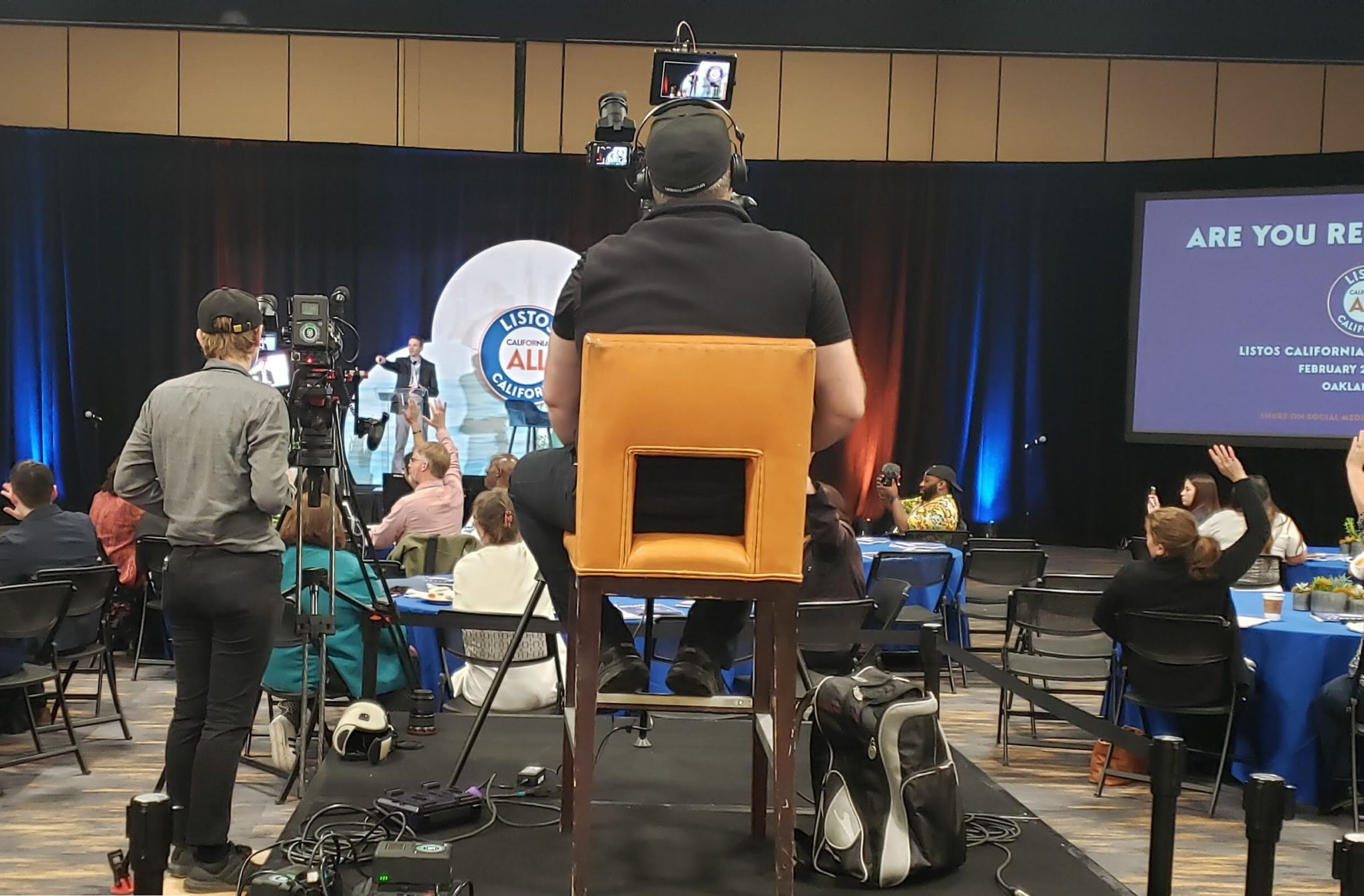
Ward Circle helped Listos California move from generic preparedness to what Hughes calls transadaptation - not simply changing words from one language to another, but changing examples, formats and delivery so the advice made sense in context. The public record describes materials in 26 languages, aimed at farmworkers, tribal communities, refugees, older adults, people with disabilities and people experiencing homelessness. During the pandemic, the team repurposed a voter-engagement model into the Social Bridging Project: culturally competent facilitators called at-risk Californians and connected them to food, protective equipment, health care, mental-health support and cash aid.
A statewide campaign co-chair credited Ward Circle as a key strategic partner in reaching 3.9 million Californians with disaster-preparedness material.
The number is impressive, but the method is more portable. Fifty-eight county resource guides were prepared in English and Spanish. A partner publisher researched, wrote, translated, edited and designed directories for every county. The campaign assembled state agencies, community organizations, translators, artists and specialist vendors. It did not ask one perfect message to conquer California. It built a system for producing many locally credible messages without losing the public purpose.
First, make the wonkiness confess
A second assignment reveals the firm's basic choreography. The Aspen Institute's Financial Security Program was expanding, but its public language had become too wonky and dry to show policymakers, funders and the public why the work mattered. A website deadline added pressure. The easy answer would have been faster copy. Ward Circle slowed the beginning down.
The team audited existing material, interviewed program leaders and Institute brand managers, studied competitors and media, then brought preliminary options into a half-day working session. Only after that did it create the message platform and guidelines. Execution touched the website, social channels, blogs, newsletters, fact sheets, earned-media templates and even conference swag. Leadership received informal message training. Then Ward Circle moved into an advisory role so internal staff could carry the system forward.
The useful deliverable was not a sentence. It was agreement about which sentences the organization could keep producing after the consultants left.The operational lesson in Ward Circle's Aspen case
The reported results included two new foundation funding partnerships, stronger media and social traffic, and more policymaker awareness. Yet the detail worth copying is the sequence. Discovery was separate from development. People who would live with the message helped choose it. Implementation happened beside staff, not above them. The handoff was designed into the engagement. Any team can borrow those four moves, even if it never hires an outside firm.
What the invoice does - and does not - reveal
Ward Circle's engagement prices are private. Public procurement offers a different window: a competed, veteran-set-aside Veterans Health Administration purchase order for manpower studies accumulated about $7.3 million in obligations. That work concerned workforce planning and organizational analysis, not the California campaign or a typical message project. Treating the figure as an agency rate card would be like pricing a kitchen by looking at the cost of an office tower.
Still, the contract clarifies the business. Ward Circle earns fees for advice and delivery, sometimes as a prime contractor, sometimes with larger firms or specialist partners. Its named collaborators include Accenture, Booz Allen Hamilton, Deloitte and a set of smaller communications shops. Its customers range from the Defense Health Agency and Veterans Health Administration to the California public-health and emergency systems, health associations, education groups, climate organizations and advocacy nonprofits. The firm occupies a useful middle: smaller and more hands-on than the giant consultancies, broader than a publicity boutique.
That position works best when the assignment is both substantive and public: military health, veterans' benefits, disaster readiness, education, organizational change. Subject-matter experience reduces the time spent learning the nouns. Communications craft keeps technical accuracy from becoming institutional fog. Production capacity turns the recommendation into a site, film, briefing, training or campaign. In 2025, the Department of Labor gave the company a Gold HIRE Vets Medallion for a small employer - a tidy confirmation that its veteran identity is part of the workforce, not merely the procurement description.
The constraint hiding inside the advantage
The model is not universal. It depends on access: to leaders willing to be interviewed, staff willing to surface disagreement, data that can reveal who is being missed, and community partners trusted enough to carry a message. It is poorly suited to a client that has already chosen the answer and only wants applause. Nor does transadaptation scale by replacing human judgment with a translation button. The more sensitive the audience, the more local knowledge matters.
But under the right conditions, Ward Circle's playbook is unusually concrete. Begin with the behavior or institutional result, not the press hit. Find the first audience the generic version excludes. Put policy experts and makers in the same room. Build a repeatable production system. Measure reach without mistaking reach for understanding. Train the people who will own the work. There is nothing magical in the sequence. Its power comes from how often organizations skip it.
The company's best line may be the simplest one on its website: “The Mission Matters.” In lesser hands, that would be lobby-wall vinyl. Here it operates more like a filter. A mission tells you whom the message must reach, what the institution must change and which clever idea is merely decoration. The megaphone comes later.
Keep going around the circle
Explore the firm's work, people and public examples.