The pantry had become a supply cupboard for a car-washing business. The living room was the office. In August 2016, before his senior year at the University of Texas at Austin, Walker Drewett and his friends had found a use for their rental house that probably did little for its domestic charm. They were starting NuWash. During the day, there were classes and customers to find. At night, there were cars to clean.
Some shifts ran until three in the morning. A parked car was a useful customer: it stayed put while its owner got on with something else. Drewett's team approached apartment communities, offering residents a wash without a trip to a car wash. The arrangement also let the founders fit the work around university. A college timetable had helped shape the delivery model.
Nearly a decade later, the business that grew from that house had joined Valvoline. Between the pantry and the acquisition came a change from washing cars to repairing them, venture funding, and a workforce of professional technicians. The recurring concern was practical. Drewett kept looking for ways to do the job while the customer was busy elsewhere.
The business after class
NuWash began with $5,000. Drewett and his co-founders did the washing themselves before building a network of technicians. He later joked, “Effectively we were the first independent contractors on the NuWash platform.” The corporate vocabulary arrived after the buckets.
There was an education in that arrangement. A reservation on a screen had to become a finished job in a parking lot. Somebody had to bring the equipment, understand the customer's expectations, and leave the vehicle looking as promised. The founders encountered the details themselves, including the unpleasant business of a service falling short. An app could accept a booking; the people doing the work had to earn the next one.
By January 2019, NuWash reported nearly 30,000 cars washed, with service reaching more than 400 office and apartment buildings as well as customers' homes. It had expanded from Austin into Dallas in 2017. For a business assembled around university commitments, these were substantial signs of demand. They also created a tempting reason to carry on exactly as before.
A clean car, and a better question
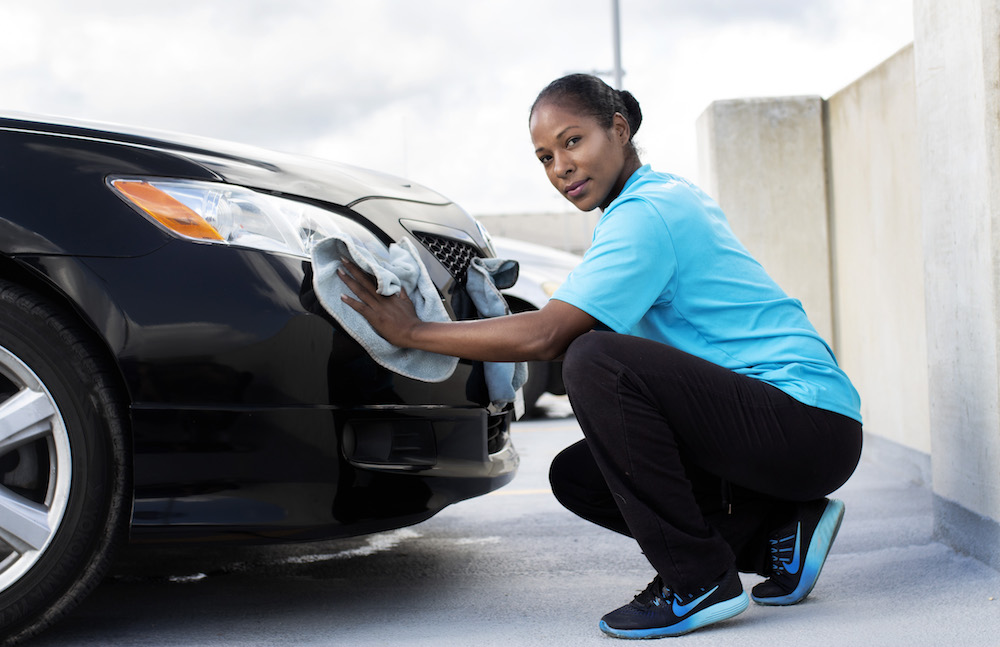
Drewett was already learning that the way a founder described a service could make it harder to buy. NuWash used a cleaning method that required very little water. Leading with the method, he said, raised questions. The convenience was easier to understand. Customers wanted a clean car without the errand; the technique was the company's problem to solve.
“We had to give people the chance to try us first.”
Walker Drewett, on NuWash, 2019
The subscription model presented another obstacle. Asking people to commit to recurring washes meant asking them to change a habit before they had tried the service. NuWash moved away from that approach and gave customers a chance to experience a wash first. The hope was that a second booking would follow a satisfactory first one.
A larger adjustment followed. The car-wash operation had reached seven figures in revenue, but Drewett learned that customers also needed help with maintenance and repairs. Cost and the inconvenience of visiting a shop could leave that work waiting. The existing business had put him close to car owners. Their next request pointed toward a different business.
This is the interesting moment in Drewett's career: he had something that worked, and still changed direction. A successful wash demonstrated that someone would pay for convenience. Repair offered another reason to pay, with a different set of responsibilities attached.
Keeping the parking space. Changing the job.
NuBrakes launched in 2019. The customer's car could remain at home or work while a technician came to it. The familiarity of that arrangement concealed a significant operational change. Cleaning bodywork and replacing brake components demand different skills, equipment, and customer confidence. Drewett was taking an established promise about convenience into work where technical competence mattered in a different way.
In July 2019, NuBrakes announced $720,000 in seed funding from investors including Gurtin Ventures, Capital Factory, and Contrary Capital. It was serving Dallas and Austin and planned to expand into Houston. The early pitch paired on-site work with transparent prices and an effort to avoid unnecessary upselling. Drewett's team was trying to make the appointment itself less of an ordeal.
The model also changed what the company needed to organize. A repair service has to match a vehicle's needs with the right technician and parts. A convenient booking becomes valuable only when that match works. Drewett's earlier experience offered a useful discipline: think through the whole visit, rather than treating the booking confirmation as the finish line.
NuWash begins while Drewett is at UT Austin.
NuBrakes takes mobile service into brake work.
Valvoline acquires NuWash, doing business as NuBrakes.
The people who turn up
The people delivering the service became a defining part of Drewett's operating choices. By the 2021 funding round, NuBrakes described its technicians as full-time W-2 employees with steady schedules and stock options. The company also offered apprenticeships and ongoing training. These were concrete decisions about how to staff a service that took place beyond an office manager's immediate view.
Mike Ghaffary, who led Canvas Ventures' investment, emphasized the employment model when explaining his interest in the company. He also described Drewett as a founder with leadership experience beyond his years. The investor had heard about him through Contrary Capital, giving a student-founded service business a connection to a wider circle of marketplace investors.
There is a plain operational logic to the staffing choice. Customers meet the technician who arrives at their car. That person has to explain the job and do it. Consistency depends on the workforce, even when the customer first encounters the company through software. Giving technicians a continuing place in the business made them central to the proposition Drewett was selling.
Nine markets, and the vehicles that earn a living
In December 2021, NuBrakes announced a $9 million Series A led by Canvas Ventures, bringing disclosed funding at that point to $12 million. Bling Capital, Contrary Capital, and Automotive Ventures participated. Ghaffary and Bling's Ben Ling were announced as additions to the board. The business was operating in nine markets across four states.
Expansion required decisions more specific than circling cities on a map. For Atlanta, the team considered vehicles per household, average commuting times, and local repair pricing. It opened an office there in September 2020 before introducing service to drivers the following January. The office recruited people with experience at businesses including Bellhop and Uber. Geography came with an operating plan.
Fleet customers added another dimension. A plumber's van or a delivery vehicle has work to do; maintenance can interrupt that work. NuBrakes offered fleet operators a way to bring service to the vehicles, alongside tools for managing appointments and vehicle records. Drewett's original concern with the customer's schedule now extended to businesses whose schedules depended on wheels.
Historical milestones from the funding announcement.
The appointment that books itself
Drewett's ambition reached beyond dispatching someone after a driver noticed a problem. He imagined vehicle data helping anticipate maintenance and arrange the service. “We envision a world where you never take a vehicle to the shop again,” he said. It was a vision for changing the sequence: recognize the need, schedule the work, and send someone to do it.
By late 2021, NuBrakes said its fleet offering connected with onboard telematics systems and brought scheduling, inspection history, communications, and payments together. The distinction between a working fleet product and a broader ambition matters. Drewett was describing a future in which vehicles could predict and schedule their own service needs, with NuBrakes supplying the people who completed the work.
A service that arrives at a convenient location already removes one errand. A service arranged before the owner has to think about it would remove another layer of administration. That explains why a founder who started with car washing became interested in connected vehicles. The customer's disappearing chore remained the organizing idea.
- 01Identify the workUnderstand what the vehicle needs.
- 02Arrange the visitMatch the job with a time and place.
- 03Bring the technicianComplete the service where the car is parked.
Back to the students
Drewett has returned to Capital Factory to speak with students in the Longhorn Startup Lab, a class he says he took twice. His enthusiasm for starting during university has survived the years since the living-room office. That is a useful detail about him: he still treats the student period as a place to begin doing the work.
He has also discussed the journey with other founders, including Joshua Baer on Austinpreneur, and appeared in an Everything Marketplaces conversation about the move from NuWash to NuBrakes. The questions his career raises are grounded ones. When should a founder change an operation that already earns revenue? How much of the service must the founding team learn firsthand? How do you trust the people representing the business away from headquarters?
A larger company, the same errand
Valvoline's fiscal 2025 annual report records its acquisition of NuWash, Inc., doing business as NuBrakes. A January 2026 corporate filing lists Drewett as Head of NuBrakes. The student business had become part of an established automotive services company, with Drewett continuing in a leadership role.
Reflecting on the acquisition, he credited employees past and present, along with customers, investors, advisers, friends, and family. He described mistakes and difficult stretches as part of the route. Joining Valvoline, he said, opened possibilities through the combination of NuBrakes' mobile platform and its new owner's scale and operating experience.
The pantry is a pleasing place to begin this story because it makes the distance visible. Yet the early business and the later one share a recognizable promise. The customer has somewhere else to be. The car can stay where it is. Drewett has spent the intervening years working out who should arrive, what they should bring, and how to make that appointment worth booking again.