Consider the small administrative life of a phone call. Someone answers. Someone scribbles a name. Someone promises a callback. Later, another person opens a customer record and tries to reconstruct what happened. The conversation may have lasted three minutes. Its paperwork has a longer career.
Vitel Global has built a business around that gap. It sells cloud phone systems, video meetings, messaging and software connections that let companies move conversations between people and devices. Its newer pitch goes further: let artificial intelligence answer routine inquiries, write summaries and carry information into the next task. The interesting part is how much office housekeeping sits behind that proposition.
- Business calling, meetings and customer messaging in a cloud platform.
- Advertised annual phone plans start at $15.99 per user per month.
- Recruiting integrations and named AI assistants reveal its workflow ambitions.
First, move the switchboard
The company dates its founding to 2009. Its own history describes a progression from hosted PBX in 2012 to mobile and desktop softphones in 2016, followed by cloud meetings in 2018. PBX is the telephone exchange that gives an office extensions, transfers and routing rules. Hosting it elsewhere removes a piece of equipment from the office and turns its functions into a service.
That changes the geography of work. A business number can follow an employee onto a laptop or mobile app. A manager can configure routing centrally. A growing firm can add people and locations without building a separate telephone island for each office. Vitel still supports IP phones; the desk handset simply becomes one option among several.
Its customer territory is fairly specific. The partner program identifies SMB to mid-enterprise organizations with approximately 50 to 500 seats. The product range also includes smaller teams. Healthcare, education, manufacturing, retail and hospitality appear among its target industries. These are buyers with ordinary, consequential problems: a missed inquiry, an unanswered extension, a customer transferred without context.
- 01AnswerBusiness number
Phone or app - 02RememberCall log
Connected record - 03ActRoute, book
or follow up
The recruiter is the clue
The revealing detail is an integration list. Alongside Salesforce, Zoho and HubSpot sit CEIPAL, JobDiva, TrackTalents and Oorwin, tools familiar to staffing businesses. Vitel describes connecting candidate records with communication logs so recruiters can keep a shared account of their conversations.
Imagine the difference between seeing an unfamiliar incoming number and seeing the candidate history associated with it. The second arrangement gives the next person a starting point. That is an illustrative use case, but it explains the appeal of tying telephony to an applicant tracking system. The value lies in reducing the work between a conversation and an informed response.
This is also where Vitel tries to distinguish itself in a crowded market. RingCentral, Nextiva, Vonage and Dialpad offer overlapping business communications products. Vitel emphasizes configurable integrations, guided provisioning and direct access to support engineers. Those are buying criteria worth testing in a demonstration, especially with the exact software a company already uses.
“Our customers work directly with trained support engineers who understand business telephony, not scripted call centers.”
Vitel Global · company overview
Meet Barry. He answers the phone.
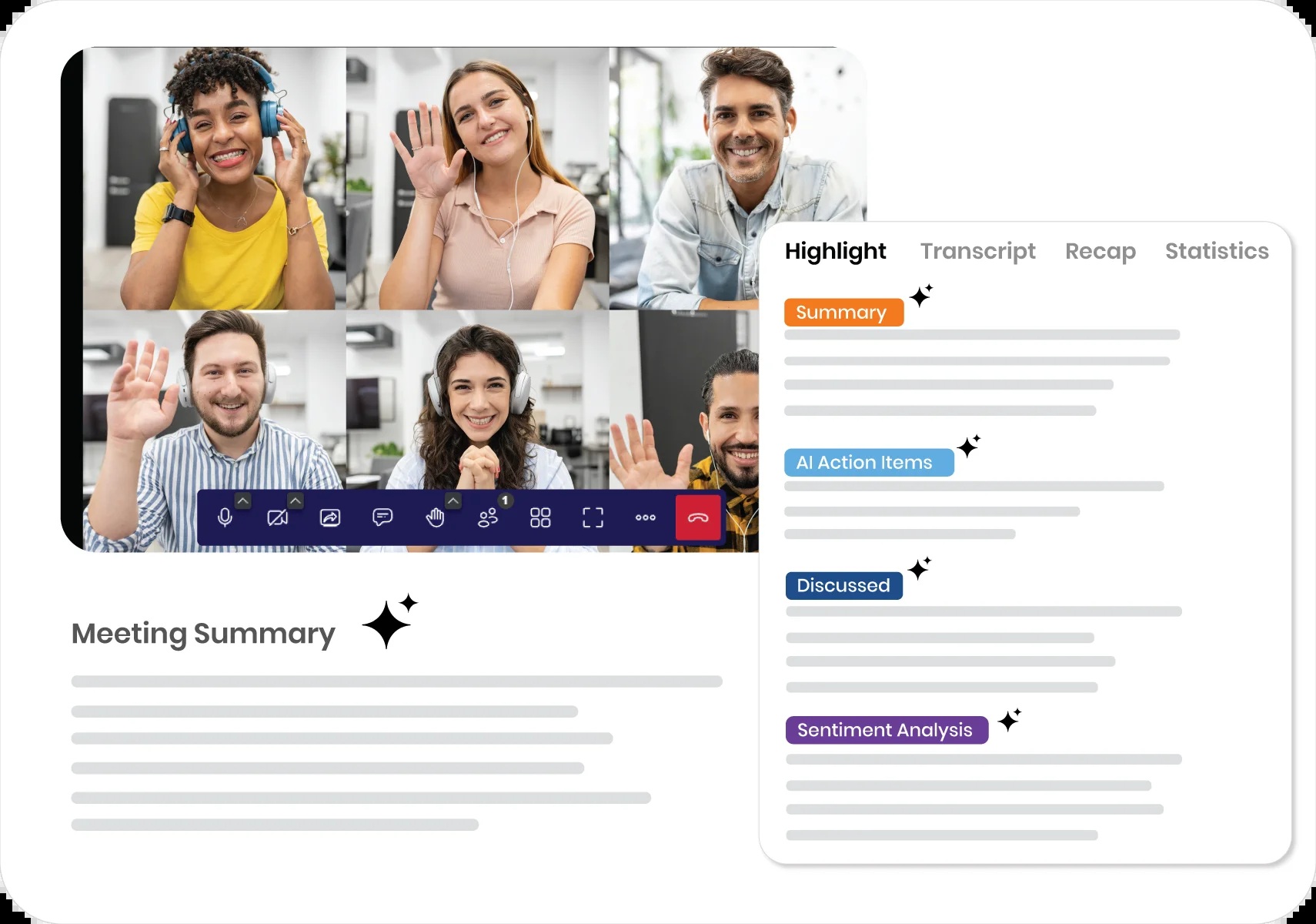
Then come the names. Barry is the AI receptionist. Sally handles WhatsApp. Perry works on email. Otto summarizes meetings. Giving software the names of possible colleagues makes the catalog easier to remember, and turns an abstract AI offering into a collection of recognizable jobs.
Barry's advertised duties include answering calls, capturing lead details, scheduling appointments and transferring callers to people. Businesses can train it with their websites, FAQs, opening hours and routing rules. Vitel says a human handover can include the caller's context and an emailed conversation summary. The proposed benefit is continuity: the customer should not have to start again each time responsibility changes.
The company's timeline places AI communication tools in 2025, after CRM integrations, messaging and APIs. Read that sequence as a product strategy: first establish the channels, then connect the records, then automate parts of the exchange. It does not establish why management changed direction. It does show where the current product catalog is headed.
The price of keeping the thread
The commercial model combines subscriptions with separately priced services and add-ons. At the time of review, the US pricing page advertises annual phone plans at $15.99, $20.99 and $28.99 per user per month. Premium adds desk-phone support, advanced queues and CRM integrations; Advanced lists AI transcripts, summaries, sentiment analysis and action items. An AI receptionist is labeled an add-on.
For ten users, the advertised Premium rate works out to $209.90 a month, or $2,518.80 a year, before taxes, usage charges or extras. That is a calculation from the displayed rate, not a customer invoice. Several integrations carry footnote markers, so a buyer needs the written quote to establish exactly what is included.
Meetings have their own price ladder. Vitel Connect Basic is listed as free, with a 40-minute meeting limit and capacity for 100 participants. Paid meeting plans sit separately on the page.
Distribution matters too. Resellers can set customer pricing and bill for the service. Agents earn commissions on referrals. Value-added resellers provide first-line support while Vitel handles billing. The person selling the system may therefore be an existing technology adviser who already knows the customer's network and habits.
A growing company still has to ring
There is a firmer public marker of commercial progress: Inc. lists Vitel among its 5000 honorees in 2021, 2022, 2023 and 2024. In the last of those years, it ranked 3,667. CEO Praveen Andapalli leads the company; his public writing advocates employee learning and balancing ambition with well-being.
Everyday usability deserves equal attention. One Google Play reviewer reported having to refresh the app repeatedly to see call-log updates after an update. Another described difficulty using it over Wi-Fi. Those are individual reports, not a measured failure rate. They do identify useful pilot questions: does the log update, does audio work on the actual network, and can staff recover when something goes wrong?
A reader can copy a sensible method here. Choose one recurring task, connect it to the correct customer record, and test the handoff before expanding automation. Try a difficult caller, an ambiguous request and an unavailable employee. Review the resulting summary. Cloud telephony depends on working connectivity; automated reception also depends on accurate business information and a reachable human. A system that remembers the conversation is useful only if someone can act on what it remembers.